
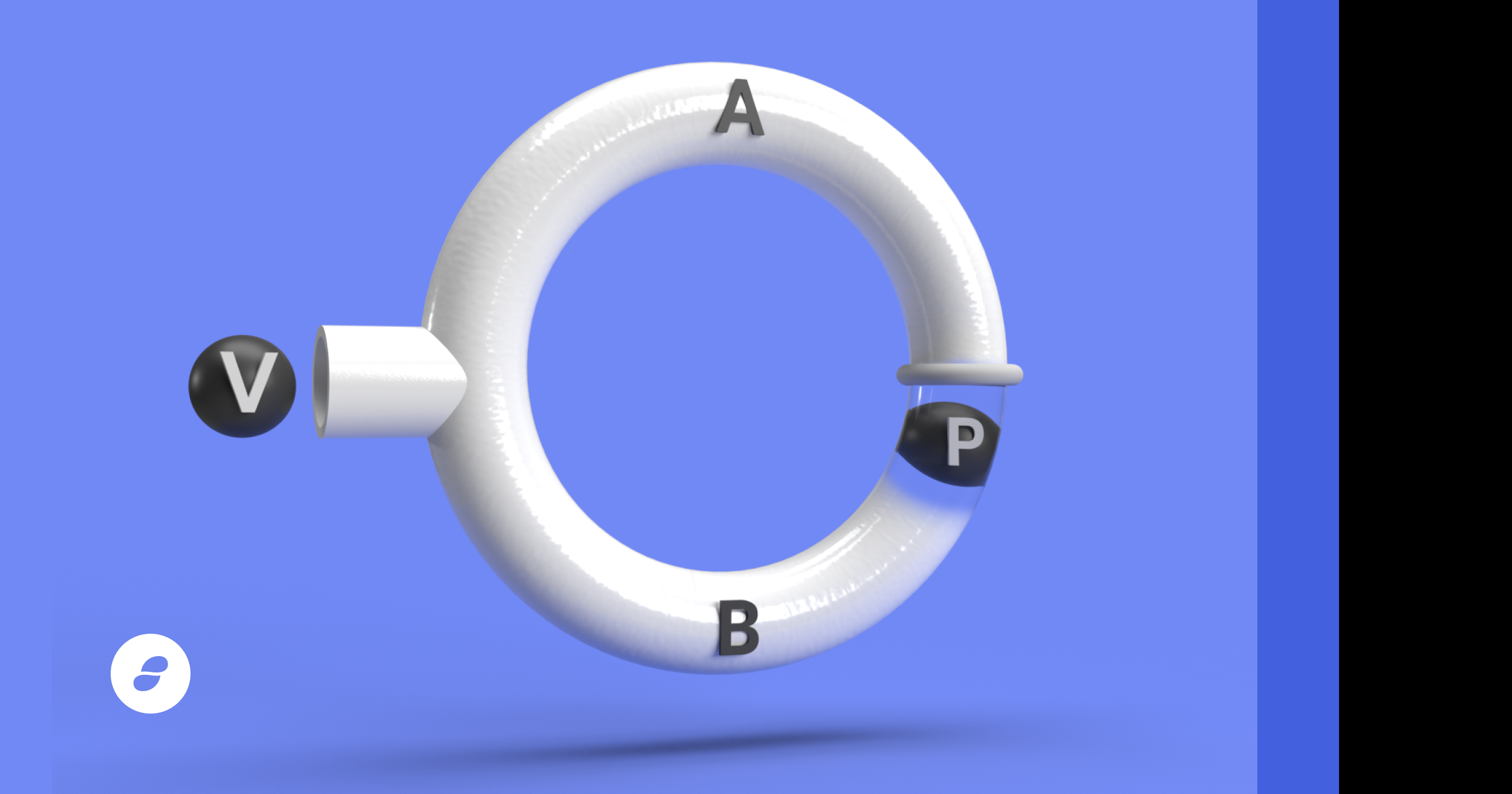
The GDPR conflict in Web3
The fundamental architecture of public blockchains creates an immediate and structural conflict with the General Data Protection Regulation (GDPR). Under GDPR, individuals possess the "right to erasure" (Article 17), also known as the right to be forgotten. This legal requirement mandates that personal data must be deleted upon request, without undue delay. However, blockchain technology is designed for immutability. Once data is written to a distributed ledger, it cannot be altered or removed without compromising the integrity of the entire chain. This creates a compliance gap that traditional Web3 architectures cannot resolve.
This tension is most acute in ZK-Rollups, which batch transactions off-chain before posting compressed proofs to Ethereum. While the rollup itself does not store raw personal data on-chain, the underlying smart contracts and associated metadata often retain identifiers or hashes that can be linked back to specific individuals. If a user exercises their right to erasure, the immutable nature of the Ethereum mainnet prevents the deletion of these records. The data remains, creating a persistent violation of GDPR principles.
The problem is not merely theoretical. In 2026, as ZK-Rollups become the primary scaling solution for Ethereum, the volume of transactions containing potentially personal data has increased exponentially. Unlike centralized databases where deletion is a simple database command, blockchain deletion requires hard forks or consensus-level changes, which are practically impossible for public networks. This means that even if a ZK-Rollup operator deletes data from their off-chain storage, the cryptographic proof on-chain remains, potentially allowing re-identification through pattern analysis or side-channel attacks.
Traditional privacy solutions, such as mixing services or private transaction layers, often fail to address this core issue because they do not eliminate the data; they only obscure it. GDPR requires erasure, not just obfuscation. Zero-knowledge proofs provide a novel approach by allowing validation without revealing the underlying data. However, implementing this in a way that satisfies GDPR’s strict erasure requirements remains a significant technical and legal challenge. The industry must develop new standards for "cryptographic erasure" to ensure that ZK-Rollups can comply with EU law without sacrificing the security benefits of zero-knowledge technology.
ZK-Rollups as the compliance layer
ZK-Rollups function as a cryptographic compliance layer by processing transactions off-chain and submitting succinct validity proofs on-chain. This architecture allows personal data to remain off the public ledger entirely, satisfying the core principle of data minimization required by GDPR. Instead of storing raw user information on the blockchain, the system only verifies that the transactions were executed correctly according to the protocol rules.
The mechanism relies on zero-knowledge proofs, which allow one party to prove the validity of a statement without revealing the statement itself. As defined by Ethereum.org, the "prover" demonstrates that a computation was performed correctly without exposing the underlying inputs. In a financial context, this means an institution can prove a transaction is compliant with anti-money laundering (AML) rules without exposing the customer's identity or trading flows on the public chain.
This separation of computation and verification is critical for regulatory adherence. The on-chain component consists solely of the state root and the zero-knowledge proof, which are immutable and publicly verifiable. The actual personal data, such as names or account balances, is stored off-chain in a private database or encrypted storage. Access to this data is governed by traditional legal frameworks, while the blockchain serves only as a trust anchor for the integrity of the transactions.
By keeping sensitive information off-chain, ZK-Rollups reduce the attack surface for data breaches. The on-chain data does not contain personally identifiable information (PII), meaning that even if the blockchain is fully transparent, no individual's private data is exposed. This structure aligns with the GDPR requirement that data processing should be limited to what is necessary for the intended purpose. The technology effectively decouples the need for public verification from the need for private data storage.
Comparing ZK architectures for privacy
Selecting the correct zero-knowledge architecture is a foundational decision for GDPR compliance. The choice between ZK-SNARKs and ZK-STARKs dictates the operational cost of data minimization and determines long-term cryptographic resilience. As regulatory scrutiny intensifies, organizations must evaluate these systems not merely on technical novelty, but on their ability to satisfy the principle of data protection by design.
ZK-SNARKs (Succinct Non-Interactive Arguments of Knowledge) remain the dominant standard for current deployments due to their small proof sizes and fast verification times. These attributes reduce on-chain storage costs, a critical factor for high-volume transaction processing. However, their security relies on elliptic curve cryptography, which is vulnerable to future quantum attacks. This creates a compliance risk: data protected today by SNARKs may become exposed if the underlying cryptographic assumptions are broken by quantum computing advancements.
ZK-STARKs (Scalable Transparent Arguments of Knowledge) offer a post-quantum alternative. They eliminate the need for a trusted setup and rely on hash-based cryptography, which is resistant to quantum attacks. While STARKs produce larger proofs and require more computational resources for generation, they provide a stronger guarantee for long-term privacy. For entities managing sensitive personal data under GDPR, the trade-off between immediate efficiency and future-proof security is central to the architectural decision.
The following comparison outlines the primary technical distinctions relevant to regulatory compliance and operational feasibility.
For organizations prioritizing immediate scalability and cost-efficiency, ZK-SNARKs are currently the pragmatic choice. However, the absence of quantum resistance introduces a latent liability. Entities with a long data retention horizon or high sensitivity to future regulatory shifts should evaluate ZK-STARKs despite their higher computational overhead. The ZKProof community continues to standardize these protocols, ensuring that both architectures meet rigorous security benchmarks for enterprise adoption.
Enterprise adoption and standardization
Enterprise readiness for zero-knowledge proofs hinges less on raw cryptographic novelty and more on the establishment of rigorous, auditable standards. As institutions prepare to deploy ZK-Rollups for GDPR compliance, the industry is moving from experimental proof generation to formalized verification frameworks. This shift is critical for legal defensibility, where the integrity of the proof system must withstand regulatory scrutiny.
The ZKProof initiative serves as the primary standardization body for this transition. As an open-industry academic initiative, ZKProof works to mainstream zero-knowledge cryptography through community-driven protocols that ensure security and interoperability. For enterprise architects, adhering to ZKProof standards provides a baseline for trust, ensuring that the underlying cryptographic primitives are vetted by independent experts rather than relying on bespoke, unverified implementations.
Complementing these academic efforts, the IEEE is driving practical standardization through its workshop series. The 3rd IEEE International Workshop on Programmable Zero-Knowledge Proofs for Decentralized Applications (ZKDAPPS 2026) focuses on the operational aspects of integrating ZKPs into existing enterprise infrastructure. These workshops address the specific challenges of programmability and legal compliance, offering a forum for developers and regulators to align on technical requirements for data minimization.
The convergence of these standardization bodies signals a maturing market. Enterprises are no longer asking if zero-knowledge proofs are viable, but how to implement them within established compliance frameworks. By relying on standards from ZKProof and IEEE, organizations can reduce the legal risk associated with novel cryptographic technologies, ensuring that their data minimization strategies are both technically sound and legally robust.
Frequently asked: what to check next
How does ZK-Rollup architecture satisfy GDPR Article 17 (Right to Erasure)?
ZK-Rollups satisfy Article 17 by ensuring that personal data is never written to the immutable public ledger. Personal data is stored off-chain in controlled databases. When a user requests erasure, the data is deleted from the off-chain storage. The on-chain ZK proof remains, but it contains no personal identifiers or raw data, only a cryptographic commitment to the validity of the transaction. Since the proof does not constitute "personal data" under GDPR (as it cannot be linked to an individual without the off-chain context), the right to erasure is effectively satisfied by removing the off-chain link.
What is the difference between ZK-SNARKs and ZK-STARKs regarding quantum security?
ZK-SNARKs rely on elliptic curve cryptography, which is vulnerable to Shor’s algorithm on sufficiently powerful quantum computers. ZK-STARKs rely on hash-based cryptography, which is considered quantum-resistant. For GDPR compliance involving long-term data retention, ZK-STARKs offer a lower risk of future cryptographic breaks, though they currently incur higher computational and storage costs.
Why is the ZKProof standard important for enterprise GDPR compliance?
ZKProof provides independently audited security benchmarks for zero-knowledge protocols. For enterprises, using ZKProof-standardized implementations reduces legal liability by demonstrating that the cryptographic primitives have been vetted by experts, rather than relying on custom, potentially flawed code. This auditability is crucial for regulatory scrutiny and legal defensibility.
Can ZK-Rollups be used for KYC/AML compliance without violating privacy?
Yes. ZK-Rollups allow institutions to prove that a user has passed KYC/AML checks without revealing their identity or transaction history on-chain. The on-chain proof verifies the validity of the transaction and the user’s compliance status, while the actual PII remains off-chain and encrypted. This satisfies both regulatory reporting requirements and GDPR data minimization principles.
No comments yet. Be the first to share your thoughts!