
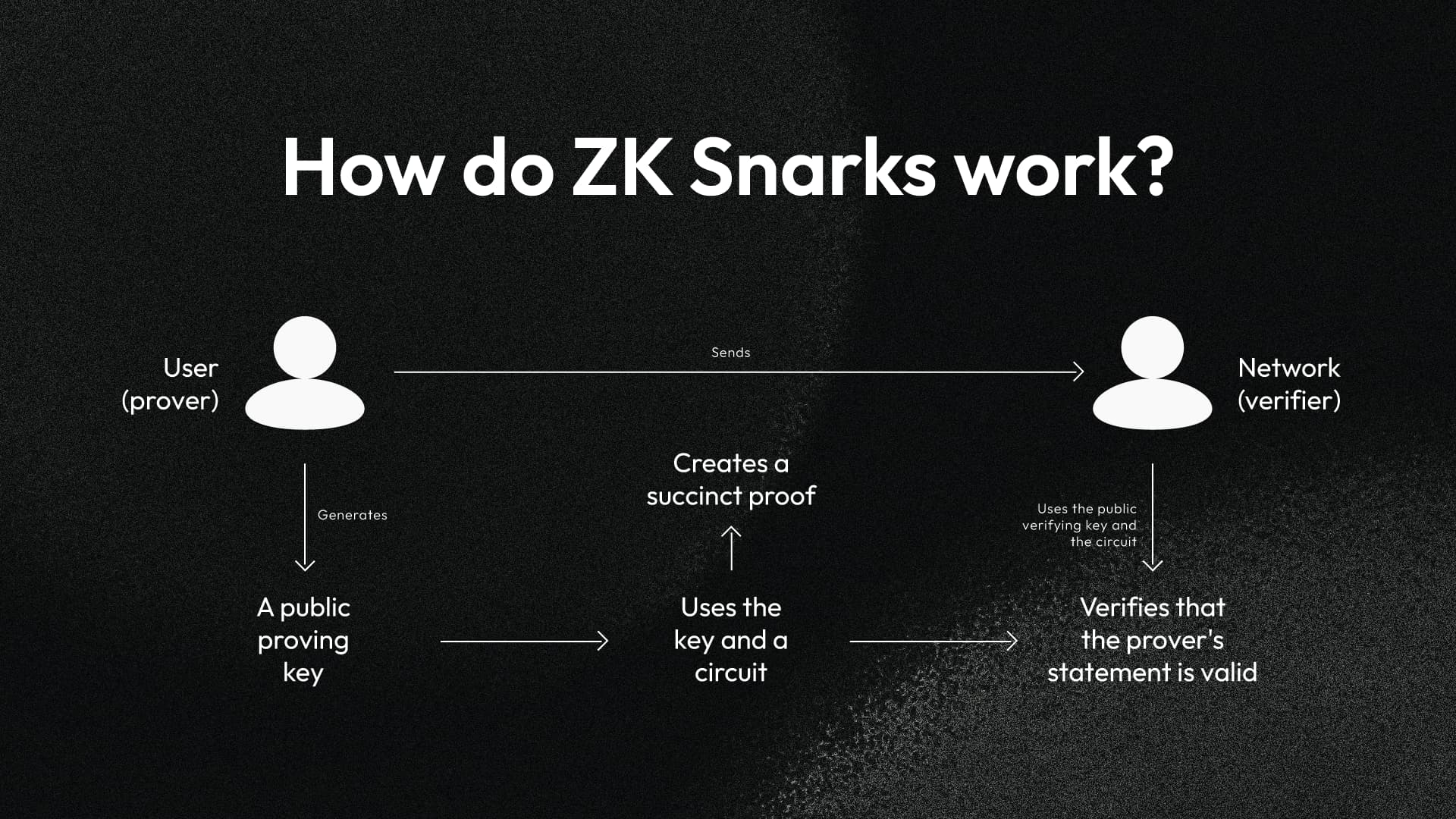
Defining zero-knowledge proofs in 2026
A zero-knowledge proof is a cryptographic method that allows one party to prove the validity of a statement without revealing the underlying data itself. The entity presenting the proof is called the "prover," while the entity verifying it is the "verifier." This mechanism ensures that the verifier gains no additional knowledge beyond the truth of the statement. As outlined by Ethereum.org, this foundational concept shifts the paradigm from sharing raw information to sharing only the evidence of its correctness.
Historically confined to academic research, zero-knowledge proofs have evolved into a critical infrastructure layer for data sovereignty. The ZKProof initiative, an open-industry academic effort, has been instrumental in mainstreaming this cryptography through rigorous, community-driven standards. By establishing clear protocols, ZKProof ensures that these proofs are not just theoretical constructs but reliable tools for real-world applications.
In the current landscape, this technology enables institutions to maintain strict data privacy while complying with regulatory requirements. For instance, financial entities can verify trading flows or customer identities without exposing sensitive transaction details. This capability addresses the growing demand for privacy-preserving verification in high-stakes environments, where data exposure carries significant risk. The shift from academic theory to practical application marks a pivotal moment in how we secure and validate digital interactions.
ZK-SNARKs versus emerging ZK protocols
The choice between ZK-SNARKs and newer protocols like ZK-STARKs or Plonk involves trade-offs in proof size, verification speed, and trust assumptions. ZK-SNARKs offer small proof sizes and fast verification but require a trusted setup, which introduces a potential point of failure if the initial parameters are compromised. In contrast, ZK-STARKs are quantum-resistant and do not require a trusted setup, but their larger proof sizes can impact bandwidth and storage costs. Plonk offers a middle ground with universal trusted setups and efficient proof generation.
| Factor | What to check | Why it matters |
|---|---|---|
| Fit | Match the option to the primary use case. | A good deal still fails if it does not fit the job. |
| Condition | Verify age, wear, and service history. | Hidden condition issues erase upfront savings. |
| Cost | Compare purchase price with likely upkeep. | The cheapest option is not always the lowest-cost option. |
The push for ZKProof standards
As zero-knowledge proofs move from experimental codebases to institutional infrastructure, the lack of a unified language has become a bottleneck. Without common standards, a proof generated by one cryptographic library cannot easily be verified by another, creating fragmented silos that undermine the very interoperability ZK technology promises. This is where bodies like ZKProof step in. They function as the architectural bridge, ensuring that the complex mathematics behind privacy-preserving computations can be reliably deployed across different blockchain networks and financial systems.
ZKProof operates as an open-industry academic initiative focused on mainstreaming zero-knowledge cryptography through community-driven rigor. Their work centers on establishing formal verification methods and standardized interfaces that allow different parties to trust the validity of a proof without needing to trust the generator. For financial institutions, this means that a proof of solvency or identity verification generated on one platform can be accepted by a counterparty on another, provided both adhere to the same standard. This reduces the security surface area by replacing custom, audited-only implementations with transparent, peer-reviewed protocols.
The distinction between a generic cryptographic proof and a standardized one is structural. As noted by Ethereum.org, a zero-knowledge proof allows a prover to demonstrate the validity of a statement without revealing the statement itself. However, standardization adds the layer of universal verifiability. It ensures that the "proof" is not just a local assertion but a globally accepted credential. This is critical for high-stakes finance, where regulatory compliance and audit trails require that every verification step is reproducible and mathematically sound across the entire ecosystem.
While other workshops and initiatives like the IEEE ZKDAPPS explore specific applications, ZKProof remains the primary authority on the foundational standards required for broad adoption. Their focus on interoperability directly addresses the institutional need for security and consistency. As the market matures, the ability to seamlessly integrate ZK proofs into existing financial rails will depend less on the speed of individual circuits and more on the strength of these overarching standards.
High-Stakes Applications in Finance and Identity
Zero-knowledge proofs are moving from experimental cryptography to the backbone of private financial infrastructure. By allowing parties to verify statements without revealing the underlying data, ZKPs resolve the core tension in digital finance: the need for transparency versus the requirement for privacy. This capability is reshaping how institutions handle sensitive trading data and how individuals assert control over their personal information.
Privacy-Preserving Trading
Institutional trading platforms face a structural dilemma. Traditional order books require public visibility to ensure liquidity, yet revealing large order sizes or trader identities exposes participants to front-running and market manipulation. ZKPs enable "blind" trading where the validity of a transaction is verified without exposing the price, volume, or counterparty details to the public ledger until settlement.
This technology allows high-frequency traders and institutional funds to execute complex strategies without leaking their order flow. According to industry analysis, this shift transforms the market structure by creating private liquidity pools that operate alongside public ones, offering a layer of protection that traditional encrypted order books cannot match without sacrificing speed. ZKProof standards are currently defining the cryptographic rigor required for these systems to achieve regulatory compliance.
Decentralized Identity and Data Sovereignty
Decentralized identity (DID) systems leverage zero-knowledge proofs to separate identity from data. Instead of sharing entire documents like passports or tax returns to prove eligibility, users generate a proof that confirms specific attributes—such as being over 18 or residing in a specific jurisdiction—without revealing the rest of the document.
This approach shifts data sovereignty from centralized authorities to the individual. As defined by ethereum.org, a zero-knowledge proof allows a prover to demonstrate the validity of a statement without revealing the statement itself. In practice, this means users can interact with financial services, healthcare systems, and government portals while maintaining a minimal data footprint, reducing the attack surface for identity theft.
No comments yet. Be the first to share your thoughts!