
The RWA Privacy-Compliance Paradox
Tokenizing real-world assets (RWA) introduces a fundamental tension between two non-negotiable requirements: regulatory transparency and institutional privacy. On one side, global compliance frameworks mandate rigorous Know Your Customer (KYC) and Anti-Money Laundering (AML) verification to prevent illicit activity. On the other, institutional investors demand strict confidentiality regarding their holdings and transaction histories to protect competitive advantages and proprietary strategies.
Traditional blockchain architectures fail to reconcile these opposing needs. Public ledgers expose transaction data to all participants, making it impossible to share proof of compliance without exposing identity or asset details. This lack of granularity has historically forced a choice between regulatory adherence and market privacy, stifling the broader adoption of tokenized securities.
Zero-knowledge proofs (ZKPs) resolve this conflict by enabling mathematical verification without data exposure. As defined by Ethereum.org, a zero-knowledge proof allows one party to prove the validity of a statement to another without revealing any information beyond the validity of the statement itself. In the context of RWA, this means a token holder can cryptographically prove they are a verified, accredited investor without disclosing their identity or the specific details of their trade to the public ledger.
This technical capability shifts the compliance model from one of public disclosure to one of cryptographic assurance. Regulators can audit the integrity of the compliance layer without accessing sensitive commercial data, while investors retain control over their private information. This balance is critical for scaling RWA markets, as it aligns the technological infrastructure with the legal and commercial realities of traditional finance.
ZK-rollups as the settlement layer
Zero-knowledge proofs 2026 implementations rely on ZK-rollups to function as the primary settlement layer for real-world asset (RWA) markets. This architecture addresses the fundamental tension between the high throughput required for financial transactions and the rigorous security guarantees demanded by regulatory compliance. By processing transactions off-chain and submitting succinct cryptographic proofs on-chain, ZK-rollups enable institutions to handle volume without compromising the integrity of the underlying ledger.
The mechanism operates through a clear division of labor. The rollup operator collects and executes thousands of transactions off-chain, maintaining a state tree that represents the current balance and ownership of assets. Once a batch is complete, the operator generates a zero-knowledge validity proof. This proof mathematically certifies that every transaction in the batch adhered to the protocol’s rules without revealing the underlying data. The proof is then posted to the mainnet, where the network verifies its correctness before updating the global state.
This process ensures that the security of the settlement layer is anchored to the base blockchain, typically Ethereum. The ZKProof initiative provides the academic and industry standards that govern these cryptographic protocols, ensuring that the proofs are both efficient and verifiable. For RWA markets, this means that compliance checks—such as identity verification or transaction limits—can be embedded into the proof generation process. The network validates that the rules were followed without exposing sensitive participant data, a capability that is becoming the new standard for digital privacy in regulated finance.
The efficiency of this layer is critical for high-volume asset classes. Traditional blockchains often struggle with congestion and high fees when processing complex financial instruments. ZK-rollups bypass these bottlenecks by compressing transaction data into a single proof. This allows for near-instant finality and significantly lower costs, making it feasible to tokenize and trade assets with high frequency.
The integration of ZK-rollups into the settlement layer represents a structural shift in how digital assets are secured. By decoupling computation from verification, these systems provide the scalability necessary for institutional adoption while maintaining the trustless security properties of blockchain technology. As the infrastructure matures, the reliance on succinct proofs will likely become the default for any RWA market requiring both privacy and auditability.
Privacy-preserving tokenization workflows
Tokenization bridges traditional asset ownership with blockchain infrastructure, but it introduces a compliance paradox: regulators require full identity verification, while investors demand financial privacy. Zero-knowledge proofs (ZKPs) resolve this by allowing on-chain systems to verify off-chain credentials without exposing the underlying data. As defined by Ethereum.org, a zero-knowledge proof is a method of proving the validity of a statement without revealing the statement itself. This capability is foundational for 2026 compliance frameworks, enabling selective disclosure where only necessary attributes are revealed to auditors.
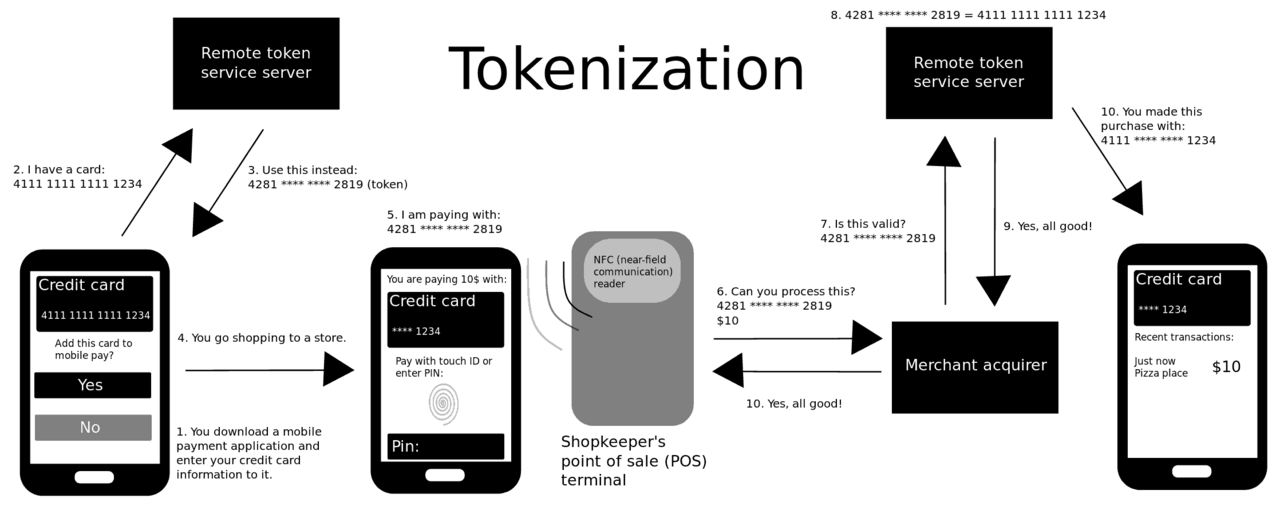
In a typical workflow, a user’s identity credentials—such as Know Your Customer (KYC) status or accreditation—are held in a secure, off-chain database managed by a trusted issuer. When the user interacts with a tokenized asset, they do not submit their passport or financial records. Instead, they generate a cryptographic proof using ZK-SNARKs or STARKs that demonstrates they meet specific criteria (e.g., "is over 18" or "is an accredited investor") without revealing their name, date of birth, or net worth. The blockchain verifier checks this proof and grants access if the conditions are met.
This architecture shifts the burden of proof from data transparency to cryptographic verification. Traditional ledgers require all transaction participants to be visible to ensure compliance, creating a single point of failure for privacy. ZK-verified ledgers, by contrast, maintain a private state while remaining fully auditable. Regulators can verify the integrity of the proof generation process without accessing the raw personal data, aligning technical execution with privacy regulations like GDPR.
| Feature | Traditional Transparent Ledger | ZK-Verified Ledger |
|---|---|---|
| Data Visibility | All participant data is public on-chain. | Only proof validity is public; data remains off-chain. |
| Regulatory Auditability | Requires full data access; high privacy risk. | Verifies compliance via cryptographic proofs; data stays private. |
| Investor Privacy | Minimal; identity is linked to wallet address. | High; selective disclosure reveals only necessary attributes. |
The use of ZK-SNARKs (Succinct Non-Interactive Arguments of Knowledge) and STARKs (Scalable Transparent Arguments of Knowledge) provides different trade-offs for tokenization. ZK-SNARKs offer smaller proof sizes and faster verification, which is beneficial for high-throughput tokenization platforms. STARKs, while producing larger proofs, offer quantum-resistant security and do not require a trusted setup, reducing the risk of systemic failure if the initial parameters are compromised. For legal and regulatory audiences, the choice between these technologies often hinges on long-term security guarantees and the specific computational costs of verification.
By decoupling identity from transaction history, privacy-preserving tokenization workflows allow institutions to participate in digital asset markets without sacrificing regulatory compliance. This approach ensures that zero-knowledge proofs 2026 implementations are not just technical novelties, but essential infrastructure for secure, compliant real-world asset trading.
Standardizing cryptographic protocols for regulatory alignment
As zero-knowledge proofs move from experimental cryptography to the backbone of real-world asset (RWA) infrastructure, the lack of uniform standards has emerged as a primary friction point for institutional adoption. In 2026, the focus of regulatory bodies has shifted from questioning the theoretical validity of ZKPs to demanding rigorous, standardized verification frameworks that ensure auditability and non-repudiation. Without these standards, a proof generated by one protocol may be unintelligible or unverifiable by another, creating silos that hinder the liquidity and transparency required by traditional finance.
Organizations such as ZKProof serve as the central nervous system for this standardization effort. As an open-industry academic initiative, ZKProof works to mainstream zero-knowledge proof cryptography by establishing formal verification protocols and security benchmarks. Their work ensures that the cryptographic primitives underpinning RWA tokenization meet the strict mathematical requirements necessary for legal scrutiny. By defining clear specifications for proof generation and verification, these bodies provide the technical certainty that regulators require to classify ZKPs as compliant evidence of asset ownership or transaction validity.
The integration of these standards is critical for non-repudiation. A standardized zero-knowledge proof must allow any third party—whether a compliance officer, an auditor, or a regulatory agent—to verify the truth of a statement without revealing the underlying private data. This capability transforms ZKPs from mere privacy tools into verifiable legal instruments. When protocols adhere to these established standards, they create a consistent language of trust, allowing regulators to audit the integrity of the blockchain layer without compromising the confidentiality of the assets it holds.
The Cost of Proof and Infrastructure Hurdles
The primary barrier to widespread adoption of zero-knowledge proofs 2026 is not theoretical but computational. Generating these proofs requires significant processing power, creating a high-stakes environment where infrastructure costs directly impact operational viability. While verification is efficient, the initial proof generation remains resource-intensive, necessitating specialized hardware and optimized software stacks.
Current market data reflects the volatility and cost structure associated with the underlying computational demands. As the industry matures, economies of scale are expected to reduce per-proof costs, but for now, organizations must account for substantial infrastructure investment.
This economic reality confines the technology to early-stage markets where the value of privacy and compliance justification outweighs the immediate operational expense. For legal and regulatory frameworks, understanding this cost curve is essential; it dictates which assets can realistically be tokenized with ZK privacy in the near term. Until hardware efficiency improves, the deployment of zero-knowledge proofs will remain selective, targeting high-value real-world assets where the compliance benefit is most acute.
Frequently asked: what to check next
How do zero-knowledge proofs satisfy KYC requirements without exposing user data?
Zero-knowledge proofs allow regulated entities to prove adherence to laws—such as anti-money laundering (AML) or know-your-customer (KYC) requirements—without revealing the underlying personal information. By generating cryptographic proofs of compliance, firms can satisfy regulatory audits while maintaining user privacy, a critical balance for real-world asset tokenization.
What is the difference between zero-knowledge proofs and traditional encryption?
Traditional encryption secures data by keeping it hidden from unauthorized parties, but requires decryption for verification. Zero-knowledge proofs, by contrast, allow one party to prove to another that a statement is true without revealing any information beyond the validity of the statement itself. This distinction is vital for regulatory verification where data minimization is required.
Are zero-knowledge proofs currently used in regulated markets?
Yes, pilot programs and early deployments are already active in several regulated markets. Institutions are testing ZK-based identity solutions and compliance tools to streamline reporting processes. While widespread adoption is still evolving, the technical infrastructure is mature enough for high-stakes financial applications.
No comments yet. Be the first to share your thoughts!