
What zero-knowledge proofs actually do
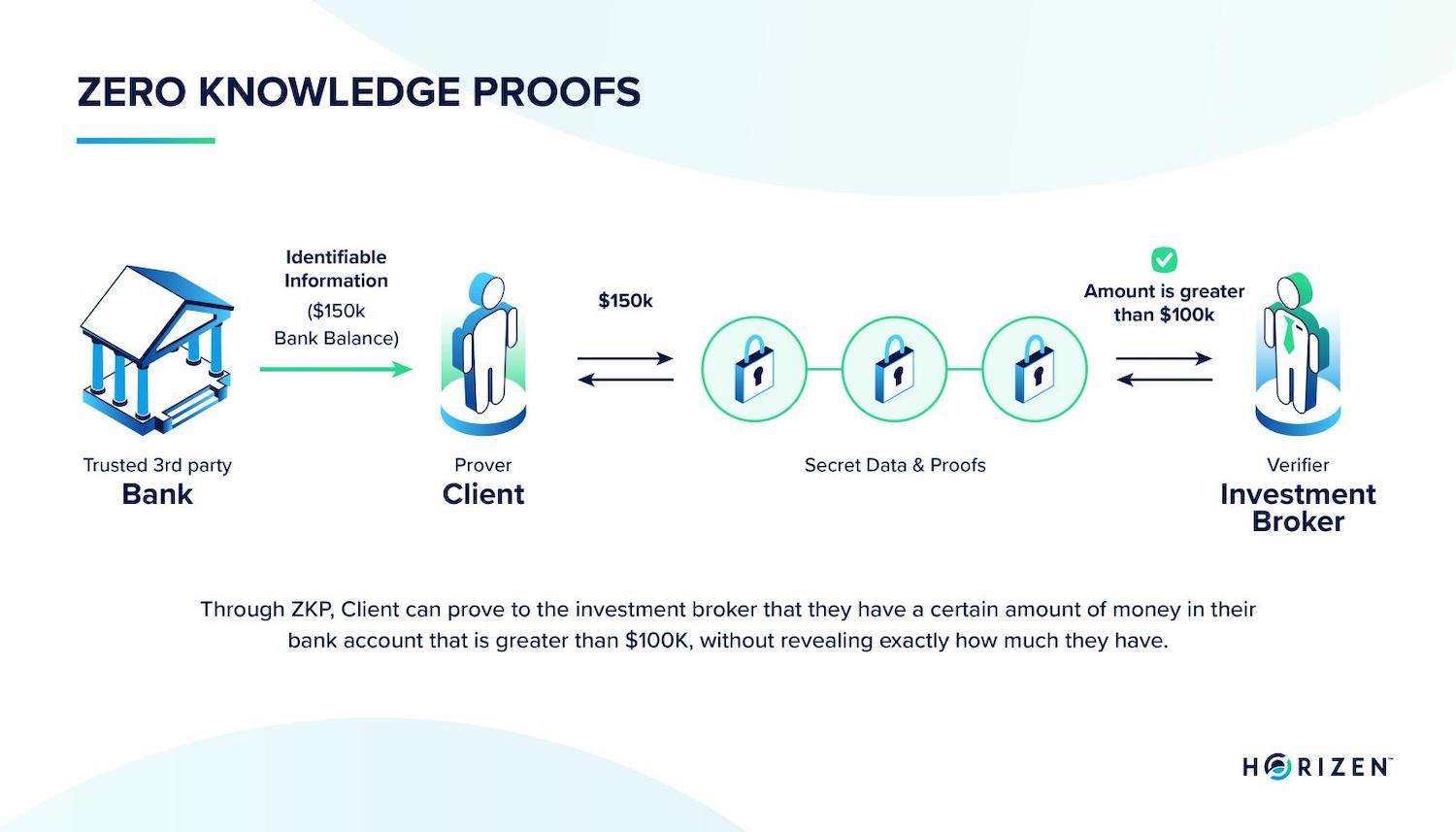
Zero-knowledge proofs (ZKPs) are a cryptographic method that allows one party to prove the validity of a statement without revealing the underlying data. In practical terms, they enable a "prover" to convince a "verifier" that a transaction is legitimate—such as confirming sufficient funds exist—without exposing the account balance or transaction history to the public ledger or third parties. This mechanism shifts the focus from sharing raw data to sharing mathematical proof of truth.
The technology operates on three core properties: completeness, soundness, and zero-knowledge. Completeness ensures that if the statement is true, an honest verifier will be convinced. Soundness guarantees that a cheating prover cannot trick the verifier into accepting a false statement. Finally, the zero-knowledge property ensures that the verifier learns nothing beyond the fact that the statement is true. This distinction is critical for enterprise privacy, where regulatory compliance often requires proof of solvency or identity without leaking sensitive customer information.
Note: Zero-knowledge proofs are distinct from zero-trust security models. While zero-trust is a security framework that verifies every user and device, ZKP is a cryptographic protocol for verifying specific data statements without disclosure.
For finance and enterprise applications, ZKPs function like a sealed envelope. You can prove you are over 21 to buy alcohol without showing your driver's license, which contains your address, name, and exact birth date. The verifier only sees the "yes" or "no" answer, not the personal data inside. This capability is increasingly vital as institutions seek to balance transparency with data protection, leveraging ZKPs to maintain privacy while ensuring auditability.
Zk-snarks vs zk-starks choices that change the plan
Enterprises choosing a zero-knowledge protocol must weigh proof size, verification speed, and long-term security. ZK-SNARKs and ZK-STARKs offer different tradeoffs that impact infrastructure costs and compliance readiness.
ZK-SNARKs (Succinct Non-interactive Arguments of Knowledge) produce small proofs and fast verification, making them ideal for high-throughput ZK-Rollups. However, they require a trusted setup ceremony, which introduces initial complexity. Their security relies on elliptic curve cryptography, which may be vulnerable to future quantum attacks.
ZK-STARKs (Scalable Transparent Arguments of Knowledge) eliminate the trusted setup requirement, offering transparency and quantum resistance. They use hash-based cryptography, which is considered post-quantum secure. The tradeoff is larger proof sizes and slower verification, which can increase data availability costs on layer-2 networks.
The table below compares the core technical attributes for enterprise evaluation.
| Feature | ZK-SNARKs | ZK-STARKs | Enterprise Impact |
|---|---|---|---|
| Proof Size | Small (~286 bytes) | Large (~60-100 KB) | SNARKs reduce data availability costs significantly. |
| Verification Speed | Fast | Slower | SNARKs enable faster finality for high-frequency transactions. |
| Trusted Setup | Required | Not Required | STARKs avoid initial ceremony risks and ongoing trust assumptions. |
| Quantum Resistance | No | Yes | STARKs protect long-term data privacy against quantum threats. |
| Cryptography | Elliptic Curves | Hash Functions | Hash-based STARKs are simpler to audit and implement. |
For privacy-focused applications where data integrity is paramount over speed, ZK-STARKs provide a more robust future-proof foundation. For consumer-facing applications requiring minimal latency and storage, ZK-SNARKs remain the industry standard for ZK-Rollups.
ZK-rollups scaling enterprise data
ZK-rollups function as a high-speed data highway, allowing enterprise applications to process thousands of transactions off-chain while settling the final state on a main blockchain. This architecture solves the scalability bottleneck that has historically limited blockchain adoption for business workloads. By grouping transactions into a single batch, the system dramatically reduces the computational load on the network.
The mechanism relies on zero-knowledge proofs to verify the integrity of these batches. A ZK-rollup generates a cryptographic proof that attests to the validity of all transactions within a block without revealing the underlying data. This allows the network to confirm that the transaction set is correct without needing to re-execute every individual step. As a result, throughput increases significantly while transaction costs drop, making enterprise-grade volume economically viable.
This approach is particularly valuable for sectors requiring both high speed and strict privacy. Financial institutions can process payments and clear trades without exposing sensitive client details to the public ledger. Healthcare providers can verify patient eligibility or insurance claims without leaking medical records. The proof acts as a seal of authenticity, ensuring that only valid, compliant transactions are recorded.
The market response to this capability has been substantial, with several projects developing specialized infrastructure for enterprise use. The following chart illustrates the price and volume activity of a major ZK-rollup token, reflecting the liquidity and investor confidence in this scaling solution.
The efficiency of ZK-rollups extends beyond simple payments. They enable complex smart contract interactions that were previously too expensive or slow for enterprise deployment. Developers can build applications that require frequent state updates, such as supply chain tracking or real-time inventory management, without incurring prohibitive gas fees. The cryptographic guarantees ensure that data remains private and tamper-proof, meeting the rigorous compliance standards of regulated industries.
Enterprise use cases for privacy
Enterprises are moving beyond theoretical demonstrations of zero-knowledge proofs (ZKPs) to implement concrete privacy solutions in identity verification, private transactions, and regulatory compliance. This shift allows organizations to validate sensitive data without exposing the underlying information, addressing the growing demand for data minimization in regulated industries.
Identity verification
Financial institutions and healthcare providers are using ZKPs to verify user attributes—such as age, creditworthiness, or medical eligibility—without storing or transmitting the actual personal documents. This approach aligns with the "privacy by design" principle, ensuring that even if a database is breached, the sensitive personal data remains protected. As noted in research from the Communications of the ACM, ZKPs are pivotal for digital identity systems where trust must be established without revealing the source of truth [1].
Private transactions
For enterprises requiring transactional privacy, ZKPs enable the validation of trade details on public or permissioned ledgers without exposing the amount, parties, or timing. The XRP Ledger’s recent integration of the Boundless ZK proving network exemplifies this trend, allowing native verification of ZK proofs to support private transactions on a public blockchain [2]. This capability is critical for institutional investors who need to execute large trades without signaling their intent to the broader market.
Compliance and auditing
Regulatory compliance often requires proof of adherence to laws, such as anti-money laundering (AML) or know-your-customer (KYC) standards. ZKPs allow enterprises to generate cryptographic proofs that they are compliant without disclosing customer identities or transaction histories to third-party auditors. This reduces the attack surface for data leaks while satisfying regulatory requirements. The technology effectively separates the "proof of compliance" from the "data of compliance," a distinction that is becoming standard in enterprise privacy architectures.
Frequently asked: what to check next
How do ZKPs differ from zero-trust security?
Zero-trust is a network security model that verifies every user and device before granting access. Zero-knowledge proofs are a cryptographic protocol used to verify specific data statements without revealing the data itself. They address different layers of security: zero-trust manages access control, while ZKPs manage data privacy and verification.
Why choose ZK-STARKs over ZK-SNARKs for enterprise use?
ZK-STARKs are preferred when quantum resistance and transparency are priorities because they do not require a trusted setup and use hash-based cryptography. ZK-SNARKs are chosen when proof size and verification speed are critical, such as in high-throughput rollups, despite requiring a trusted setup and relying on elliptic curve cryptography.
Can ZKPs be used for regulatory compliance like KYC/AML?
Yes. ZKPs allow enterprises to prove they meet regulatory standards (e.g., a user is over 18 or funds are not from illicit sources) without disclosing the underlying personal data or transaction history to auditors or the public ledger.
No comments yet. Be the first to share your thoughts!