

Soundness Labs has quietly notched a landmark achievement in the zero-knowledge proof ecosystem: over 1,000,000 Soundness ZK proofs generated and attested on-chain. This SoundnessLabs milestone isn't mere hype; it signals tangible progress toward privacy zk scaling at internet scale. In a field where zkVM provers still grapple with overheads nearing a million times native execution costs, hitting 1M on-chain proofs demonstrates real-world stress testing of decentralized verification infrastructure. Soundness Layer, their proof-agnostic network, emerges as a linchpin for building a verifiable internet zk foundation, where computations stay private yet fully auditable.
Decoding the 1M Proof Milestone
Reaching 1,000,000 proofs marks more than a vanity metric. Each proof attests to a computation's correctness without exposing inputs, a core tenet of zero-knowledge protocols. Soundness Labs' infrastructure handled this volume across diverse chains, underscoring its robustness. Consider the context: traditional zkVMs demand enormous resources, where a simple program ballooning to a million cycles hampers scalability. Yet Soundness Layer proves otherwise, delivering fast, modular verification that sidesteps these pitfalls.
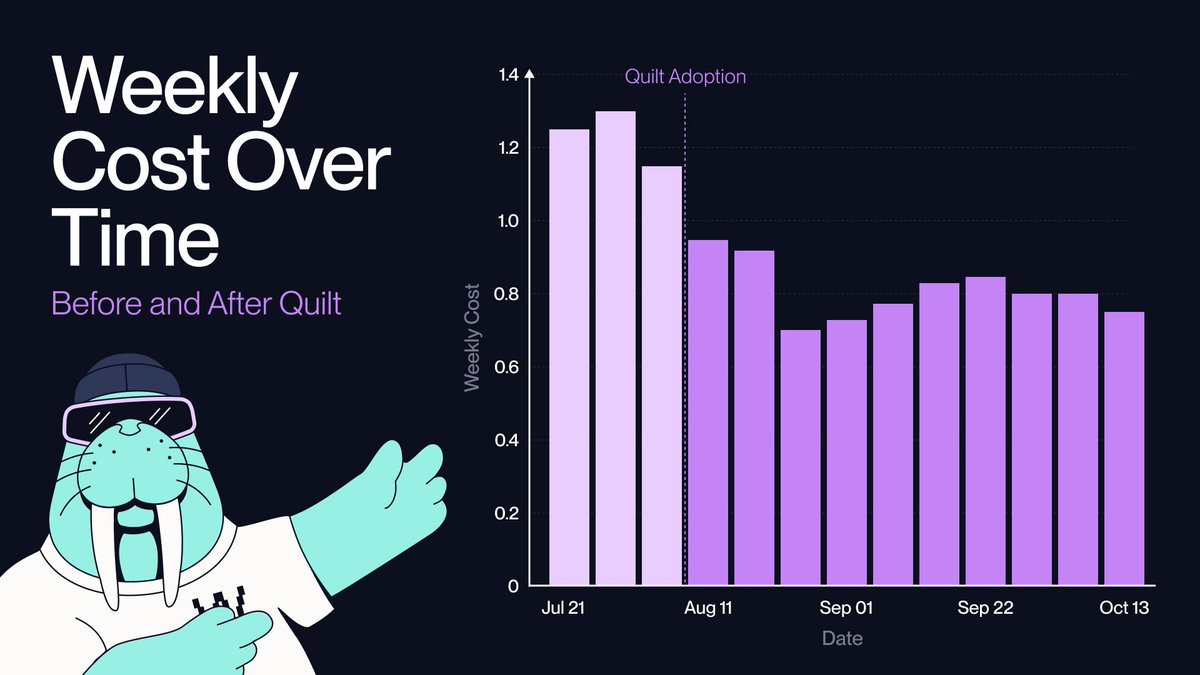
This feat arrives amid broader ZK momentum. Communities buzz with recognition; the Soundies group on X, now at 3.7K members, frames it as a pivotal step beyond numbers, toward reliable privacy layers. For developers and blockchain engineers, it translates to feasible on-chain attestation without prohibitive gas fees or centralization risks. In essence, 1M on-chain proofs validate Soundness' claim to efficiency, potentially slashing costs like the projected $18 million annual storage savings at full scale.


Soundness Layer: Proof-Agnostic Verification Redefined
At the heart lies Soundness Layer, a fully decentralized network engineered for any ZK proof system. Unlike siloed solutions tied to specific curves or schemes, it offers agnostic verification, making it a versatile middleware for blockchains. This modularity shines in high-throughput scenarios, where proofs from tools like SP1 integrate seamlessly.
Privacy advocates appreciate how it upholds soundness - the cryptographic guarantee that invalid proofs fail verification. Educational value here is profound: ZK proofs shift heavy computation off-chain while anchoring trust on-chain, ideal for DeFi privacy or enterprise data processing. Soundness Layer amplifies this by distributing verification nodes, mitigating single points of failure and enhancing resilience. My take? In Web3's maturing landscape, such infrastructure prioritizes long-term stability over flashy tokenomics, echoing sound financial principles.
Tracking progress against zkVM benchmarks reveals optimism. While overheads persist industry-wide, Soundness' 1M milestone hints at convergence toward practical usability, perhaps halving prover costs in coming iterations.
Partnerships Fueling Privacy Scaling
Soundness Labs isn't operating in isolation. Their August 2025 tie-up with Linera integrates microchain architecture, optimizing ZK attestations for speed and parallelism. Microchains enable granular, efficient proof handling, a boon for high-volume applications.
Earlier, in February 2025, collaboration with Succinct brought SP1 proofs to Sui Network. Sui developers now verify these proofs on-chain effortlessly, democratizing ZK without cryptographic PhDs. This bridges generation efficiency with scalable verification, crucial for dApps in gaming, AI, or confidential compute.
These alliances position Soundness as a dark horse in ZK space. By fostering interoperability, they pave the way for a unified verifiable internet zk, where privacy scales horizontally across ecosystems. For institutional finance eyeing Web3, this means confidential portfolio tools without data leaks, aligning with conservative risk management.
Yet challenges linger. Prover centralization and latency in aggregation demand vigilance. Soundness' trajectory, however, suggests they're tackling these head-on, with 1M proofs as empirical proof.




No comments yet. Be the first to share your thoughts!