
What zero-knowledge proofs deliver in 2026
Zero-knowledge proofs (ZKPs) have shifted from theoretical cryptography to the backbone of Web3 infrastructure. At their core, they allow one party to prove a statement is valid without exposing the raw information behind it. This capability solves the fundamental tension in blockchain: how to verify transactions without exposing sensitive user information on a public ledger.
In 2026, ZKPs are no longer just a privacy tool; they are the critical infrastructure for scaling and security. By generating a succinct proof that a computation was executed correctly, blockchains can verify millions of transactions off-chain while maintaining the security guarantees of the main chain. This is the mechanism powering ZK-rollups, which handle the heavy lifting of data processing.
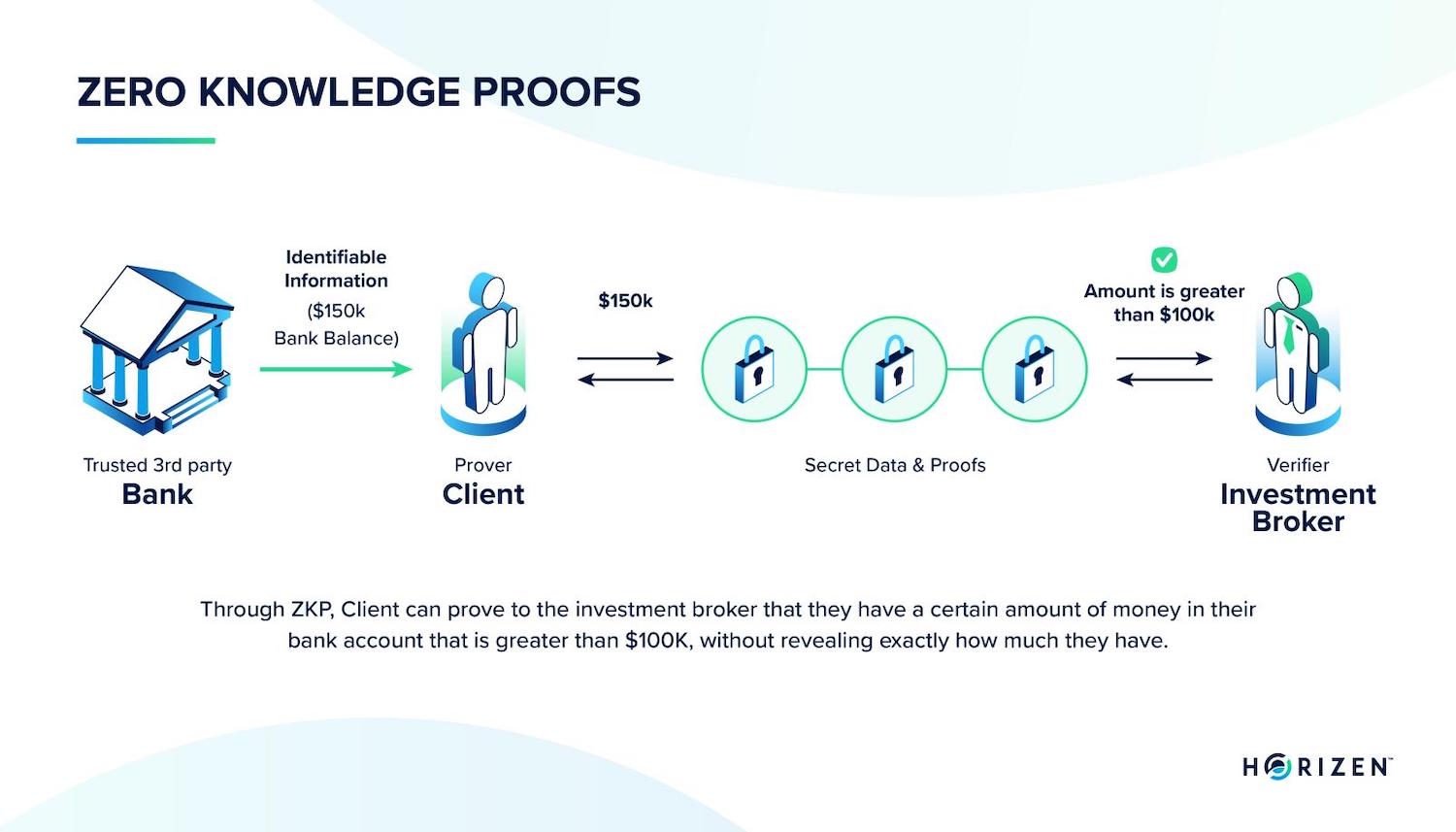
The practical application is clear. Users can prove they have sufficient funds to complete a transaction, or that they meet age requirements for a service, without broadcasting their balance or identity to the entire network. As Ethereum and other networks integrate ZK-technology natively, the focus remains on making these proofs faster and cheaper to generate, ensuring privacy becomes a default feature rather than an opt-in luxury.
ZK-rollups vs. other privacy layers
The 2026 Web3 landscape is defined by a tension between scalability and confidentiality. While ZK-rollups have emerged as the dominant scaling layer for Ethereum, they are not the only approach to handling transaction privacy and throughput. Understanding how ZK-rollups compare to optimistic rollups and privacy-focused mixers is essential for selecting the right infrastructure for specific use cases.
ZK-rollups process transactions off-chain and submit a succinct cryptographic proof to the main chain. This method ensures that validity is verified without exposing the raw information behind it, offering strong privacy guarantees alongside high throughput. In contrast, optimistic rollups assume transactions are valid unless challenged, which can introduce latency in dispute resolution and often relies on transparency unless paired with additional privacy layers. Meanwhile, privacy mixers like Tornado Cash focus exclusively on obfuscating transaction origins but do not provide the scalability benefits of rollups, making them complementary rather than competitive tools.
The following table compares these three approaches across key dimensions relevant to 2026 adoption.
| Feature | ZK-rollups | Optimistic Rollups | Privacy Mixers |
|---|---|---|---|
| Privacy Level | High (data hidden) | Low (data visible) | High (obfuscated) |
| Scalability | High | Medium | None |
| Finality Speed | Fast | Slow (7-day window) | N/A |
| Trust Model | Cryptographic | Economic (challenges) | Smart Contract |
The choice between these solutions depends on whether the priority is speed, privacy, or cost. ZK-rollups offer the best balance for applications requiring both scale and confidentiality. Optimistic rollups remain suitable for high-value transactions where the extended dispute window is acceptable. Mixers serve niche privacy needs but lack the utility of a full scaling layer.
Real-world privacy use cases
Zero-knowledge proofs are moving from theoretical cryptography into active infrastructure. The European Union’s eIDAS Regulation, set to take effect in 2026, is driving the adoption of ZKPs for age assurance and identity verification. This shift allows users to prove they meet legal requirements—such as being over a certain age—without exposing their birthdate or government ID.
Identity verification
Traditional KYC (Know Your Customer) processes require uploading sensitive documents to centralized servers, creating a single point of failure for data breaches. ZKPs allow a user to generate a proof that they possess a valid credential issued by a trusted authority, without exposing the raw information behind it. Google has contributed open-source ZKP libraries to support this specific use case, enabling developers to build privacy-preserving age verification systems that comply with emerging regulations.
Payments and transactions
In the financial sector, ZKPs enable transaction privacy on public blockchains. Unlike traditional banking, where transaction history is visible to the institution, ZK-rollups can validate that a transaction is legitimate without exposing the sender, receiver, or amount to the public ledger. This maintains the transparency required for auditability while protecting user financial privacy. The following chart illustrates the broader market context for the underlying assets often used in these privacy-preserving transactions.
Governance and voting
Decentralized governance systems use ZKPs to prevent vote manipulation and ensure one-person-one-vote integrity. A user can prove they are eligible to vote and that their vote was counted correctly, without exposing their specific choice or identity. This prevents coercion and vote-buying, which are significant risks in transparent voting systems. By keeping the vote secret while proving its validity, ZKPs create a more secure and equitable governance model.
Standardization and trust models
As ZK-rollups move from experimental tech to core infrastructure, the absence of unified standards becomes a systemic risk. In 2026, security no longer depends solely on mathematical elegance but on rigorous, community-vetted protocols. ZKProof serves as the primary industry body driving this standardization, ensuring that different implementations can interoperate securely.
ZKProof is an open-industry academic initiative that brings together over 1,000 practitioners to mainstream zero-knowledge proof cryptography. Their work focuses on creating inclusive, community-driven standards that prevent fragmentation. Without these benchmarks, developers risk building isolated silos that cannot communicate or share security assumptions across chains.
The importance of this coordination is evident in the growing frequency of global summits, such as the recent ZKProof 8 event in Rome. These gatherings allow researchers and engineers to align on proof systems, verification speeds, and privacy guarantees. This collective effort transforms ZK technology from a niche cryptographic tool into a reliable, standardized component of the broader Web3 ecosystem.
| Standard Body | Primary Focus | 2026 Status |
|---|---|---|
| ZKProof | Community-driven ZKP standards | Active, 1000+ practitioners |
| EIP-4844 | Proto-Danksharding data availability | Implemented on Ethereum |
| IETF ZK-DAP | Privacy-preserving data access protocols | Early draft stage |
Choosing the right ZK solution
Selecting a zero-knowledge implementation requires balancing proof speed, verification cost, and hardware accessibility. There is no single best protocol; the right choice depends on whether you are building a high-throughput rollup, a private identity layer, or a low-cost micro-transaction system.
ZK-Rollups for Scaling
ZK-Rollups are the most mature application for scaling Ethereum. They bundle transactions off-chain and submit a single validity proof to the main chain. This approach offers the highest security guarantees because the Ethereum Virtual Machine (EVM) directly verifies the proof. However, generating these proofs is computationally expensive and requires specialized hardware.
STARKs vs. SNARKs
The choice between STARKs (Scalable Transparent Arguments of Knowledge) and SNARKs (Succinct Non-Interactive Arguments of Knowledge) hinges on trust assumptions and proof size. SNARKs produce smaller proofs and verify faster but often require a trusted setup. STARKs are quantum-resistant and do not need a trusted setup, but their proofs are larger and verification is slower. For most current applications, SNARKs remain the standard for efficiency.
ZK-SNARKs for Privacy
When privacy is the primary goal, such as in mixers or private identity verification, ZK-SNARKs are often preferred due to their compact size. They allow users to prove they meet certain criteria (e.g., age > 18) without exposing the raw information behind it. This makes them ideal for compliance-heavy use cases where minimal data exposure is critical.
Decision Framework
Start by defining your primary constraint. If you need maximum throughput and security, choose a ZK-Rollup with SNARKs. If you require quantum resistance and transparency, opt for STARKs. For simple privacy proofs where proof size matters, SNARKs are typically sufficient. Always test your chosen circuit against the target verifier's gas limits before deployment.
No comments yet. Be the first to share your thoughts!