
The 2026 ZK Landscape
Zero-knowledge proofs have moved from academic papers to the backbone of blockchain infrastructure. In 2026, the focus is no longer on whether ZK technology works, but on how efficiently it scales. The primary driver of this shift is the ZK-rollup, which bundles thousands of transactions off-chain and submits a single cryptographic proof to the main chain.
This approach solves the scalability trilemma by keeping data availability high while reducing costs. Major networks like Ethereum rely on these rollups to handle throughput that would otherwise congest the base layer. The technology is now standardized through initiatives like ZKProof, which ensures interoperability and security across different implementations.
The underlying asset, Ethereum, continues to serve as the settlement layer for these proofs. Its market performance often reflects the broader adoption of ZK technology, as increased network usage drives demand for block space.
The transition from theory to practice has lowered the barrier for developers. Instead of building custom cryptography, teams can now use standardized circuits and tools. This standardization is critical for enterprise adoption, where security audits and compliance are non-negotiable. As the ecosystem matures, we see a clear divide between experimental ZK applications and production-ready ZK-rollups that handle real value.
Snarks vs starks: architectural choices that change the plan
Choosing between ZK-SNARKs and ZK-STARKs is a foundational architectural decision for 2026 scalability. The difference is not merely academic; it dictates gas costs, deployment complexity, and long-term security assumptions. As the network matures, the tradeoff shifts from pure speed to trust minimization and quantum resilience.
SNARKs (Succinct Non-Interactive Arguments of Knowledge) have dominated the early ZK-rollup landscape. They offer exceptionally small proof sizes and fast verification, making them ideal for Ethereum L2s where on-chain gas efficiency is paramount. However, this efficiency comes with a cost: the need for a trusted setup. This initial ceremony creates a temporary point of failure, requiring participants to generate and securely destroy "toxic waste" (randomness). If this setup is compromised, attackers could forge proofs without detection.
STARKs (Scalable Transparent Arguments of Knowledge) eliminate the trusted setup entirely, relying instead on publicly verifiable randomness. This transparency removes the single point of failure inherent in SNARK ceremonies. Additionally, STARKs are post-quantum secure, meaning their security relies on hash functions rather than elliptic curve cryptography, which is vulnerable to future quantum computing advances. The tradeoff is that STARK proofs are significantly larger, leading to higher data availability and verification costs on-chain.
The following table compares the core technical attributes of both proof systems.
| Attribute | ZK-SNARK | ZK-STARK |
|---|---|---|
| Proof Size | Small (KB range) | Large (MB range) |
| Verification Speed | Fast | Slower |
| Trusted Setup | Required | Not Required |
| Quantum Resistance | No | Yes |
| Cryptography | Elliptic Curves | Hash Functions |
For 2026 implementations, the choice often depends on the specific use case. ZK-SNARKs remain the standard for high-throughput consumer applications where gas costs must be minimized, such as payment networks or social media rollups. The smaller proof size allows for cheaper batch verification. However, for applications requiring long-term auditability and resistance to quantum threats, ZK-STARKs are becoming the preferred choice despite their higher overhead.
The market is responding to these technical distinctions. Projects like StarkNet have built entire ecosystems around STARK technology, prioritizing transparency and quantum readiness. Meanwhile, solutions like zkSync and Scroll continue to optimize SNARK-based architectures for maximum efficiency. As quantum computing capabilities advance, the window for transitioning to quantum-resistant STARKs may narrow, making the initial setup decision critical.
ZK-Rollups Scaling Ethereum
ZK-rollups solve Ethereum’s congestion by moving transaction execution off-chain while anchoring security to the mainnet. A ZK-rollup bundles hundreds of transactions into a single batch, generates a cryptographic proof that verifies every transaction in that batch, and submits the proof to an Ethereum smart contract. The contract validates the proof and updates the state, ensuring that the off-chain data remains accurate without requiring every node to re-execute every transaction.
This approach differs fundamentally from optimistic rollups, which assume transactions are valid unless challenged. ZK-rollups rely on mathematical certainty rather than dispute periods. The cryptographic proof acts as a guarantee: if the proof is valid, the state transition is correct. This eliminates the need for users to wait for fraud-proof windows to withdraw their funds, significantly improving capital efficiency and user experience.
The primary benefit is throughput. By compressing data and validating it with succinct proofs, ZK-rollups can process thousands of transactions per second compared to Ethereum’s base layer limit. Gas costs drop because the expensive computation is shared across the batch. Users pay a fraction of the cost while inheriting Ethereum’s security model. As Ethereum.org explains, zero-knowledge proofs allow the verification of validity without revealing the underlying data, making them ideal for scaling while preserving privacy.
The trade-off lies in computational complexity. Generating ZK proofs requires significant processing power, often referred to as the prover overhead. While verification on-chain is cheap, creating the proof can be resource-intensive. However, hardware advancements and circuit optimizations continue to reduce this cost, making ZK-rollups increasingly viable for high-frequency applications like decentralized exchanges and gaming.
Privacy and Identity Use Cases
Zero-knowledge proofs are moving beyond simple transaction scaling to solve fundamental privacy problems in decentralized identity and compliance. By allowing users to prove attributes—such as age, citizenship, or creditworthiness—without revealing the underlying data, ZKPs create a framework for trust that doesn't require exposing personal information.
Decentralized Identity Verification
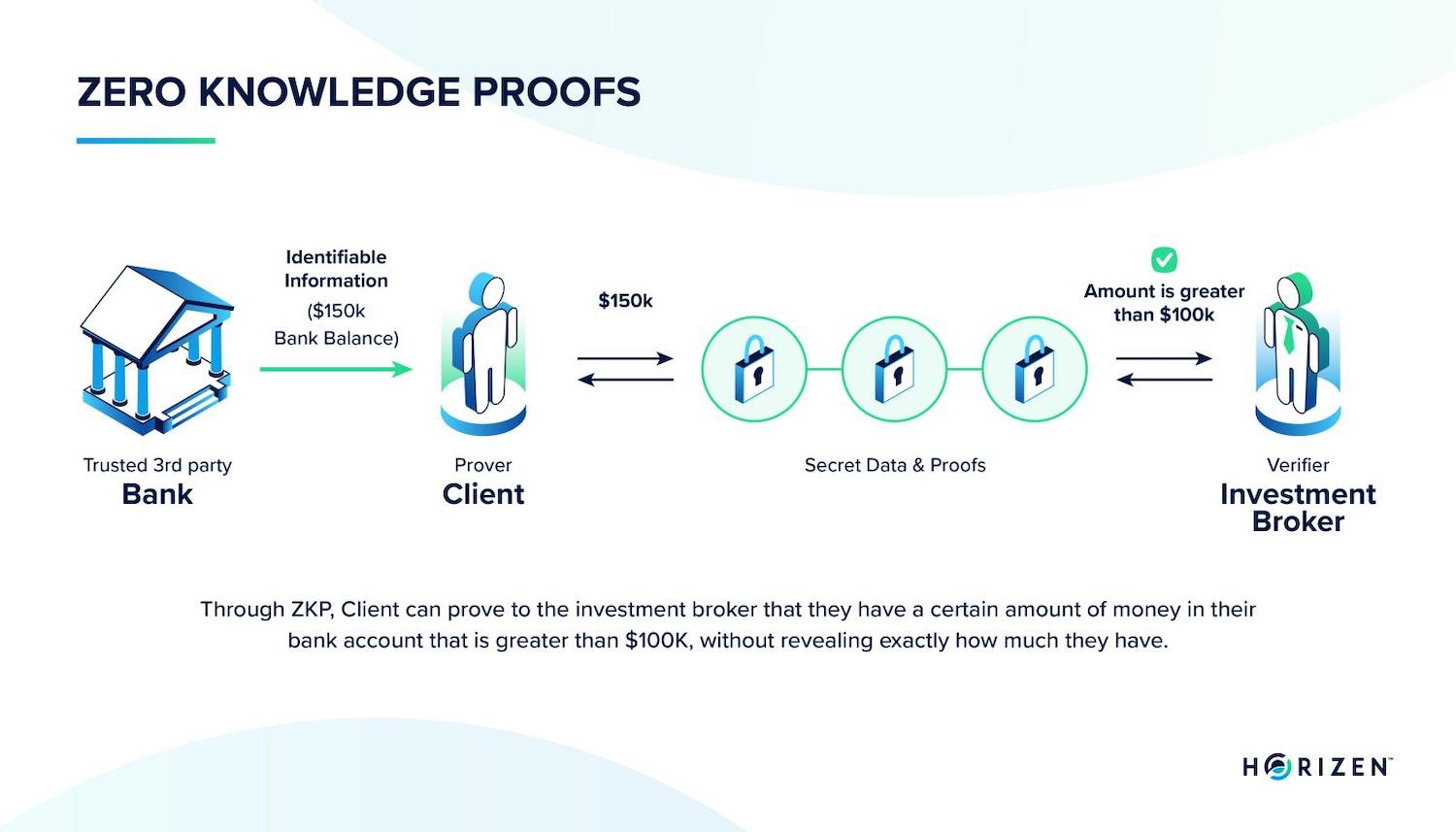
The most immediate impact of ZKPs is in age assurance and identity verification. Traditional KYC (Know Your Customer) processes often require users to upload sensitive documents, creating centralized honeypots for data breaches. ZKPs allow a user to generate a cryptographic proof that they meet a specific criteria, such as being over 18, without disclosing their birth date or government ID.
This capability is becoming critical as regulations tighten. The European Union's eIDAS 2.0 regulation, set to take effect in 2026, mandates strong customer authentication and secure digital identity frameworks. Tech giants like Google are already responding by open-sourcing ZK libraries specifically designed for age assurance, aligning technical infrastructure with impending legal requirements.
Regulatory Alignment: The shift toward ZK-based age verification is not just a privacy preference; it is a compliance necessity as global regulations like eIDAS 2.0 come into force.
Privacy-Preserving Transactions
While ZK-Rollups handle scalability, ZKPs also enable privacy-preserving transactions where the amount and participants remain confidential. This is distinct from the transparency of standard blockchains, where every transaction is visible. In financial contexts, this allows institutions to verify solvency or transaction validity without exposing their entire ledger to competitors or the public.
This dual-use model—scaling throughput while protecting data—positions ZKPs as the backbone for the next generation of financial applications. As the ecosystem matures, we expect to see more standardized protocols for identity verification that work seamlessly across different blockchains, reducing friction for users who currently have to manage multiple identity silos.
Standardization and Trust
Zero-knowledge proofs are only as strong as the trust placed in their underlying mathematics. For high-stakes financial adoption, relying on custom, unverified implementations is unacceptable. The industry now looks to bodies like ZKProof to establish rigorous, community-driven standards that ensure security and interoperability across different protocols.
ZKProof operates as an open-industry academic initiative, bringing together over 1,000 practitioners to mainstream ZKP cryptography. Their work focuses on formal verification and standardized proof systems, reducing the risk of implementation errors that could lead to catastrophic financial losses. By adhering to these standards, developers can build systems that are not just functional, but provably secure.
This standardization is critical for interoperability. When different ZK-Rollups and layer-2 solutions follow common protocols, assets and data can move seamlessly between them. This creates a cohesive ecosystem rather than a fragmented set of isolated chains. The upcoming ZKProof 8 event in Rome in May 2026 will further solidify these standards, bringing the community together to address the next wave of scalability challenges.
Without such rigorous oversight, the promise of privacy and scalability remains theoretical. Standardization turns theoretical cryptography into practical, trustworthy infrastructure for global finance.
No comments yet. Be the first to share your thoughts!