

In the evolving landscape of Ethereum layer-2 solutions, Fhenix stands out with its FHE Coprocessor, known as CoFHE, delivering confidential smart contracts at speeds up to 50 times faster. This breakthrough addresses a core tension in blockchain privacy: balancing robust encryption with practical performance. As institutional interest in private DeFi grows, Fhenix FHE integration offers a conservative path to scaling encrypted computations on Arbitrum and beyond, without compromising EVM compatibility.

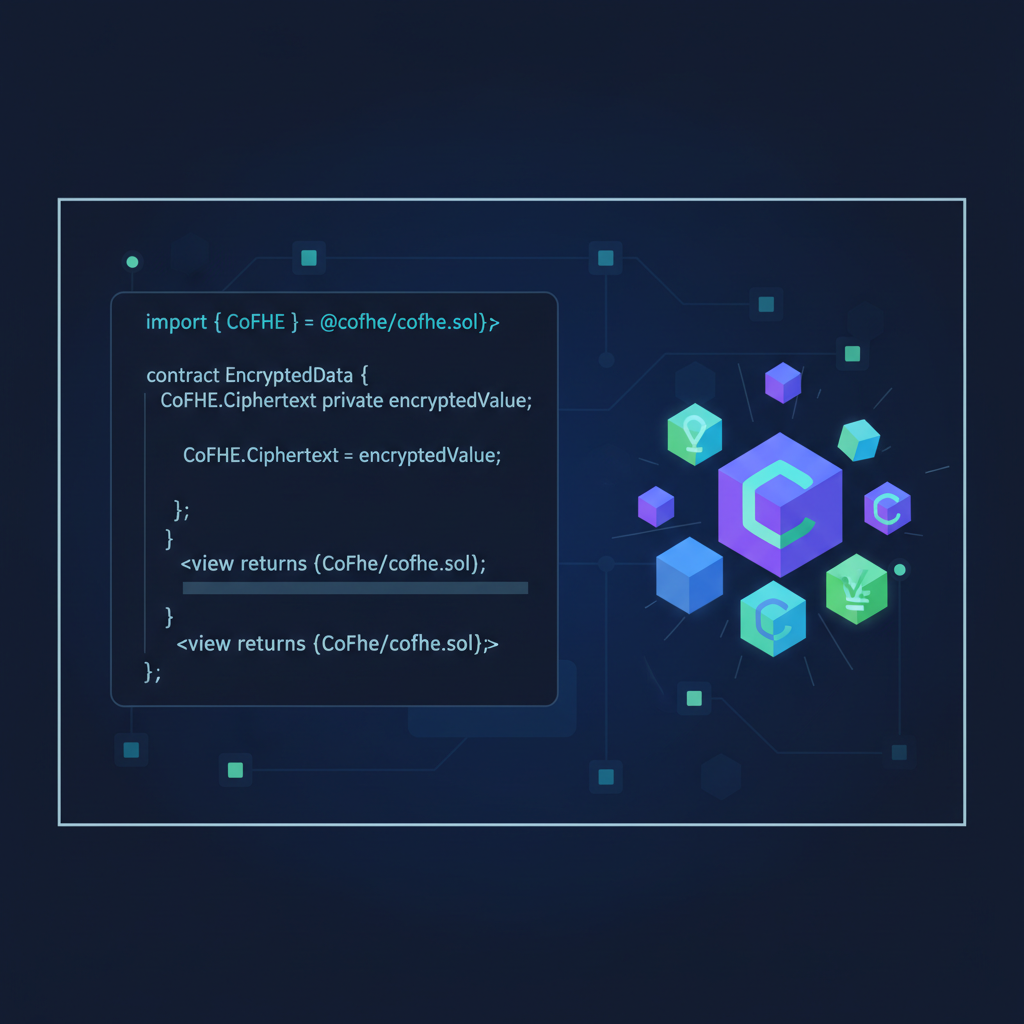
Fully Homomorphic Encryption (FHE) has long promised computation on encrypted data, a holy grail for Web3 privacy. Yet, its computational intensity has confined it to theoretical realms or trusted off-chain setups. Fhenix flips this script by offloading heavy FHE operations to CoFHE, an off-chain layer that processes encrypted payloads while the blockchain verifies proofs. Developers access this via a single Solidity import, enabling confidential smart contracts on Ethereum that shield sensitive inputs like bids or balances from MEV bots and front-runners.
CoFHE's Architecture: Seamless Integration Without Forks
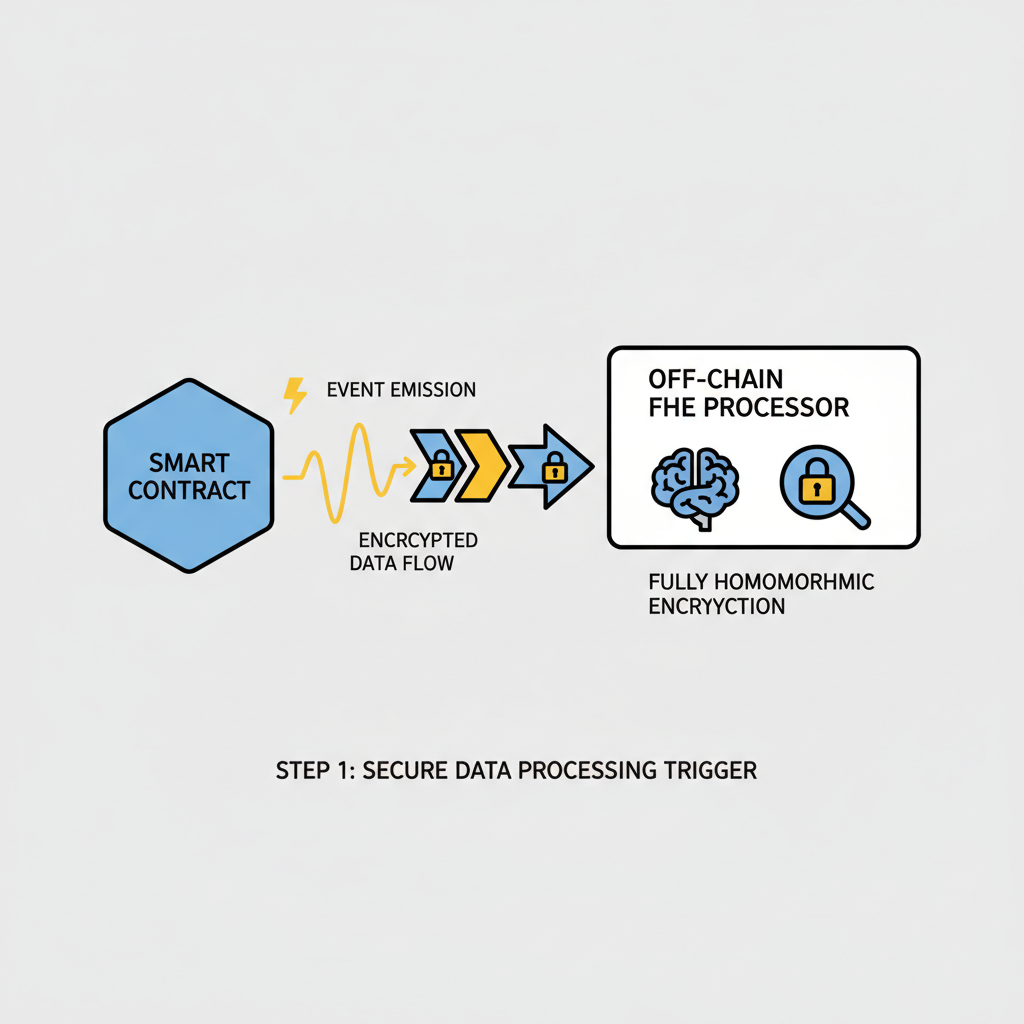
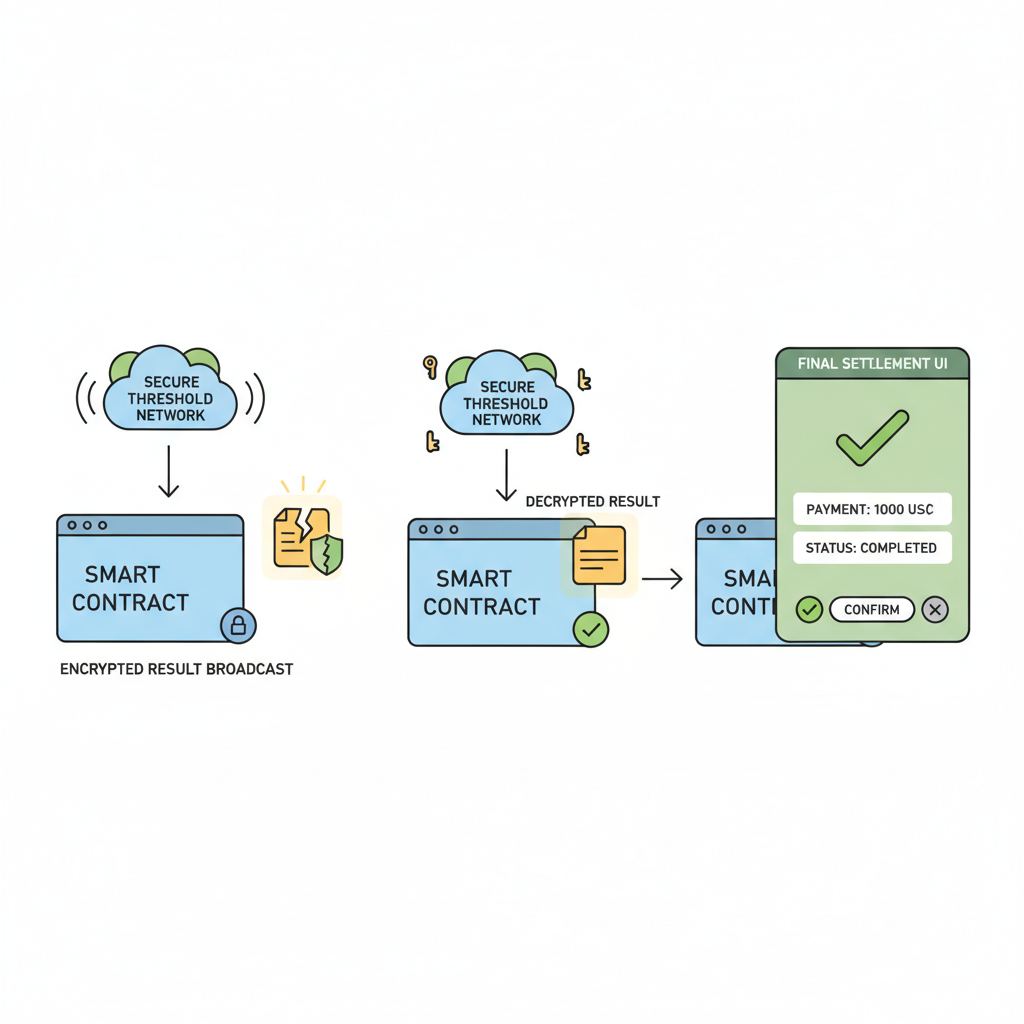
The elegance of CoFHE lies in its minimalism. Smart contracts emit an event signaling FHE needs; CoFHE's engine detects it, computes on ciphertexts, and returns verifiable results. No sidechains, no state forks, just encrypted payloads on-chain. This preserves Ethereum's composability while extending FHE to L2s like Arbitrum and Base. From a macro perspective, as financial cycles favor privacy amid regulatory scrutiny, such infrastructure correlates strongly with adoption in enterprise DeFi.
Security anchors in optimistic mechanisms and EigenLayer staking. Operators stake ETH to attest computations; disputes resolve on-chain with zero-knowledge proofs or fraud proofs. Data stays encrypted end-to-end, decryptable only by authorized threshold networks. This setup resists manipulation, offering verifiability without bloating L2 gas costs.
From Theory to Practice: One-Line Encrypted Computations
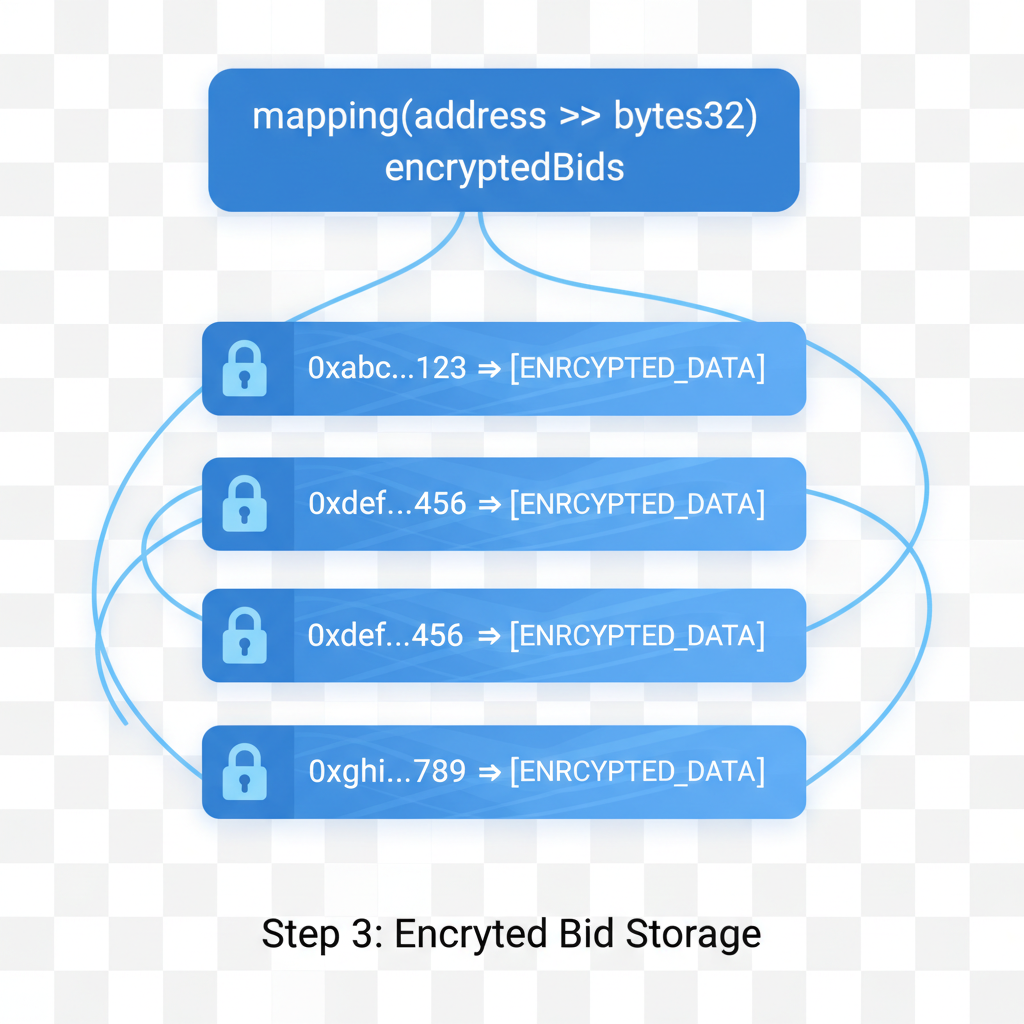
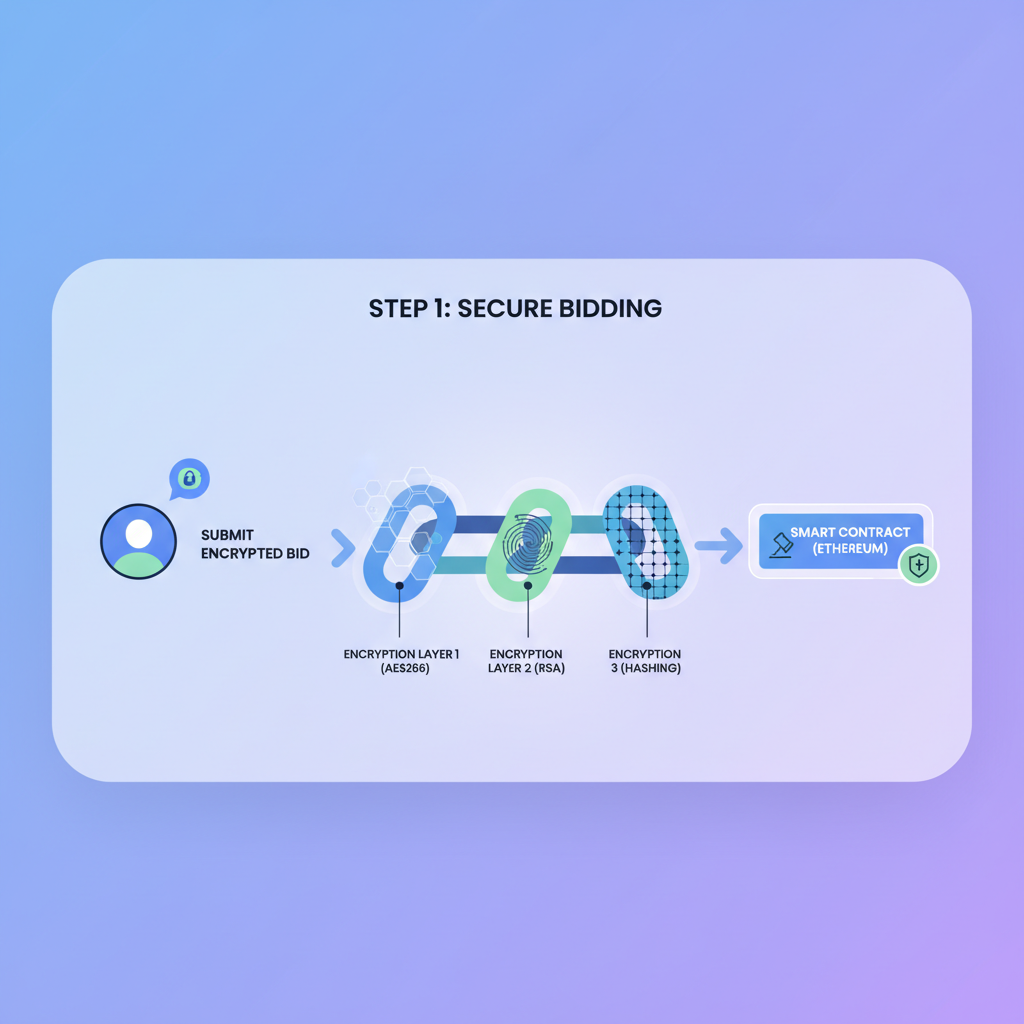
EVM developers integrate CoFHE effortlessly. Consider a private auction: encrypt bids off-chain, emit to CoFHE for comparison, reveal winner privately. Gas remains low since only proofs settle on-chain. Live on Ethereum mainnet and Arbitrum, it supports real-time use cases like private DeFi on Fhenix, from intents to Uniswap v4 hooks hiding parameters.
This simplicity democratizes FHE Ethereum L2 access. Traditional FHE demands custom circuits or heavy pre-processing; CoFHE abstracts it, yielding decryption 50x faster than peers. Benchmarks show sub-second latencies for complex ops, crucial for high-frequency trading or governance votes where privacy prevents collusion.
Performance Edge in Confidential DeFi
Fhenix's 50x speedup stems from optimized TFHE schemes and distributed decryption. On-chain footprints shrink to kilobytes per tx, versus megabytes in naive FHE. For MEV protection via FHE, this means encrypted intents execute without leakage, fostering fairer order flow on L2s. Ecosystem tools like SDKs extend to confidential RFQs or lending, positioning Fhenix as bedrock for sovereign-grade finance.
Conservatively, while ZK proofs dominate scalability, FHE via CoFHE fills the confidentiality gap. It enables computations impossible with selective disclosure, like private order matching. As cycles turn toward privacy premiums, Fhenix's traction on Arbitrum signals institutional readiness, with Base support accelerating developer momentum.
Recent expansions to Base underscore this momentum, allowing developers to deploy encrypted computations on Arbitrum and beyond with identical primitives. Threshold decryption networks ensure outputs reach only intended recipients, preserving confidentiality in multi-party scenarios like syndicated loans or private DAOs.
Integrate CoFHE: Confidential Bidding in Solidity
Developer Tools: SDKs and Hooks for Private DeFi
Fhenix's ecosystem SDKs streamline encrypted inputs for intents and RFQs, integrating seamlessly with Uniswap v4 hooks to mask swap parameters. This yields private DeFi on Fhenix applications resistant to predatory MEV, where bots cannot snipe orders based on visible data. A confidential RFQ protocol, for instance, matches liquidity privately, settling only commitments on-chain. Such primitives align with maturing L2 liquidity pools, where privacy becomes a moat against extraction.
From an investor's lens, these tools correlate with broader cycles favoring data sovereignty. As regulations like MiCA tighten disclosure rules, FHE Ethereum L2 solutions like CoFHE position Ethereum as compliant infrastructure for institutions eyeing tokenized assets.
Advanced Solidity: Encrypted RFQ Matching with Fhenix Coprocessor
To enable confidential RFQ matching in a DeFi lending protocol, the Fhenix SDK allows Solidity contracts to interface with an FHE coprocessor. This processes encrypted lender quotes (amount, rate) against borrower requests (needed amount, max rate) to determine matches without on-chain decryption, preserving privacy while benefiting from accelerated computation.
```solidity
// SPDX-License-Identifier: MIT
pragma solidity ^0.8.20;

import {IFhenixCoprocessor} from "@fhenix/sdk/contracts/interfaces/IFhenixCoprocessor.sol";

contract PrivateRFQMatcher {
    IFhenixCoprocessor public immutable coprocessor;

    struct EncryptedRFQ {
        bytes lenderQuote;   // FHE-encrypted (amount, rate)
        bytes borrowerReq;   // FHE-encrypted (neededAmount, maxRate)
        bool matched;
    }

    mapping(uint256 => EncryptedRFQ) public rfqs;

    constructor(address _coprocessor) {
        coprocessor = IFhenixCoprocessor(_coprocessor);
    }

    /// @notice Lender submits encrypted quote for RFQ
    function submitLenderQuote(uint256 rfqId, bytes calldata encryptedQuote) external {
        rfqs[rfqId].lenderQuote = encryptedQuote;
    }

    /// @notice Borrower submits encrypted request for RFQ
    function submitBorrowerReq(uint256 rfqId, bytes calldata encryptedReq) external {
        rfqs[rfqId].borrowerReq = encryptedReq;
    }

    /// @notice Invoke FHE coprocessor to privately match RFQ
    /// Computes: amount >= neededAmount && rate <= maxRate ? true : false
    function matchRFQ(uint256 rfqId) external returns (bytes memory encryptedMatch) {
        EncryptedRFQ storage rfq = rfqs[rfqId];
        require(bytes(rfq.lenderQuote).length > 0 && bytes(rfq.borrowerReq).length > 0, "Missing inputs");

        bytes[] memory inputs = new bytes[](2);
        inputs[0] = rfq.lenderQuote;
        inputs[1] = rfq.borrowerReq;

        // Assumes deployed FHE program ID for RFQ matching logic
        encryptedMatch = coprocessor.compute("rfq_match_program_id", inputs);
        rfq.matched = true; // Placeholder; actual match from decrypted result off-chain
    }
}
```
This simplified example illustrates the core pattern; production use requires deploying the corresponding FHE program to the coprocessor, client-side encryption via the Fhenix SDK, and careful handling of encrypted outputs. Such integrations maintain the conservative security model of Ethereum L2s with added confidentiality.
Benchmarks validate the edge: CoFHE handles 1,000 and encryptions per second off-chain, with on-chain verification under 200k gas. Compared to ZK-based privacy layers, it excels in stateful computations, like ongoing balance checks without repeated proofs. This efficiency suits high-throughput L2s, where Arbitrum's Orbit chains could host specialized confidential rollups.
Ecosystem Traction and Macro Tailwinds
Partnerships amplify adoption. Fhenix integrates with EigenLayer for restaking security, slashing operator collusion risks through slashed stakes. Early apps span confidential governance on DAOs, private order books for perp DEXes, and encrypted oracles shielding price feeds. On Arbitrum, live deployments demonstrate sub-minute finality for encrypted txs, a leap from prior FHE latencies exceeding minutes.
Conservatively assessing macro trends, FHE via CoFHE anticipates a privacy premium in DeFi yields. Historical cycles show privacy tech surging post-regulatory shocks; today's scrutiny on on-chain surveillance mirrors that pattern. With Ethereum's Dencun upgrade compressing blobs, encrypted payloads fit neatly, boosting L2 viability. Fhenix avoids hype, grounding claims in verifiable benchmarks and mainnet proofs.
Challenges persist, chiefly in key management for non-custodial decryption. Yet, CoFHE's threshold schemes distribute trust, akin to MPC wallets gaining traction. For developers, the single-line import lowers barriers, fostering organic growth over mandated migrations. In private auctions or lending, where leakage erodes edges, this delivers tangible alpha.
Outlook: Bedrock for Institutional Web3
Looking ahead, Fhenix FHE's coprocessor sets a template for hybrid ZK-FHE stacks, where ZK scales and FHE conceals. Live across Ethereum mainnet, Arbitrum, and Base testnets, it proves production readiness. As a CFA charterholder tracking 20-year cycles, I view CoFHE as foundational: it embeds confidentiality natively, shielding cycles from transparency's pitfalls. Ethereum L2s with such primitives will anchor sovereign finance, rewarding patient capital in privacy's quiet revolution.




No comments yet. Be the first to share your thoughts!