
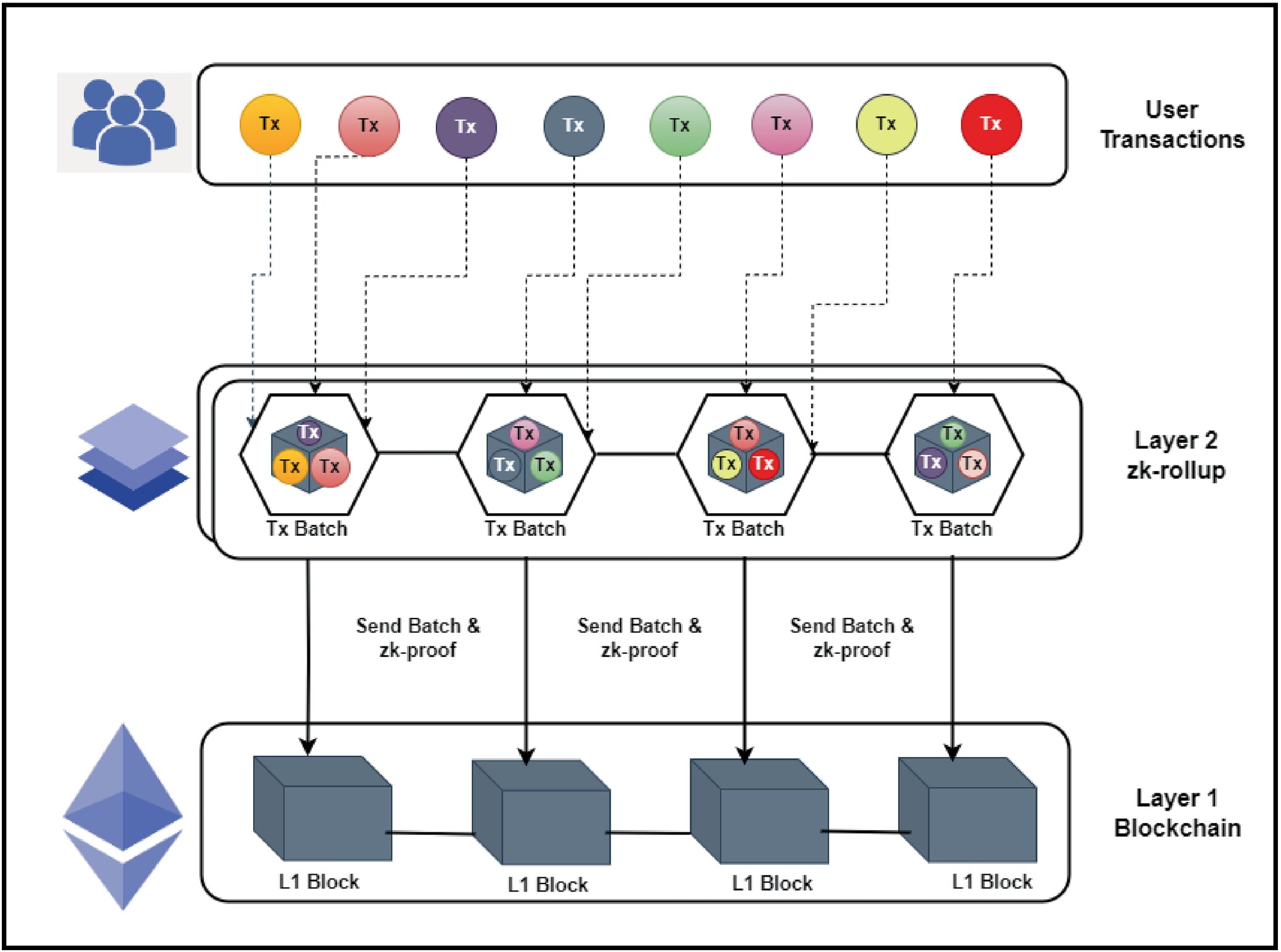
Why zero-knowledge proofs 2026 define AI privacy
The intersection of artificial intelligence and data privacy has reached a breaking point. Current anonymization techniques, once the industry standard, are increasingly ineffective against modern re-identification attacks. As AI models grow more sophisticated, they can infer sensitive personal details from aggregated, "anonymized" datasets, creating a direct conflict with strict regulatory frameworks like the GDPR and CCPA. This regulatory pressure has made traditional data masking insufficient for high-stakes compliance.
Zero-knowledge proofs 2026 represent the necessary evolution in this landscape. Rather than relying on data obfuscation, this cryptographic approach allows AI systems to verify the validity of a statement without revealing the underlying data itself. As defined by ethereum.org, a zero-knowledge proof enables a prover to demonstrate the truth of a claim without exposing the claim's content. This distinction is critical for legal compliance, as it fundamentally changes how data is handled during processing.
In practical applications, this shift is already altering high-risk sectors. Consider credit scoring: a bank can verify that an applicant meets specific income and debt-to-income ratios without ever accessing their raw bank statements. Similarly, in healthcare, an AI model can confirm a patient’s eligibility for a specific treatment protocol without exposing their full medical history. These examples illustrate how zero-knowledge proofs 2026 solve the GDPR conflict by design, ensuring that data utility does not come at the cost of privacy.
The implementation challenges are significant but manageable. The ZKProof initiative, an open-industry academic effort, is working to mainstream these standards through community-driven development. By adhering to rigorous cryptographic standards, organizations can deploy AI models that are both compliant and efficient. This move away from fragile anonymization toward provable privacy is not just a technical upgrade; it is a legal necessity for the next generation of AI.
Comparing ZK architectures for machine learning
Zero-knowledge proof systems are not interchangeable; each architecture imposes distinct constraints on AI model training and inference. For legal and regulatory compliance, the choice between SNARKs, STARKs, and Fully Homomorphic Encryption (FHE) determines whether a system can achieve real-time verification or requires batch processing. The primary trade-offs involve proof size, verification speed, and quantum resistance.
SNARKs (Succinct Non-Interactive Arguments of Knowledge) offer the smallest proof sizes and fastest verification, making them suitable for high-throughput inference. However, they rely on elliptic curve cryptography, which is vulnerable to future quantum attacks. STARKs (Scalable Transparent Arguments of Knowledge) sacrifice some verification speed for quantum resistance and transparency, eliminating the need for a trusted setup. FHE allows computation on encrypted data without generating proofs, offering maximum privacy but at a significant computational cost.
The following comparison outlines the technical characteristics of each approach as they apply to AI compliance workflows.
| Metric | SNARKs | STARKs | FHE |
|---|---|---|---|
| Proof Size | Very small (~KB) | Large (~MB) | N/A |
| Verification Time | Fast (~ms) | Moderate (~s) | N/A |
| Quantum Resistance | No | Yes | Yes |
| AI Suitability | Inference, audit trails | Large-scale training | Private inference |
For credit scoring and healthcare applications, the distinction is critical. SNARKs are often preferred for verifying inference results where the model output must be proven correct without revealing the underlying data, due to their small proof size. STARKs are better suited for auditing the training process of large models, where transparency and quantum resistance are paramount, despite the larger data overhead. FHE remains experimental for large-scale AI due to computational latency but offers a unique path for private inference where even the model weights must remain hidden.
Official documentation from ethereum.org clarifies that zero-knowledge proofs are a method of proving validity without revealing the statement itself. This distinction underpins their regulatory value: they allow institutions to prove compliance with data protection laws (such as GDPR or HIPAA) without exposing the sensitive data required for the verification.
ZK proofs for GDPR compliance and identity
Zero-knowledge proofs (ZKPs) offer a cryptographic mechanism to satisfy the European Union’s General Data Protection Regulation (GDPR) by decoupling verification from data exposure. Under GDPR principles such as data minimization and the right to be forgotten, organizations must limit the personal data they collect and retain. ZKPs allow a system to verify that a user meets specific criteria—such as being over 18 or having a clean credit history—without storing the underlying personal information on a blockchain or centralized server.
Identity verification and data minimization
In identity management, ZKPs enable users to prove attributes without revealing their full identity. For example, a healthcare provider can verify that a patient is eligible for insurance without exposing their medical history or social security number. This aligns with GDPR’s requirement that data processing be limited to what is strictly necessary. By using ZKPs, companies can audit access and verify compliance without holding sensitive personal data that could be breached or misused.
The right to be forgotten
The "right to be forgotten" (Article 17) allows individuals to request the deletion of their personal data. Traditional blockchain systems face a conflict here because data is immutable. ZKPs resolve this by allowing proofs to be generated from ephemeral data. Once the proof is verified, the underlying data can be securely deleted. The proof itself, which contains no personal information, remains on-chain as a record of compliance, not identity. This ensures that the organization can demonstrate compliance without retaining the data it was required to delete.
Practical implementation challenges
Implementing ZKPs for GDPR compliance requires careful architectural design. The generation of proofs can be computationally expensive, potentially impacting user experience in real-time applications like credit scoring. Additionally, the legal validity of ZKPs as a method of compliance is still evolving. Regulators are beginning to acknowledge ZKPs as a valid technical measure for data protection, but clear guidelines are still emerging. Organizations must ensure that their ZK implementations are audited and that the zero-knowledge property holds against advanced cryptographic attacks.
Confidential computing and ZK integration
Zero-knowledge proofs (ZKPs) alone cannot solve the "honest verifier" problem. In a standard ZKP setup, the verifier must be trusted to process the proof correctly. If the verifier’s hardware is compromised or the software contains malicious code, the proof’s validity is meaningless. This limitation is critical for AI compliance, where the integrity of the computation environment is as important as the data itself.
Confidential Computing, specifically Trusted Execution Environments (TEEs), provides the missing layer. TEEs create a secure, isolated area within the processor (such as Intel SGX or AMD SEV) where code and data are protected from the rest of the system, including the operating system and hypervisor. By combining ZKPs with TEEs, organizations can prove that an AI model was executed correctly within a verified, tamper-proof environment.
This synergy creates a robust privacy layer for sensitive AI applications. For example, in healthcare, a hospital can use a ZKP to demonstrate that a diagnostic model produced a valid result without exposing patient records or the proprietary model weights. The TEE ensures the computation wasn’t tampered with, while the ZKP ensures the output is mathematically correct. This combination satisfies regulatory requirements for both data privacy and algorithmic transparency.
The integration also addresses compliance in financial services. A bank can verify that a credit scoring model adhered to specific regulatory constraints (e.g., no discrimination based on protected attributes) without revealing the underlying customer data or the black-box logic of the model. The TEE guarantees the integrity of the scoring process, while the ZKP provides the audit trail.
While powerful, this hybrid approach introduces implementation complexity. Developers must manage both the cryptographic proof generation and the secure enclave configuration. However, as AI systems become more central to regulated industries, this dual-layer approach offers the only viable path to verifiable privacy at scale.
Adoption barriers and the 2026 roadmap
Despite the theoretical promise of zero-knowledge proofs (ZKP) for AI compliance, practical adoption remains constrained by significant computational overhead. Generating proofs for complex machine learning models requires substantial processing power and memory, creating a bottleneck for real-time inference. For instance, verifying a credit scoring decision or a healthcare diagnostic model on-chain is currently too slow and expensive for most enterprise applications. The latency involved in proof generation often conflicts with the low-latency requirements of modern AI services.
Standardization gaps further complicate implementation. Without universal protocols for proof verification, integrating ZKPs into existing regulatory frameworks is fragmented. Different industries require different proof structures, leading to siloed solutions that do not interoperate. This lack of cohesion forces organizations to build custom verification layers, increasing development costs and the risk of security vulnerabilities. The industry is currently moving away from proprietary systems toward open standards to address these interoperability issues.
The path forward relies on coordinated standardization efforts. The ZKProof initiative is leading this charge, with the 8th ZKProof Workshop scheduled for May 9–10, 2026, in Rome. This gathering aims to finalize core protocols that will allow different AI systems to use compatible zero-knowledge proofs. By establishing a common language for privacy-preserving computation, these standards will reduce integration friction and enable broader regulatory acceptance.
As these standards mature, the focus will shift from theoretical feasibility to practical efficiency. Optimizations in circuit design and hardware acceleration are expected to lower the cost of proof generation, making ZKPs viable for high-volume AI tasks. Until then, organizations should prioritize pilot programs that align with emerging ZKProof standards to ensure future compatibility.
No comments yet. Be the first to share your thoughts!