
The shift to production infrastructure
The narrative around zero-knowledge proofs 2026 has shifted from theoretical possibility to operational reality. Where earlier years were defined by proof generation times measured in hours, the current landscape is dominated by systems capable of generating proofs in seconds or milliseconds. This acceleration is not merely a result of raw hardware scaling; it is the product of standardized protocols and optimized tooling that have matured over the last two years.
At the center of this transition is ZKProof, an open-industry academic initiative that has moved from publishing whitepapers to driving concrete implementation standards. The organization’s recent convening in Rome in May 2026 marked a significant milestone, bringing together major academic institutions and industry players to align on interoperability frameworks. This standardization effort has reduced the fragmentation that previously hindered enterprise adoption, allowing developers to build on a common set of cryptographic primitives rather than reinventing the wheel for each new application.
On the infrastructure side, the barrier to entry for running ZK nodes has lowered significantly. Projects like RISC Zero, which boasts the longest production track record in the space, now support proof generation on consumer-grade hardware, including setups with as few as 16 GPUs. This democratization of proof generation means that the heavy lifting of cryptographic verification is no longer restricted to specialized, high-cost data centers. Instead, it is becoming a commodity service, integrated into the broader cloud and edge computing fabric.
The combination of standardized protocols and accessible hardware has created a stable foundation for production workloads. Enterprises are no longer testing zero-knowledge technology in isolated sandboxes; they are deploying it for compliance verification, private transactions, and data integrity checks in live environments. This shift from experimental to essential marks the beginning of the mainstream era for privacy-preserving cryptography.
ZK-Rollups solve the scalability bottleneck
ZK-Rollups address the blockchain trilemma by moving transaction execution off-chain while settling proofs on-chain. This architecture allows thousands of transactions to be bundled into a single batch, dramatically reducing gas fees and increasing throughput without compromising security. Unlike optimistic rollups, which assume transactions are valid unless challenged, ZK-Rollups rely on cryptographic proofs to guarantee correctness instantly.
The mechanism works by generating a zero-knowledge proof—a succinct, verifiable cryptographic argument—that attests to the validity of the entire batch. Once this proof is submitted to the Ethereum mainnet, the smart contract verifies it and updates the state. This process ensures that the security guarantees of the underlying layer-one blockchain are preserved, even as the heavy lifting is done elsewhere. It is a shift from computational trust to mathematical certainty.
To visualize the market context for the asset being scaled, consider the current price action of Ethereum.
This scalability layer is critical for the mainstream adoption of zero-knowledge proofs 2026. By enabling high-frequency applications like decentralized exchanges and gaming to operate at low cost, ZK-Rollups transform blockchain from a settlement layer into a viable global computing platform. The cryptographic integrity remains intact, offering a privacy-preserving and efficient alternative to legacy systems.
Zero-knowledge proofs 2026 for regulatory compliance
In 2026, regulatory compliance is shifting from data hoarding to data minimization. Traditional KYC and AML processes require financial institutions to collect, store, and verify raw personal data—names, dates of birth, and government IDs. This creates massive honeypots for hackers and raises significant privacy concerns for users. Zero-knowledge proofs allow individuals to prove they meet compliance criteria without revealing the underlying information.
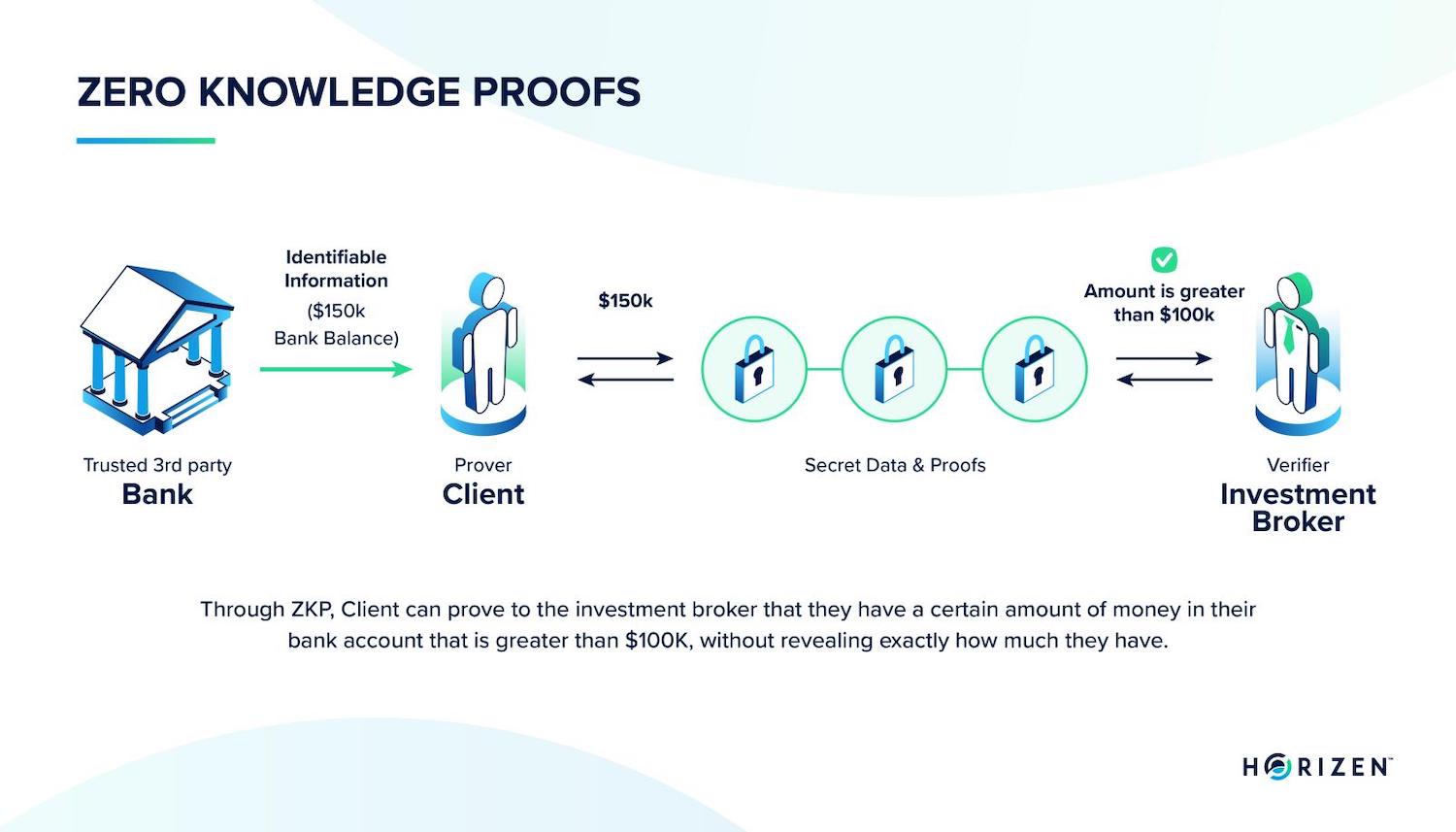
The mechanism is straightforward: a user generates a cryptographic proof that they possess a valid credential (such as a government ID) that satisfies specific conditions (such as being over 18 or not being on a sanctions list). The verifier checks the proof mathematically. If the proof is valid, the transaction proceeds. The verifier learns nothing else about the user. This approach aligns with privacy-by-design principles while satisfying legal obligations.
Comparing traditional KYC with ZK-KYC
The shift to zero-knowledge identity changes the risk and utility profile of compliance. Traditional methods expose sensitive data to every intermediary, increasing liability. ZK-KYC limits exposure to the minimum necessary for verification.
Age verification without identity exposure
One of the most immediate applications is age verification. Services that require users to be over 18 can accept a ZK-proof that the user is an adult without accessing their birth date or full identity. This is particularly valuable in jurisdictions with strict data protection laws like the GDPR. Users retain control over their personal information while still meeting legal requirements.
Credential checks and sanctions screening
ZKPs also enable efficient sanctions screening. Financial institutions can verify that a user is not on a restricted list without storing or processing the user's full name or other identifiers. This reduces the risk of false positives and minimizes the data footprint. The proof confirms membership in a "clean" set without revealing the individual's identity within that set.
The path to mainstream adoption
As zero-knowledge proofs become more efficient and standardized in 2026, they are expected to replace many legacy KYC processes. This transition will require updates to regulatory frameworks and technical infrastructure, but the benefits in privacy and security are compelling. The result is a more resilient and user-centric compliance ecosystem.
Hardware acceleration and tooling maturity
In 2026, the bottleneck for zero-knowledge proofs 2026 shifted from theoretical complexity to raw computational throughput. The most significant breakthrough has been the maturation of consumer-grade GPU acceleration. What once required specialized, expensive ASIC farms can now be executed on standard 16-GPU consumer workstations. This democratization of hardware has drastically lowered the barrier to entry for developers, allowing proof generation to scale with the same economics as consumer gaming rigs.
The software layer has kept pace with this hardware shift. RISC Zero has established the longest production track record in the field, offering robust tooling that abstracts the complexity of circuit design. Its open-source zkVM (Zero-Knowledge Virtual Machine) allows developers to write standard Rust code that is automatically compiled into zero-knowledge circuits. This approach reduces development time and minimizes the risk of implementation errors that often plague custom circuit designs.
The combination of accessible hardware and mature tooling has made proof generation faster and cheaper. For enterprises and developers, this means that privacy-preserving computations are no longer a niche experimental feature but a production-ready utility. The infrastructure is now stable enough to support high-throughput applications, from private financial transactions to secure cloud computing, marking a pivotal transition for the entire zero-knowledge ecosystem.
Zero-Knowledge Proofs 2026: Market Implications for Crypto Assets
The integration of zero-knowledge proofs 2026 into mainstream infrastructure is shifting market dynamics from speculative noise to institutional-grade utility. As privacy-preserving blockchain networks mature, they are resolving the long-standing tension between regulatory compliance and user anonymity. This shift is not merely a technical upgrade; it is a fundamental revaluation of how digital assets are stored, transferred, and audited.
Institutional adoption hinges on this balance. Traditional finance requires transparent audit trails for compliance, while users demand privacy. ZK technology provides a cryptographic solution that satisfies both. By allowing proofs of solvency and transaction validity without exposing underlying data, these networks enable institutions to participate in Web3 with reduced counterparty risk. This capability is driving capital inflows into ZK-focused Layer 2 solutions and privacy-centric protocols.
Market sentiment reflects this structural change. We are seeing a divergence in asset valuation where projects with robust ZK implementations outperform those relying on older, less efficient privacy models. Investors are increasingly pricing in the "privacy premium"—the added value of compliant, scalable, and private transaction layers. This trend suggests that the next wave of market growth will be led by infrastructure that seamlessly integrates zero-knowledge proofs 2026 standards.
No comments yet. Be the first to share your thoughts!