
The 2026 privacy compliance landscape
The regulatory environment for data protection has shifted from a period of theoretical exploration to one of practical implementation. In 2026, zero-knowledge proofs (ZKPs) are no longer experimental concepts confined to cryptography journals; they are becoming foundational infrastructure for legal and regulatory compliance. This transition marks a decisive move away from the traditional "collect and store" model toward a system built on cryptographic verification and data minimization.
Earlier compliance frameworks often required organizations to hold sensitive personal data to prove eligibility, creating significant liability and privacy risks. The new paradigm allows entities to verify attributes—such as age, identity, or credential status—without exposing the underlying data. This capability aligns directly with the core principles of the GDPR and emerging global privacy laws, which emphasize that data processing should be limited to what is strictly necessary for the stated purpose.
Industry standards bodies are accelerating this shift. Initiatives like ZKProof, which held its 2026 summit in Rome, are working to mainstream ZK cryptography through rigorous academic and industry collaboration. These efforts are producing standardized protocols that enable interoperable, auditable, and legally defensible verification processes. As a result, sectors requiring high-stakes identity assurance, such as financial services and healthcare, are beginning to deploy ZKP-based solutions for age verification and credential checks.
The technical maturity of zero-knowledge proofs addresses a critical gap in modern compliance: the ability to prove truth without revealing secrets. By decoupling verification from data storage, organizations can reduce their attack surface and minimize regulatory exposure. This architectural change is not merely a technical upgrade; it represents a fundamental restructuring of how privacy and compliance interact in a digital economy.
ZK-rollups and GDPR data minimization
ZK-rollups represent a structural shift in how personal data is handled under regulatory frameworks. By batching transactions off-chain and submitting a single cryptographic proof to the main chain, these systems allow for the verification of data validity without exposing the underlying personal information. This mechanism directly addresses the data minimization principle enshrined in Article 5(1)(c) of the GDPR, which mandates that personal data be adequate, relevant, and limited to what is necessary for the purposes for which they are processed.
In traditional data storage models, compliance often requires retaining raw personal data to prove transaction integrity or user eligibility. ZK-rollups invert this requirement. The cryptographic proof serves as the evidence of validity, rendering the raw data unnecessary for the verification process. Consequently, the amount of personal data stored or transmitted is significantly reduced, lowering the attack surface for data breaches and simplifying compliance audits.
Comparison: Traditional Storage vs. ZK-Proof Verification
The following table contrasts the data handling implications of traditional methods against ZK-rollup verification.
| Feature | Traditional Data Storage | ZK-Rollup Verification |
|---|---|---|
| Data Exposed on Chain | Full personal details | None (proof only) |
| GDPR Minimization | Difficult to enforce | Inherently compliant |
| Verification Method | Direct data lookup | Cryptographic proof |
| Breach Impact | High (raw data exposed) | Low (no personal data stored) |
Practical Applications in Identity and Age Verification
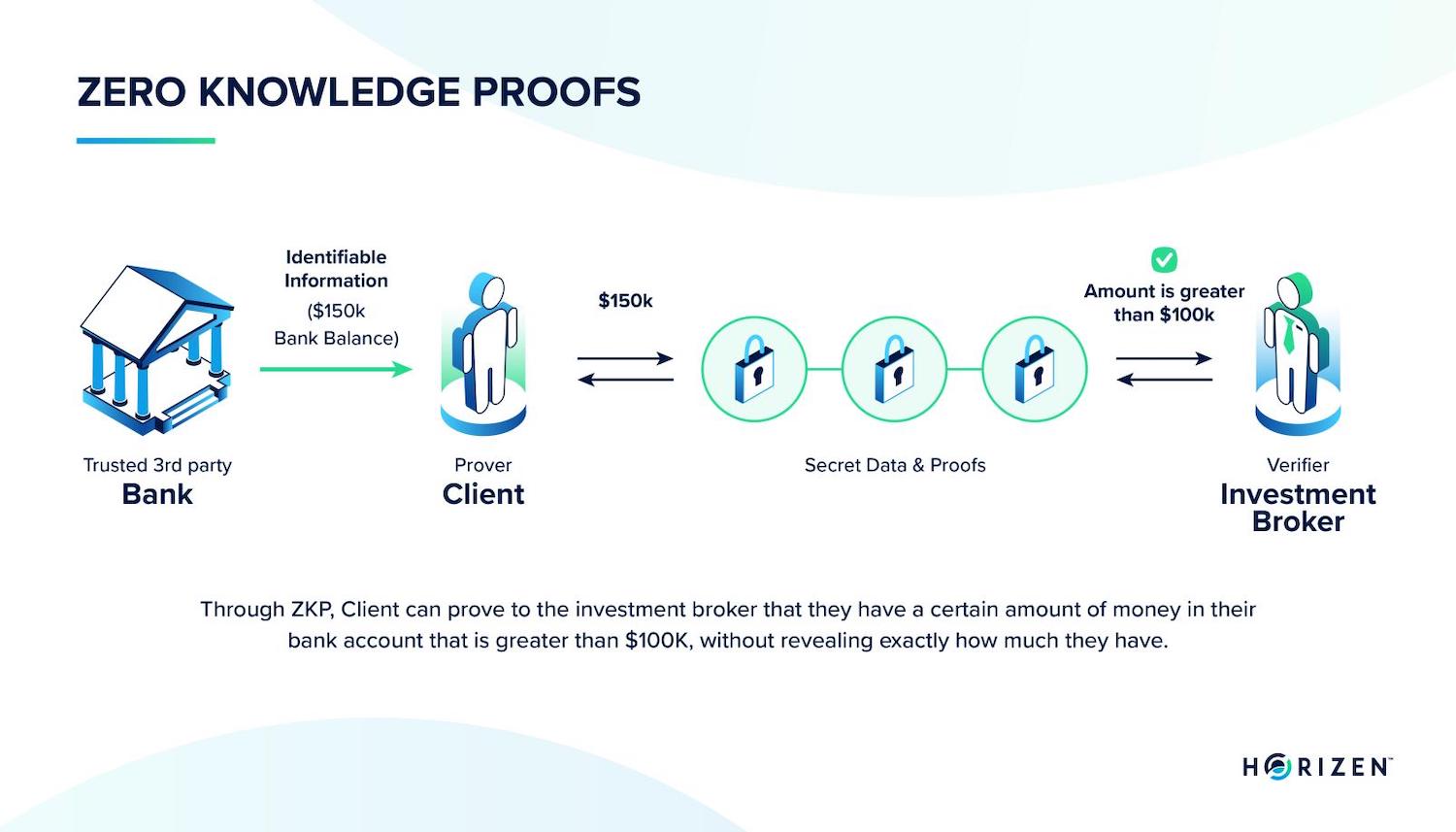
The utility of ZK-rollups extends beyond theoretical compliance into concrete identity applications. For instance, a user can prove they are over 18 without revealing their date of birth, name, or any other identifying details. This capability is particularly relevant for age-verified services, where the regulatory requirement is to confirm eligibility, not to collect and store sensitive personal data.
Similarly, in identity verification processes, ZK-proofs can validate that a user possesses a valid credential issued by a trusted authority without exposing the credential's underlying data. This approach aligns with the GDPR's requirement to process data only to the extent necessary, ensuring that personal information is not retained longer or more broadly than required by law.
For further technical details on the cryptographic foundations of these proofs, refer to the ZKProof initiative's documentation on zero-knowledge proof systems.
Enterprise zk-SNARKs adoption trends
Enterprise adoption of zero-knowledge proofs is shifting from experimental pilots to standardized, auditable production systems. The primary driver is the need for legal defensibility in compliance workflows, particularly where data minimization is mandated by regulations like the GDPR. Organizations are increasingly prioritizing zk-SNARKs and STARKs that offer transparent verification processes, allowing third-party auditors to validate privacy claims without accessing underlying sensitive data.
The ZKProof initiative, an open-industry academic effort, has become the central reference for standardizing these proof systems. By establishing rigorous benchmarks for soundness and completeness, ZKProof provides the technical foundation required for high-stakes regulatory alignment. Their ongoing standardization efforts, including community workshops in 2026, ensure that enterprise implementations meet the stringent criteria for legal admissibility and cross-jurisdictional compliance.
zk-SNARKs and STARKs in Identity Verification
In practical applications, zk-SNARKs are widely deployed for identity and age verification. These systems allow users to prove they meet specific criteria—such as being over 18 or holding a valid credential—without revealing their actual birth date or personal identity. This capability is critical for financial institutions and healthcare providers managing sensitive personal data. The use of STARKs is growing for scenarios requiring quantum-resistant security, though zk-SNARKs currently dominate the enterprise landscape due to their smaller proof sizes and mature tooling ecosystems.
Production-Ready Infrastructure
The infrastructure supporting these proofs has reached a level of maturity suitable for large-scale enterprise deployment. Recent developments indicate that zero-knowledge proof generation can now run efficiently on standard consumer hardware, with some implementations optimized for 16 consumer GPUs. This reduction in computational overhead lowers the barrier to entry for enterprises that previously found ZK proof generation too resource-intensive. Projects like RISC Zero have established long production track records, offering robust tooling that integrates seamlessly with existing enterprise identity management systems.
Standardization and Auditable Proof Systems
Legal defensibility relies on transparency. Enterprises are moving toward standardized proof systems where the verification algorithms are publicly auditable. This approach aligns with regulatory expectations for explainable AI and data processing. By adopting standards from bodies like ZKProof, organizations can demonstrate that their privacy-preserving mechanisms are not "black boxes" but mathematically verified systems. This transparency is essential for passing regulatory audits and maintaining trust in digital identity frameworks.
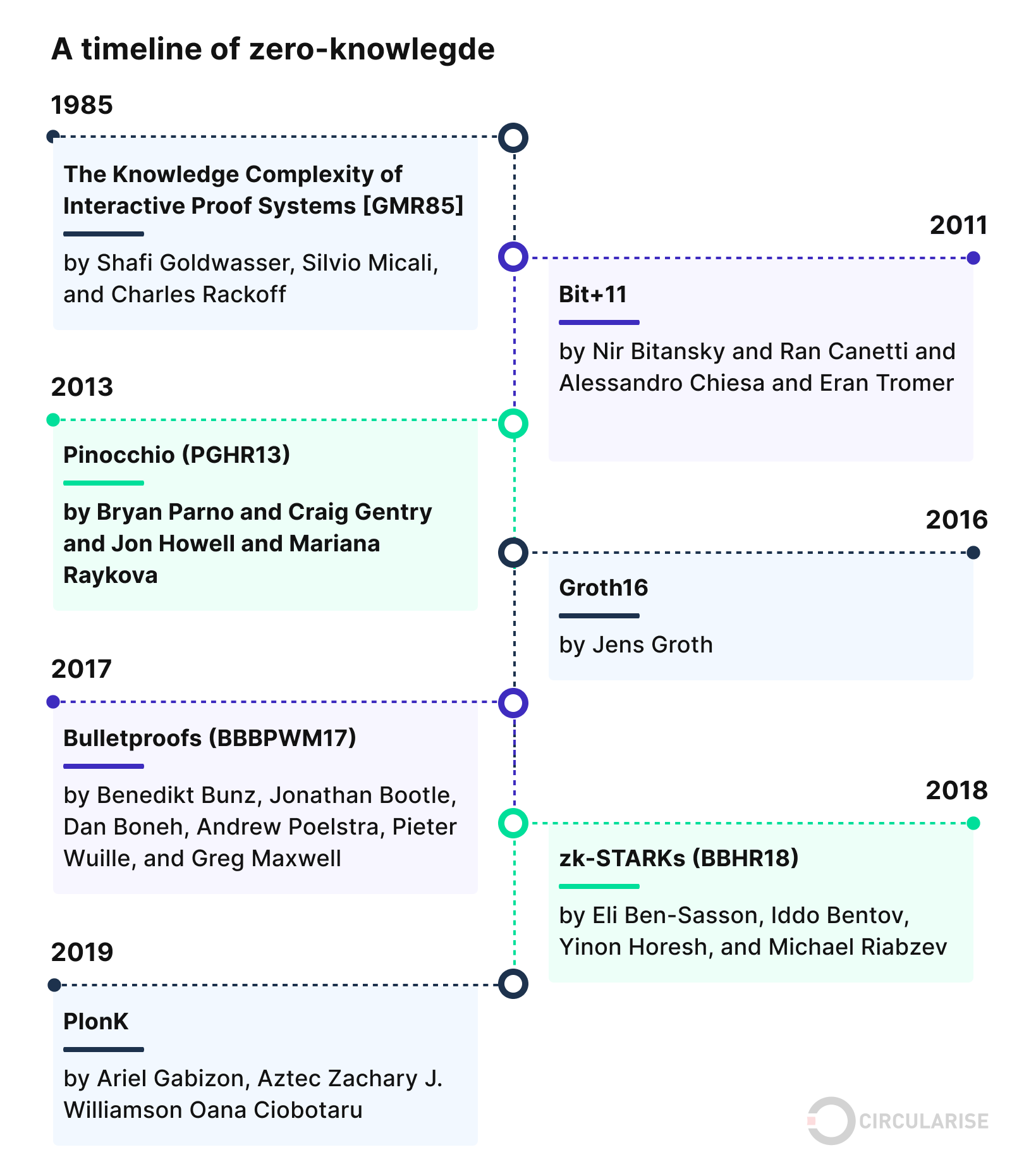
Timeline of Key Milestones
The progression toward enterprise-ready zero-knowledge proofs has followed a clear trajectory of standardization and optimization.
Data sovereignty and cross-border transfers
Zero-knowledge proofs (ZKPs) are reshaping the mechanics of cross-border data transfers, particularly in the context of the European Union’s General Data Protection Regulation (GDPR) and frameworks like the EU-US Data Privacy Framework. Traditionally, transferring personal data across jurisdictions requires strict contractual safeguards or adequacy decisions, as the receiving entity gains full access to the data. ZKPs alter this dynamic by allowing data to remain encrypted at the source while only the proof of compliance is transmitted.
This shift reduces the risk profile of data exposure during transit. Instead of moving raw personal identifiers, organizations can transmit non-interactive zero-knowledge proofs (NIZKPs) that verify specific attributes without revealing the underlying information. For example, an identity verification service can confirm that a user is over 18 or holds valid residency in a specific jurisdiction without exposing their birth date or address. This approach aligns with the GDPR’s principle of data minimization, ensuring that only the strictly necessary information is processed.
The technical capability to verify ownership of knowledge without disclosing the actual data, as demonstrated in recent blockchain-based identity solutions, provides a robust mechanism for maintaining data sovereignty. By keeping sensitive data within its original jurisdiction and only sharing cryptographic proofs, organizations can mitigate the legal and security risks associated with international data flows.
Checklist for evaluating ZK solutions for GDPR compliance
- Verify the cryptographic strength of the proof system against current standards.
- Ensure the zero-knowledge protocol preserves the anonymity of the data subject.
- Confirm that the verifier can validate the proof without accessing the underlying personal data.
- Assess the computational overhead to ensure it does not impede real-time processing requirements.
- Review the legal interpretation of ZKP-transferred data under relevant jurisdictional guidelines.
Standardized verification and legal defensibility
For zero-knowledge proofs to hold up in regulatory audits, the underlying cryptographic systems must be standardized and auditable. Ad-hoc implementations introduce unacceptable risk, as regulators require verifiable certainty that privacy-preserving claims are mathematically sound. The ZKProof initiative provides the necessary open-industry framework to mainstream these standards, ensuring that proof systems meet rigorous academic and industrial scrutiny.
Legal defensibility hinges on transparency. When a service provider uses a standardized protocol, auditors can independently verify the integrity of the proof generation process. This is critical for identity verification and age checks, where the system must prove a user meets a criterion (e.g., being over 18) without revealing the underlying personal data. A standardized proof allows a court or regulator to confirm that the verification logic was executed correctly, without exposing the sensitive information itself.
Without such standards, proving compliance becomes an exercise in trust rather than verification. Organizations must demonstrate that their zero-knowledge implementations are robust against tampering and that the cryptographic assumptions remain valid. By adhering to frameworks like those from ZKProof, entities align their technical practices with the evidentiary standards required for high-stakes regulatory compliance, reducing the liability associated with proprietary or unverified cryptographic methods.
Common questions about ZK privacy
Zero-knowledge proofs (ZKPs) allow systems to verify compliance without exposing underlying data, a shift critical for GDPR alignment. However, technical capability does not equate to legal immunity. The following questions address the intersection of cryptographic verification and regulatory obligation.
These distinctions matter for compliance officers. ZKPs reduce data exposure, but they do not absolve organizations from their obligations under data protection laws. Proper implementation requires careful architecture to ensure that privacy protections align with regulatory expectations.
No comments yet. Be the first to share your thoughts!