
What zero-knowledge proofs actually do
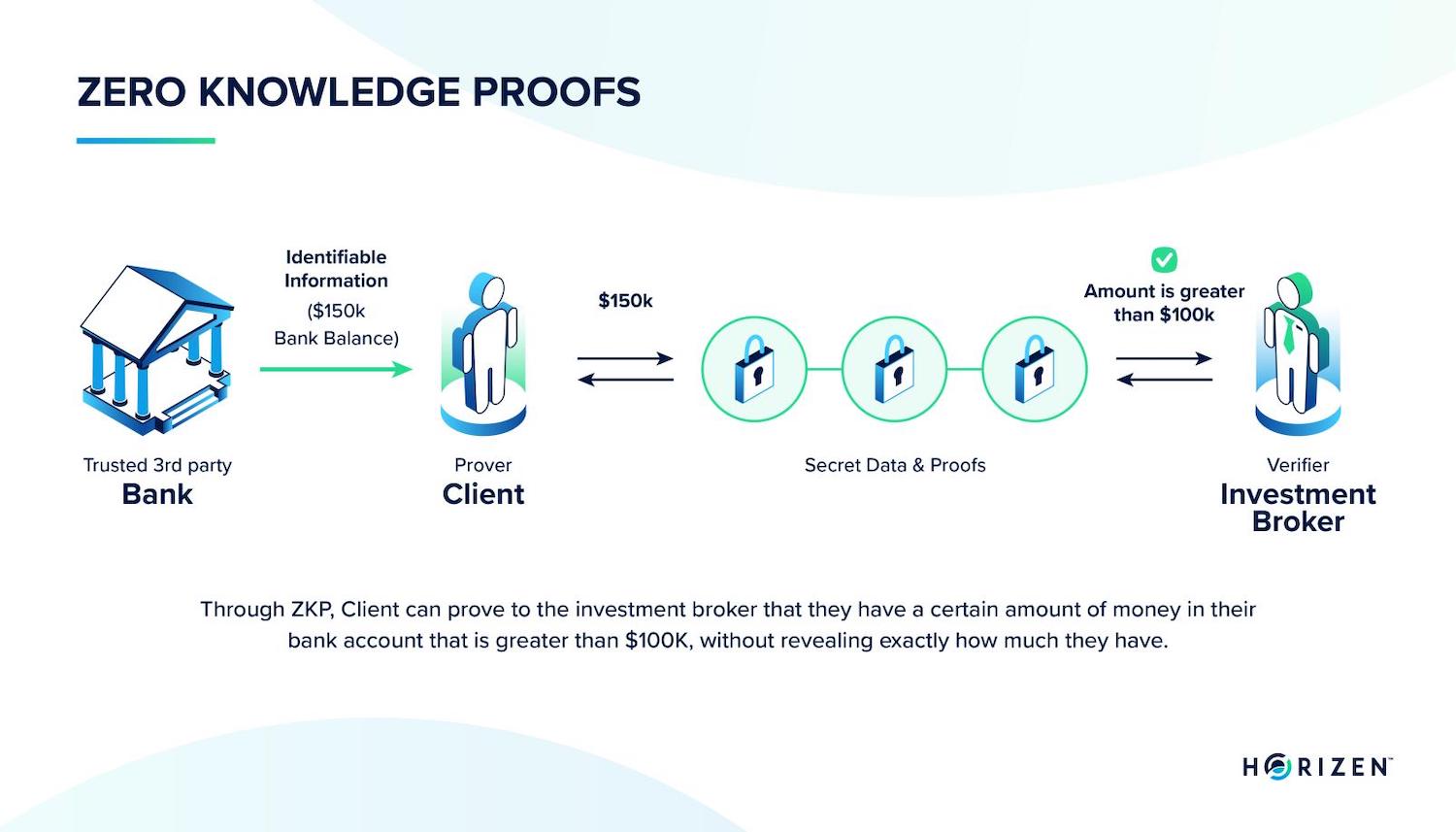
A zero-knowledge proof (ZKP) is a cryptographic protocol that allows one party to prove to another that a statement is true without revealing any information beyond the validity of the statement itself. In simpler terms, it enables a "prover" to convince a "verifier" that they possess certain knowledge or credentials without exposing the underlying data.
Think of it like proving you are over 21 without handing over your driver's license. The verifier needs assurance that you meet the age requirement, but the ZKP mechanism confirms this fact cryptographically while keeping your birthdate, address, and photo private.
This mechanism addresses a core tension in digital privacy: the need to verify identity or compliance without surrendering sensitive personal information. By keeping the raw data hidden while still providing mathematical certainty, ZKPs allow systems to enforce rules and verify transactions while preserving user confidentiality. This capability is becoming increasingly relevant as regulatory frameworks seek to balance transparency with privacy rights.
ZK-SNARKs versus STARKs explained
Zero-knowledge proofs are not a single technology but a family of cryptographic protocols. The two dominant systems, ZK-SNARKs and STARKs, solve the same problem—proving a statement is true without revealing the underlying data—but they use different mathematical tools to do it. This difference creates distinct tradeoffs in proof size, verification speed, and security assumptions.
ZK-SNARKs (Succinct Non-interactive Argument of Knowledge) rely on elliptic curve cryptography. They produce very small proofs that can be verified quickly, making them ideal for blockchains with strict storage limits. However, their security depends on trusted setups and complex mathematical assumptions that may be vulnerable to future quantum computing advances.
STARKs (Scalable Transparent Arguments of Knowledge) use hash functions instead of elliptic curves. This makes them quantum-resistant and eliminates the need for a trusted setup. The tradeoff is that STARK proofs are significantly larger than SNARKs, which can increase storage and bandwidth costs on-chain.
The table below compares the core technical characteristics of both systems.
| Feature | ZK-SNARKs | STARKs |
|---|---|---|
| Proof Size | Small (KB range) | Large (MB range) |
| Verification Time | Fast | Moderate |
| Quantum Resistance | No | Yes |
| Trusted Setup | Required | Not Required |
| Cryptography | Elliptic Curves | Hash Functions |
ZK-rollups bring privacy to scale
ZK-rollups use zero-knowledge proofs to batch many transactions into a single on-chain record. This approach reduces gas costs while keeping transaction details private, addressing the growing demand for privacy in 2026.
In ZK-rollups, the prover generates a cryptographic proof that all transactions in a batch are valid, without including the actual transaction data on the main chain. The verifier checks this proof to ensure integrity without needing to process every individual transaction.
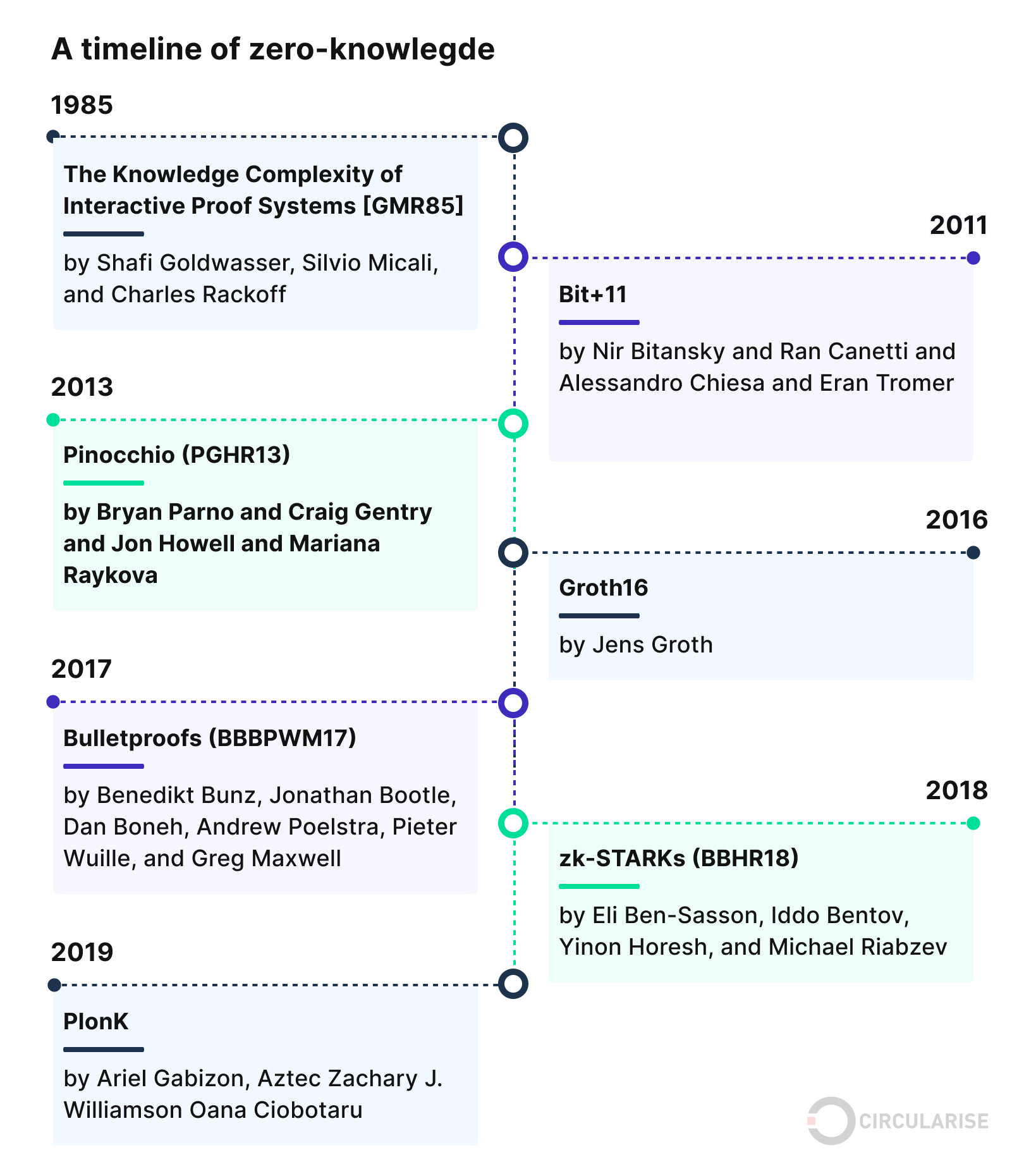
The diagram below illustrates how zero-knowledge proofs work in practice, showing the relationship between the prover and verifier.
This batching mechanism allows ZK-rollups to achieve high throughput and low costs. By processing transactions off-chain and only submitting the proof on-chain, ZK-rollups can handle thousands of transactions per second. This scalability is crucial for mainstream adoption, as it makes blockchain transactions affordable and fast.
The Ethereum Foundation provides a detailed explanation of how zero-knowledge proofs work. For a visual representation of the gas fee trends on L2 networks compared to L1, see the chart below.
Meeting 2026 Regulatory Standards
Compliance in 2026 requires a shift from data hoarding to data proving. Zero-knowledge proofs (ZKPs) allow platforms to demonstrate adherence to regulations like the General Data Protection Regulation (GDPR) and the Markets in Crypto-Assets (MiCA) regulation without exposing raw personal information. This capability resolves the central tension between transparency and privacy.
Under traditional compliance models, regulators demand full access to user data to verify identity or transaction legitimacy. ZKPs change this dynamic by enabling selective disclosure. A user can prove they are over 18, reside in a permitted jurisdiction, or hold sufficient funds to meet capital requirements, while keeping their birthdate, address, and balance hidden. This is known as zero-knowledge identity verification.
The National Institute of Standards and Technology (NIST) identifies ZKPs as a primary tool within Privacy-Enhancing Cryptography (PEC). By treating compliance as a mathematical proof rather than a data dump, organizations can satisfy auditors while minimizing privacy risks. This approach reduces the attack surface for data breaches, as sensitive fields are never transmitted to third-party validators.
For crypto assets, this means proving reserves or transaction legitimacy without revealing the entire ledger. As seen in emerging proof-of-reserve schemes on networks like Bitcoin, ZKPs allow users to verify ownership of specific assets without exposing the full transaction history. This granular control is becoming the standard for meeting 2026 regulatory expectations.
Key TakeawayThe core advantage is that compliance becomes a binary state: the proof either holds, or it does not. Regulators receive the assurance they need, and users retain their privacy. This balance is essential for the sustainable growth of regulated digital markets.
Beyond Ethereum: Bitcoin and Decentralized Identity
Zero-knowledge proofs (ZKPs) extend far beyond Ethereum’s smart contract ecosystem. While Ethereum leverages ZKPs for scalability, Bitcoin and decentralized identity (DID) systems use them for privacy and verification.
Bitcoin Privacy and Proof-of-Reserve
Bitcoin’s transparent ledger has always been a double-edged sword. ZKPs allow users to prove transaction validity without exposing sender, receiver, or amount. A recent academic proposal demonstrates a proof-of-reserve scheme where users prove ownership of a UTXO exceeding a threshold without revealing specific transaction details [src-serp-3]. This approach offers a path to regulatory compliance without sacrificing financial privacy.
Decentralized Identity (DID)
Decentralized identity systems use ZKPs to verify credentials without exposing underlying data. For example, a user can prove they are over 21 without revealing their birth date. This selective disclosure is critical for compliant KYC (Know Your Customer) processes in a decentralized world. By keeping sensitive data off-chain, DID systems reduce the attack surface for identity theft while maintaining verifiable trust.
Common questions about zero-knowledge proofs
How do ZKPs protect privacy in blockchain transactions?
ZKPs protect privacy by allowing a network to verify that a transaction is valid (e.g., the sender has sufficient funds and hasn't double-spent) without recording the sender's address, recipient's address, or the transaction amount on the public ledger. The network only sees the cryptographic proof of validity.
What is the difference between ZK-SNARKs and ZK-STARKs?
ZK-SNARKs produce smaller proofs and verify faster but require a trusted setup and rely on elliptic curve cryptography, which may be vulnerable to quantum computing. ZK-STARKs are quantum-resistant and do not require a trusted setup, but they generate much larger proofs, which can increase storage and bandwidth costs.
Can zero-knowledge proofs be used with Bitcoin?
Yes. While Bitcoin's base layer does not natively support complex ZKP circuits, projects like zk-SNARKs on Bitcoin (via sidechains or layer-2 solutions) and proof-of-reserve schemes allow users to prove ownership of assets or transaction validity without exposing full transaction histories on the main chain.
No comments yet. Be the first to share your thoughts!