
The 2026 Privacy Stack Shift
The landscape of digital compliance has undergone a structural shift this year. Zero-knowledge proofs (ZKPs) have moved beyond theoretical cryptographic exercises into the core of identity and regulatory verification systems. This transition addresses the long-standing tension between data minimization principles and the need for verifiable trust in financial and legal contexts.
Industry analysis indicates that ZKPs are now standard for age verification, credential checks, and settlement proofs. As noted in recent privacy stack reviews, the technology allows users to prove specific attributes without revealing the underlying data, such as confirming age without disclosing a birth date [[src-serp-4]]. This capability aligns directly with evolving regulatory frameworks that prioritize data protection while maintaining auditability.
Official sources, including ZKProof.org, continue to validate the mathematical rigor of these protocols. The integration of ZKPs into major networks, such as the XRP Ledger’s adoption of the Boundless proving network, demonstrates a broader industry consensus on the utility of private transactions in public blockchains [[src-serp-1]]. This infrastructure supports a new model where compliance is built into the verification process rather than layered on top.
This shift marks a departure from previous attempts to balance privacy and transparency. By embedding verification directly into the proof mechanism, organizations can meet regulatory requirements without exposing sensitive personal information. The result is a more robust privacy stack that supports both user rights and institutional accountability.
Regulatory Alignment and ZK-Rollups
By 2026, the integration of zero-knowledge proofs (ZKPs) into regulatory frameworks has shifted from theoretical exploration to operational necessity. Organizations face mounting pressure to comply with data minimization principles under the GDPR and similar global privacy laws. These regulations require that personal data be collected and processed only to the extent necessary for a specific purpose. Traditional compliance methods often force a binary choice: disclose raw data to satisfy an auditor or withhold it and risk non-compliance. ZK-rollups and ZK-proofs resolve this tension by allowing entities to prove compliance without exposing the underlying data.
This technological shift enables a "privacy-by-design" approach to regulatory reporting. Instead of transferring entire datasets to auditors or regulators, organizations can generate cryptographic proofs that verify specific conditions. For example, a financial institution can prove that a transaction complies with Anti-Money Laundering (AML) statutes without revealing the customer's identity or transaction history to the verifier. This capability is particularly critical for cross-border data transfers, where jurisdictional conflicts often complicate compliance efforts.
The following comparison illustrates how ZK-proof verification differs from traditional data disclosure methods in common compliance scenarios. The table highlights the reduction in data exposure and the preservation of privacy while maintaining auditability.
| Compliance Scenario | Traditional Disclosure | ZK-Proof Verification | Data Exposure |
|---|---|---|---|
| Age Verification | Submit government ID showing name, DOB, address | Prove age is over 18 without revealing DOB or name | Minimal |
| Financial Audit | Provide full transaction logs and account statements | Prove transaction integrity and balance sufficiency | None |
| AML Compliance | Share customer identity and transaction history with regulator | Prove funds are not from illicit sources | Minimal |
| Credential Check | Submit full educational transcript or employment record | Prove degree or employment status is valid | None |
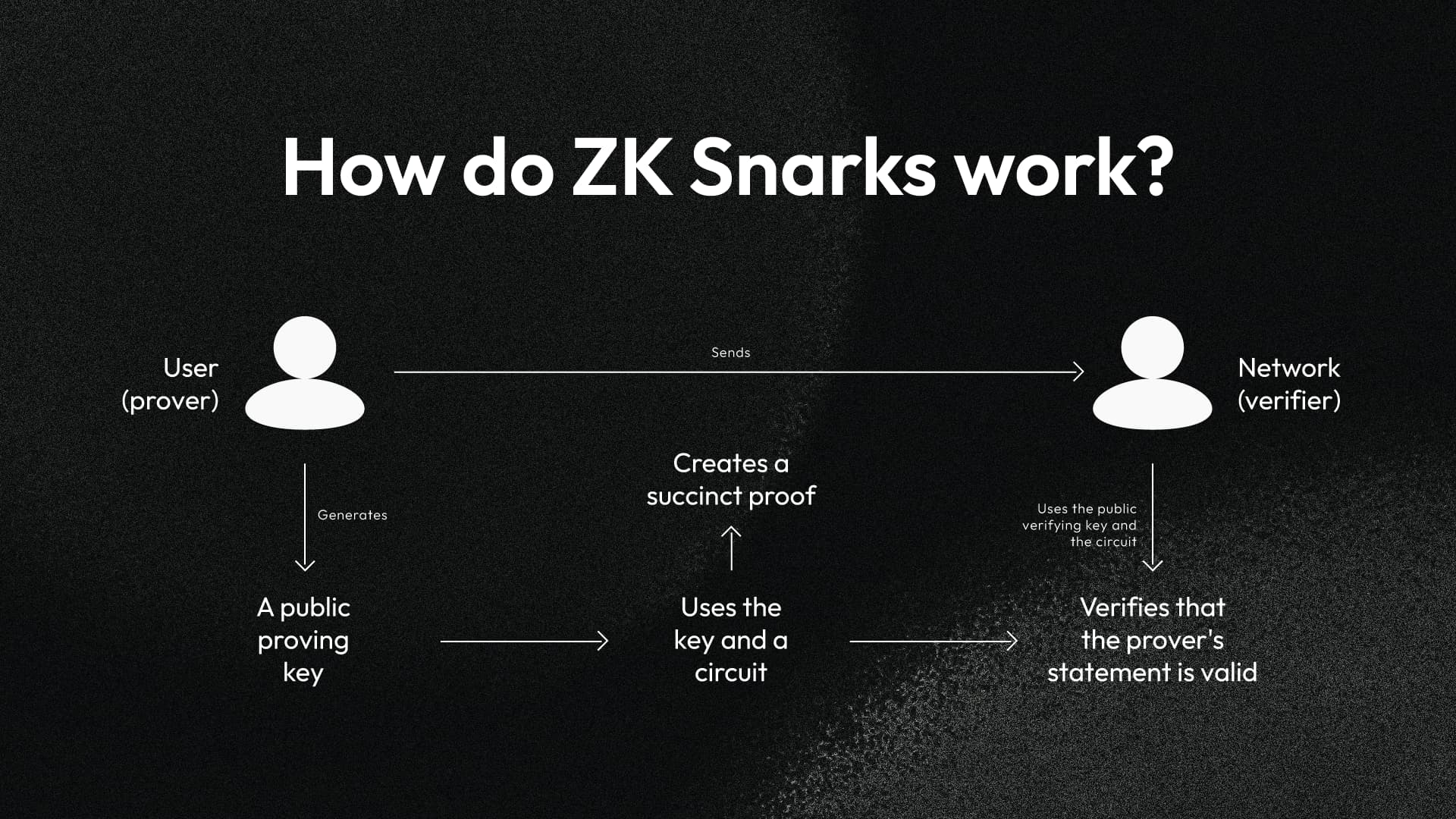
As noted by industry analyses, the privacy stack is becoming a standard component of Web3 infrastructure, with ZKPs increasingly adopted for identity and compliance verification. The XRP Ledger, for instance, integrated Boundless, a zero-knowledge proving network, to support native verification of ZK proofs and enable private transactions on its public blockchain. This integration demonstrates how major networks are adapting to meet the dual demands of transparency and privacy.
The adoption of ZK-rollups further enhances this capability by batching transactions off-chain and posting only the cryptographic proof on-chain. This reduces the data footprint while maintaining the security guarantees of the underlying blockchain. For regulators, this means they can verify the integrity of the entire batch without processing every individual transaction. This efficiency is crucial for high-volume environments where traditional audit methods would be prohibitively slow and data-intensive.
While the technology offers significant advantages, organizations must ensure that their ZK-proof implementations meet specific regulatory standards. The ZKProof.org initiative provides formal verification frameworks that help ensure the mathematical soundness of these proofs. Compliance teams should prioritize solutions that have undergone rigorous third-party audits and adhere to established cryptographic standards. This approach minimizes the risk of implementation errors that could compromise both privacy and compliance.
The transition to ZK-based compliance is not merely a technical upgrade but a strategic realignment of data governance. By proving compliance without exposing raw data, organizations can build trust with regulators and customers alike. This shift toward verifiable privacy is expected to become a defining feature of the 2026 regulatory landscape, setting new standards for data protection and auditability.
Standardization efforts in Rome
Use this section to make the Zero-Knowledge Proofs decision easier to compare in real life, not just on paper. Start with the reader's actual constraint, then separate must-have requirements from details that are merely nice to have. A practical choice should survive normal use, maintenance, timing, and budget. If a recommendation only works in an ideal situation, call that out plainly and give the reader a fallback path.
The simplest way to use this section is to write down the must-have criteria first, then compare each option against those criteria before weighing nice-to-have features.
Implementation checklist for compliance
Use this section to make the Zero-Knowledge Proofs decision easier to compare in real life, not just on paper. Start with the reader's actual constraint, then separate must-have requirements from details that are merely nice to have. A practical choice should survive normal use, maintenance, timing, and budget. If a recommendation only works in an ideal situation, call that out plainly and give the reader a fallback path.
-
Verify the basicsConfirm the core specs, condition, and fit before comparing extras.
-
Price the downsideLook for the repair, maintenance, or replacement cost that would change the decision.
-
Compare alternativesCheck at least two comparable options before treating one listing as the benchmark.
Frequently Asked Questions on Zero-Knowledge Proof Legitimacy and Integration
The rapid adoption of zero-knowledge proofs (ZKP) in 2026 has generated significant interest among developers and investors alike. This section addresses common inquiries regarding the technical legitimacy, investment considerations, and specific blockchain integrations of ZK technologies.
Is zero-knowledge proof a legitimate technology?
Yes. Zero-knowledge proofs are a well-established cryptographic protocol, not a speculative concept. The ZKProof community provides formal verification standards and academic research that underpin its mathematical validity. In 2026, ZKP is recognized as essential for Web3 privacy and regulatory compliance, offering a method to verify transactions without revealing underlying data.
Is ZKP a good investment?
Investing in "ZKP" tokens involves high risk and should be distinguished from the underlying technology. Some projects market physical infrastructure or token mechanics as investment vehicles, with claims of daily returns that are not guaranteed. Investors should evaluate the actual utility of the infrastructure rather than relying on presale promises or speculative price predictions.
Does the XRP Ledger use zero-knowledge proofs?
Yes. The XRP Ledger integrated Boundless, a ZK proving network, in April 2026. This integration enables native verification of ZK proofs on the public blockchain, allowing for private transactions while maintaining the ledger's transparency and security. This move signals a broader industry shift toward embedding ZKP directly into major public chains.
What is the future of zero-knowledge proof?
ZKP is evolving from a niche cryptographic tool to a foundational element of secure digital society. As privacy regulations tighten globally, ZKP will likely become mandatory for compliant data handling in Web3. The technology brings trustworthiness to privacy, ensuring that users can prove credentials or transactions without exposing sensitive personal information.
No comments yet. Be the first to share your thoughts!