
The 2026 ZK landscape
Zero-knowledge proofs (ZKPs) have transitioned from theoretical cryptography to foundational blockchain infrastructure. In 2026, the technology is no longer an experimental niche but a deployed standard for scaling and privacy. As defined by ethereum.org, a zero-knowledge proof allows one party to prove the validity of a statement without revealing the statement itself. This capability underpins the modern financial architecture, enabling transactions to be verified without exposing sensitive user data on-chain.
The primary driver of this adoption is the ZK-rollup. These solutions bundle hundreds of transactions off-chain and submit a single proof to the main blockchain. This approach dramatically reduces gas fees and increases throughput while maintaining Ethereum’s security guarantees. According to ZKProof, the industry is focused on mainstreaming these standards through rigorous academic and community validation. The result is a scalable layer that handles high-volume financial operations efficiently.
In finance, ZK-rollups are solving the scalability trilemma. They allow decentralized exchanges and lending protocols to process thousands of transactions per second. This performance enables real-time trading and settlement, bringing institutional-grade efficiency to decentralized finance. The technology provides the privacy and speed required for mass adoption, moving beyond simple value transfer to complex financial instruments.
ZK-rollups vs. other scaling layers
Scaling privacy on chain requires choosing the right architecture for specific financial use cases. While ZK-rollups offer immediate finality and strong security guarantees, they compete with optimistic rollups and state channels that prioritize different trade-offs between cost, speed, and decentralization. Understanding these distinctions is essential for institutions evaluating infrastructure for high-frequency trading or confidential asset management.
Comparing Scaling Architectures
The choice between ZK-rollups, optimistic rollups, and state channels depends on the required balance between transaction throughput and security assumptions. ZK-rollups process transactions off-chain and submit zero-knowledge validity proofs to the main chain, enabling instant finality. Optimistic rollups assume transactions are valid unless challenged, requiring a seven-day dispute window for withdrawal, which delays liquidity access. State channels offer the lowest fees but require all participants to remain online and lock funds for extended periods, limiting their applicability to broad market participation.
| Layer | Finality | Security | Cost |
|---|---|---|---|
| ZK-rollups | Instant | Cryptographic | Medium |
| Optimistic rollups | ~7 days | Game-theoretic | Low |
| State channels | Instant | Multi-party | Very low |
Trade-offs in Finality and Security
Finality speed directly impacts capital efficiency in financial markets. ZK-rollups provide immediate settlement, allowing traders to access liquidity without waiting for challenge periods. This is critical for arbitrage strategies and institutional custody solutions where time-to-settlement determines risk exposure. Optimistic rollups, while cheaper to operate, introduce latency that can be exploited in fast-moving markets. State channels, though extremely efficient, lack the composability required for complex DeFi interactions, restricting their use to simple peer-to-peer transfers.
Security models also diverge significantly. ZK-rollups rely on cryptographic proofs, offering robust security independent of user behavior. Optimistic rollups depend on economic incentives and the availability of fraud proof monitors, creating a reliance on active community participation. For high-stakes finance, the cryptographic assurance of ZK-rollups aligns better with regulatory requirements for immutable audit trails and predictable settlement outcomes.
Practical Applications in Finance
Deployed ZK-rollups are increasingly used for confidential trading and private asset transfers. Institutions leverage ZKPs to verify compliance without exposing sensitive trading data, maintaining competitive advantage while adhering to regulatory standards. Optimistic rollups remain popular for general-purpose DeFi applications where cost efficiency outweighs the need for instant finality. State channels are limited to niche use cases such as micropayments or high-frequency internal ledger updates between known parties.
The selection of a scaling layer should be driven by the specific requirements of the financial application. ZK-rollups are best suited for scenarios demanding immediate settlement and strong security guarantees, while optimistic rollups offer a cost-effective alternative for less time-sensitive operations. As the ecosystem matures, hybrid approaches may emerge, combining the strengths of multiple layers to optimize both privacy and performance.
Privacy trends and institutional use
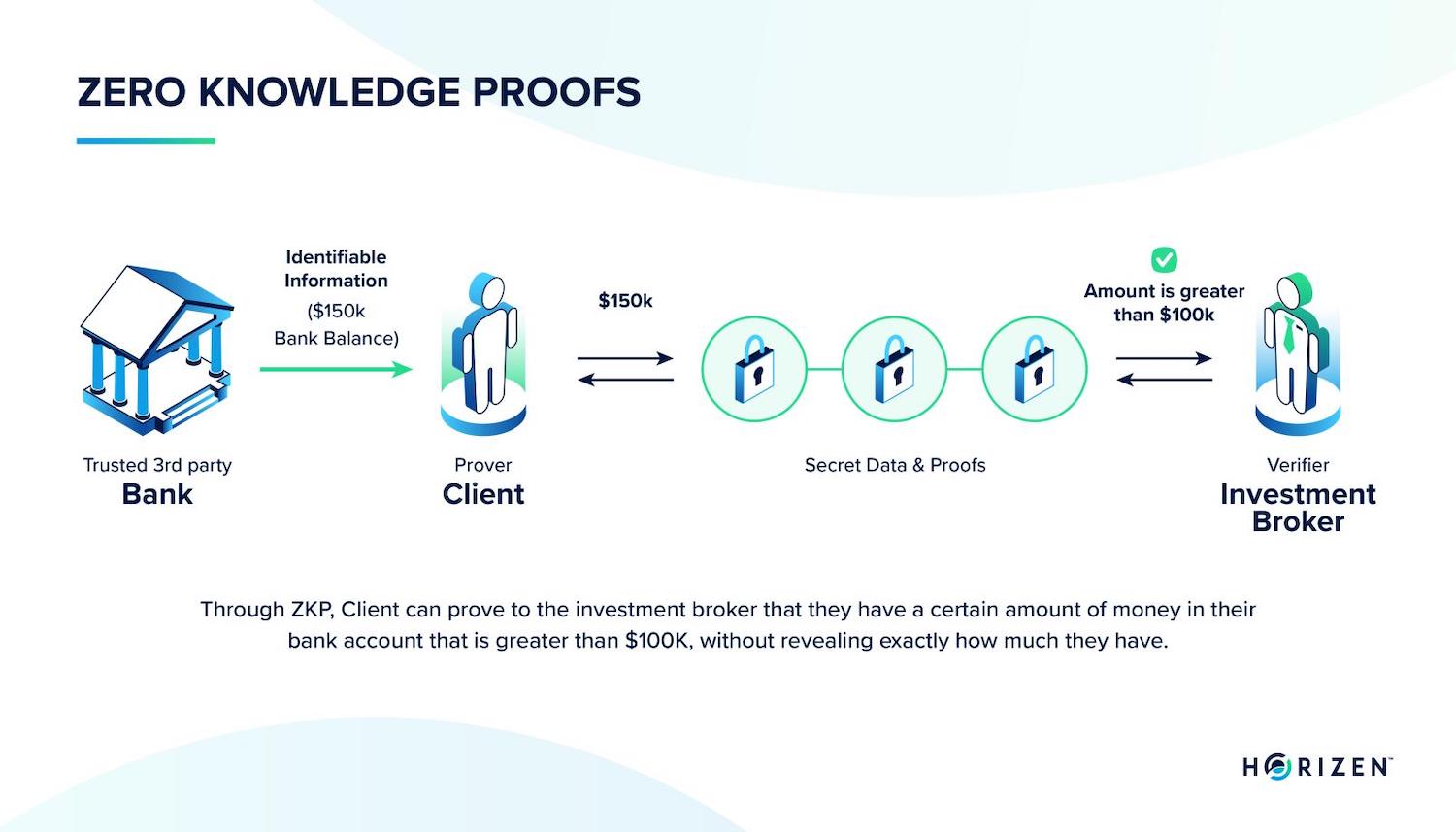
Zero-knowledge proofs are shifting from experimental cryptography to a core infrastructure for financial compliance. By allowing one party to prove a fact without exposing the underlying data, ZKPs enable institutions to maintain strict privacy while satisfying regulatory audits. This capability addresses the central tension in blockchain finance: the need for transparent, immutable ledgers versus the requirement for confidential trading flows and customer data protection.
Institutional adoption is driven by the practical reality that raw data exposure creates significant liability. As noted by Nethermind, ZKPs allow financial entities to verify transaction validity and compliance status without revealing sensitive order book details or personal identity information. This selective disclosure mechanism ensures that sensitive commercial strategies and customer records remain private on-chain, reducing the attack surface for data breaches while maintaining an auditable trail for regulators.
Identity verification represents another critical use case. Traditional KYC (Know Your Customer) processes often require uploading sensitive documents to centralized servers, creating single points of failure. ZK-based identity solutions allow users to prove they meet specific criteria—such as being over 18 or residing in a permitted jurisdiction—without revealing their actual age or location. This approach aligns with the cryptographic definition provided by Chainlink, where the proof validates knowledge about data without revealing the data itself.
The integration of these technologies is reshaping how financial institutions interact with public blockchains. Rather than treating privacy and transparency as mutually exclusive, ZKPs allow for a hybrid model where public verifiability coexists with private data states. This shift is accelerating the deployment of confidential transactions and private identity layers on major networks, moving the industry toward a more robust and compliant financial infrastructure.
Standardization and ecosystem growth
The transition of zero-knowledge proofs from experimental cryptography to institutional infrastructure hinges on standardization. Without unified protocols, the ecosystem remains fragmented, forcing developers to navigate incompatible proof systems and increasing the risk of implementation errors. ZKProof serves as the central coordinating body for this effort, operating as an open-industry academic initiative that brings together over 1,000 practitioners to establish rigorous standards.
By defining clear benchmarks for proof generation and verification, ZKProof reduces the technical debt associated with deploying ZK-rollups in finance. This standardization is critical for high-stakes applications where auditability and trust are non-negotiable. The community-driven nature of the ZKProof consortium ensures that standards evolve in response to real-world deployment challenges rather than theoretical models alone.
The momentum behind these standards is visible in the growing frequency of industry gatherings, such as the upcoming ZKProof 8 event in Rome. These convenings facilitate the alignment of cryptographic research with market realities, ensuring that the protocols underpinning financial privacy are both robust and interoperable. As these standards mature, they provide the necessary foundation for scalable, privacy-preserving financial products on-chain.
Investment and token considerations
The market for zero-knowledge (ZK) technology is bifurcating into two distinct categories: infrastructure tokens that power the underlying cryptographic protocols and speculative assets that trade on narrative hype. For investors, distinguishing between these two is essential for assessing risk. Infrastructure plays a critical role in scaling privacy and throughput on blockchains, particularly through ZK-rollups, which bundle transactions off-chain before settling proofs on the main chain. These are the tangible applications driving real utility in finance, such as private lending protocols and confidential DeFi markets.
Infrastructure tokens tied to active ZK-rollup networks often have clearer value accrual mechanisms, as they are used to pay for proof generation and data availability. However, this sector remains early, with many projects still in beta or facing technical hurdles related to prover latency and cost. In contrast, speculative assets labeled as "ZK" often lack direct integration with the core technology, relying instead on marketing claims. The distinction matters because infrastructure value is tied to network usage and developer adoption, while speculative value is driven by short-term sentiment and broader market cycles.
Current market data reflects this volatility. Assets directly involved in ZK infrastructure, such as Ethereum (ETH), which serves as the settlement layer for many ZK-rollups, show price movements correlated with broader network activity and upgrade cycles. Investors should monitor official sources like the ZKProof community and Ethereum.org for technical milestones rather than relying on price predictions from unverified forecasters. The long-term viability of ZK tokens depends on their ability to solve real scaling and privacy problems, not just on speculative demand.
No comments yet. Be the first to share your thoughts!