
Why zero-knowledge proofs dominate 2026
Zero-knowledge proofs (ZKPs) have shifted from experimental cryptography to the central infrastructure layer for 2026. This dominance is not driven by hype alone, but by a convergence of regulatory pressure and AI verification demands that legacy systems cannot solve. As privacy laws tighten globally, ZKPs offer a way to prove compliance without exposing sensitive data, a capability that traditional blockchain transparency lacks.
The technology’s superiority lies in its ability to verify computations off-chain while keeping the underlying data private. This dual benefit of scalability and privacy makes ZKPs essential for high-frequency DeFi applications and AI model validation. Unlike proof-of-work systems that consume massive energy, ZKPs allow for lightweight verification, aligning with both environmental standards and performance needs.
Market momentum reflects this structural shift. While Bitcoin remains a store of value, ZK-focused ecosystems are capturing innovation capital due to their utility in real-world compliance and data integrity. The following chart illustrates the recent performance trends of leading ZK ecosystem tokens, highlighting the growing investor confidence in this privacy-first infrastructure.
Private transactions in DeFi protocols
Use this section to make the Zero-Knowledge Proofs decision easier to compare in real life, not just on paper. Start with the reader's actual constraint, then separate must-have requirements from details that are merely nice to have. A practical choice should survive normal use, maintenance, timing, and budget. If a recommendation only works in an ideal situation, call that out plainly and give the reader a fallback path.
The simplest way to use this section is to write down the must-have criteria first, then compare each option against those criteria before weighing nice-to-have features.
ZKML for private AI agents
Zero-Knowledge Machine Learning (ZKML) is the emerging bridge between opaque AI models and verifiable trust. As AI agents begin executing complex tasks in DeFi and enterprise workflows, the need to prove computation without revealing proprietary weights or sensitive user data has become critical. ZKML allows an agent to generate a cryptographic proof that it ran a specific model correctly, ensuring integrity while maintaining strict privacy.
This capability solves a fundamental transparency problem. In traditional setups, users must blindly trust the AI provider’s backend. With ZKML, the proof serves as a mathematical guarantee that the output was derived from the claimed model and data, without exposing the underlying intellectual property or personal information. This is particularly vital for high-stakes applications where data leakage or model theft carries significant financial or reputational risk.
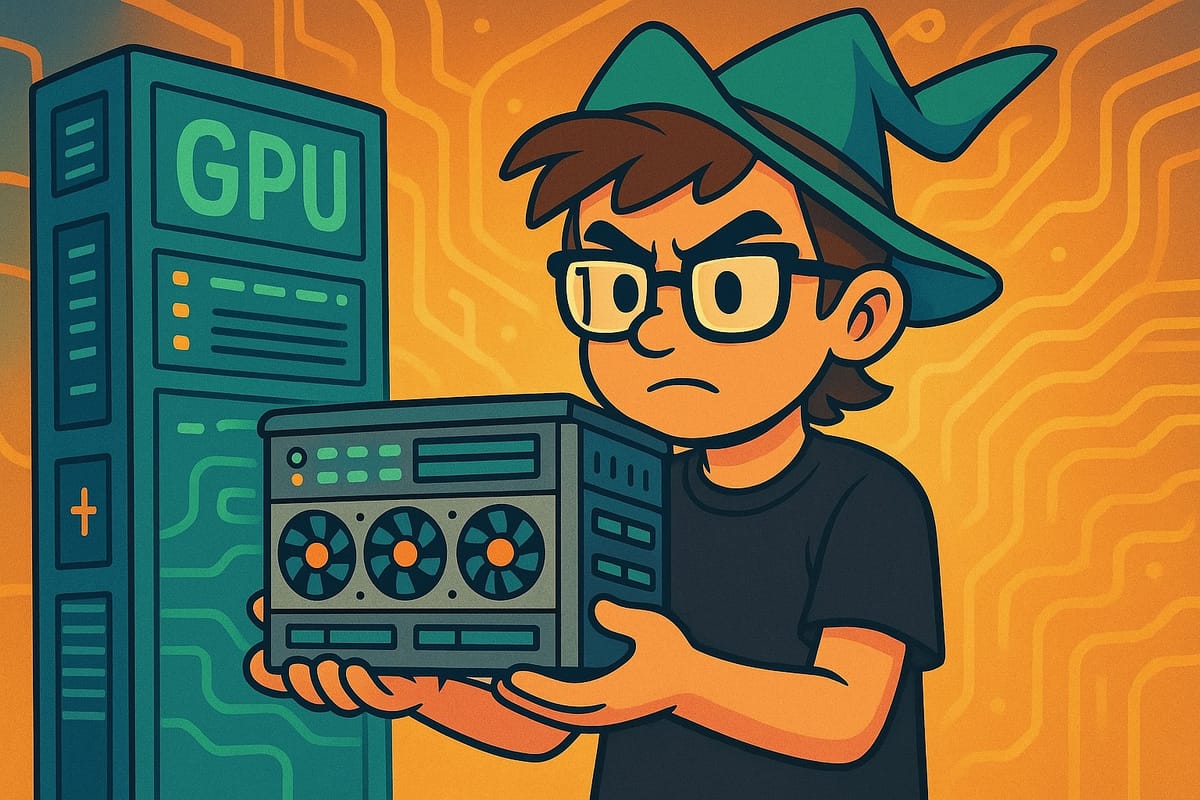
The infrastructure for ZKML is still maturing, but major players are already laying the groundwork. Projects like ZKP.com are tracking the evolution of zero-knowledge proofs toward decentralized AI verification, signaling a shift toward "Proof Pods" that can validate AI actions on-chain. As the technology scales, ZKML will likely become the standard for any AI agent handling financial or private data, ensuring that automation remains both powerful and accountable.
Top ZK projects to watch in 2026
The landscape of zero-knowledge proof infrastructure is consolidating around a few key players that are bridging the gap between theoretical cryptography and practical DeFi and AI applications. These projects are not just building privacy layers; they are establishing the standard for scalable, verifiable computation.
Polygon ID
Polygon ID focuses on decentralized identity, allowing users to prove attributes like age or residency without revealing underlying data. By leveraging zk-SNARKs, it enables selective disclosure, a critical feature for compliance in DeFi and secure access in AI systems. Its integration with the broader Polygon ecosystem ensures immediate utility for existing Web3 applications.
StarkWare
StarkWare provides the underlying zk-STARK technology that powers high-throughput blockchains like StarkNet. Unlike zk-SNARKs, STARKs offer quantum-resistant security and transparent setup processes, making them ideal for long-term infrastructure. As AI models require verifiable computation to ensure integrity, StarkWare’s stack is becoming a foundational layer for trustless AI inference.
Aztec Network
Aztec is building a confidential Layer 2 for Ethereum, specifically designed to hide transaction details while maintaining public verifiability. This "private-by-default" approach is gaining traction among DeFi protocols seeking to protect user strategy data from front-running bots. Its focus on developer tooling makes it a strong contender for mainstream adoption in 2026.
Frequently asked questions about zero-knowledge proofs
Zero-knowledge proofs often get tangled up with other blockchain consensus mechanisms or dismissed as purely theoretical. Here are the most common points of confusion clarified.
Is zero-knowledge proof the future of privacy?
Yes. Zero-knowledge proof is the future for any system requiring private verification. As AI models process sensitive data and DeFi scales, ZK proofs allow validation without exposing the underlying information. NTT DATA notes that ZKPs will become essential for safe, secure societies demanding high privacy levels [1].
Are zero-knowledge proofs the same as proof-of-stake?
No. Zero-knowledge proofs and proof-of-stake are entirely different technologies. Proof-of-stake is a consensus mechanism for validating blocks on a blockchain, while zero-knowledge proofs are cryptographic methods for verifying statements. Ethereum shifted from proof-of-work to proof-of-stake in 2022, but this transition did not change how ZK proofs function or their cryptographic validity [2].
Can zero-knowledge proofs be trusted?
Trust in ZK proofs relies on mathematical rigor, not institutional reputation. If the cryptographic protocol is sound and the implementation is bug-free, the proof is valid. However, users must trust the setup ceremony and the code. Recent research into Transient Zero-Knowledge Proofs (TRZKP) explores non-interactive variants that simplify verification for future applications [3].
Why are zero-knowledge proofs expensive?
Generating ZK proofs requires significant computational power, making them costly to produce. While verification is cheap, the "proof generation" phase involves complex polynomial commitments. This is why ZK rollups often batch transactions to amortize the cost across many users.
Is zero-knowledge proof secure against quantum computers?
Current ZK implementations vary. Some rely on elliptic curve cryptography, which is vulnerable to quantum attacks. Others use lattice-based cryptography, which is considered quantum-resistant. As quantum computing advances, ZK infrastructure will likely migrate to post-quantum secure algorithms to maintain long-term viability.
[1] https://www.nttdata.com/global/en/insights/focus/2024/what-is-zero-knowledge-proof [2] https://finance.yahoo.com/news/ethereum-makes-game-changing-decision-153000138.html [3] https://link.springer.com/article/10.1186/s42400-025-00453-7
No comments yet. Be the first to share your thoughts!