

Zero-knowledge proofs stand at the vanguard of privacy-preserving technologies, yet their verification has long been the Achilles' heel throttling mass adoption. Enter zkVerify, the modular L1 blockchain from Horizen Labs that has now verified 17 million proofs, slashing costs by over 90% and redefining scalable ZK verification for privacy protocols across Web3.
This milestone isn't mere hype; it's a testament to zkVerify's architecture as the universal proof verification layer. Designed to handle proofs from any system, it empowers developers building DeFi rollups, zkEmail privacy tools, and institutional-grade confidential computing without the prohibitive gas fees of general-purpose chains like Ethereum.
Engineering Scalability Where Others Stumble
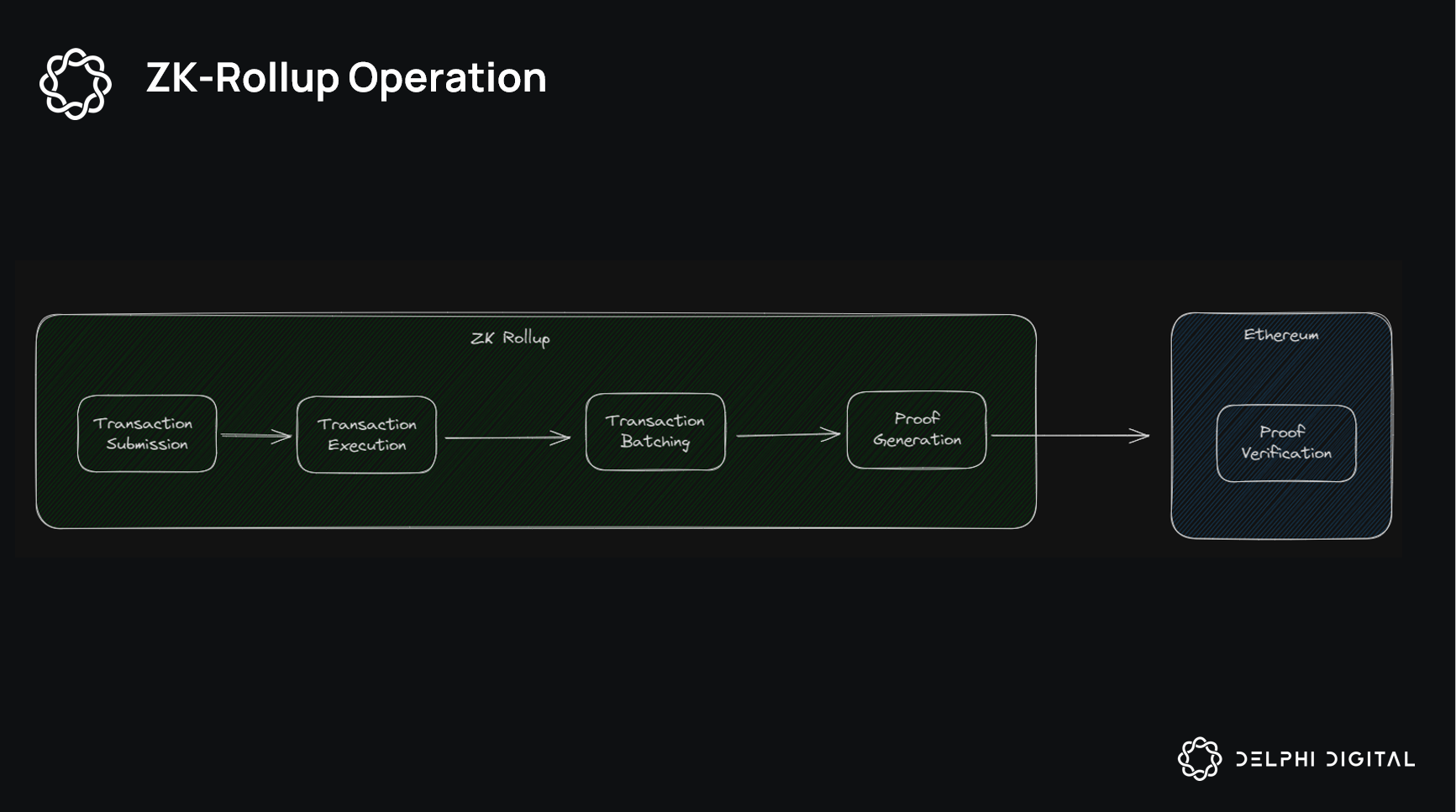
zkVerify's mainnet launch on September 30,2025, marked the dawn of dedicated zero-knowledge proof verification infrastructure. Processing 50,000 to 100,000 proofs daily through integrations like CallScan, the network has scaled to 17 million total verifications by early 2026. This isn't incremental improvement; it's a paradigm shift. Traditional verification on Ethereum devours resources, often costing thousands per proof. zkVerify compresses that to pennies, achieving 91% cost reductions even in partnerships like Arbitrum, where L2 apps now offload verification seamlessly.
Horizen Labs zk proofs shine here through purpose-built optimizations. The protocol supports diverse schemes via a modular design, ensuring flexibility without sacrificing speed. Imagine privacy protocols in DeFi verifying user positions without exposing balances, or machine learning models processing encrypted data at scale. zkVerify makes this routine, not rare.
Strategic Alliances Fueling the Privacy Revolution
Partnerships underscore zkVerify's momentum. Integration with Arbitrum unlocks L2 scalability, letting developers verify proofs at a fraction of prior costs. The zkEmail collaboration brings privacy-preserving email proofs to Web3, where users prove content ownership sans revelation. Everstake bolsters the validator network for ironclad security, while the Proof of Cloud Alliance ties hardware attestations to blockchain trust, vital for TEE-backed computations.
These moves position zkVerify as the backbone for ZK proof aggregation privacy. Its VFY token, trading at $0.01847 USD with robust volume, incentivizes verifiers and aligns economic incentives with network growth. As a CFA charterholder tracking long-cycle privacy trends, I see zkVerify not as a niche player, but the foundational layer enabling ZK-secured financial infrastructures globally.
Cost Efficiency Meets Unrivaled Throughput
At its core, zkVerify optimizes verification through specialized sequencing and aggregation techniques. Verifiers stake VFY to process batches, earning yields while maintaining decentralization. This yields ultra-efficient zero-knowledge proof verification, handling high-volume workloads that would cripple Ethereum. For privacy advocates and blockchain engineers, it's a game-changer: scalable ZK verification now viable for enterprise apps, from confidential ML to interoperable rollups.
The network's flexibility across proof schemes democratizes access. No longer must projects build custom verifiers; zkVerify serves as the modular ZK layer, verifying Groth16, Plonk, or beyond with equal prowess. With 17 million proofs under its belt, it's proven resilient, processing surges without latency spikes or centralization risks.
Developers harnessing scalable ZK verification can now deploy privacy protocols that scale with demand, from DeFi yield aggregators masking strategies to supply chain ledgers concealing proprietary data. zkVerify's aggregator prowess bundles proofs efficiently, minimizing on-chain footprints while maximizing confidentiality. This isn't just technical elegance; it's the economic enabler for Web3's next phase, where privacy isn't a luxury but the default.
Unlocking New Frontiers in Privacy-Preserving Applications
Consider the ripple effects. In decentralized finance, zkVerify empowers rollups to settle positions privately, verifying complex computations without exposing trader intents. Machine learning on encrypted data becomes feasible at scale, as seen in integrations pushing zero knowledge proof verification into confidential AI. The zkEmail tie-up exemplifies this: users attest email-derived claims, like subscription proofs or identity links, all without baring contents. Such primitives fuel identity systems, governance DAOs, and cross-chain bridges demanding ironclad privacy.
Through the Proof of Cloud Alliance, zkVerify bridges blockchain with trusted execution environments, anchoring remote attestations to verifiable locations. This fortifies enterprise adoption, where regulators demand auditable privacy. Horizen Labs zk proofs evolve from niche tools to infrastructural bedrock, with zkVerify as the linchpin.
zkVerify's Key Advantages
- 90%+ Cost Savings: Delivers over 90% reduction in ZK proof verification costs vs. Ethereum, with 91% savings through Arbitrum integration.
- Universal ZK Support: Modular L1 verifies proofs from any ZK scheme or system, enabling seamless scalability.
- High-Volume Capacity: Handles 50k-100k proofs daily via CallScan, powering real-world privacy protocols.

- Strategic Partnerships: Integrates with Arbitrum, zkEmail, Everstake, and Proof of Cloud Alliance for enhanced reliability.
- Proven Resilience: Achieved 17 million total verifications since mainnet launch, demonstrating battle-tested performance.
Tokenomics reinforce this ascent. VFY holders stake for verification duties, capturing fees from a burgeoning proof economy. At $0.01847 USD, with daily volumes signaling liquidity, it mirrors early infrastructure bets poised for exponential uplift as ZK adoption surges. Patient entry here aligns with macro privacy cycles, shielding portfolios amid volatility while capturing Web3's confidentiality boom.
The Macro Vision: ZK as Global Financial Backbone
Zoom out, and zkVerify embodies the long-cycle shift toward ZK-secured infrastructures. Central banks eye programmable privacy for CBDCs; institutions crave confidential ledgers for tokenized assets. General-purpose chains falter under verification loads, but zkVerify's modular ZK layer absorbs this, verifying proofs universally. Its throughput, honed to 17 million milestones, anticipates quadrillions in a mature ecosystem.
Challenges persist, yet zkVerify counters them adeptly. Validator decentralization via Everstake partnerships mitigates risks, while ongoing R and D expands scheme compatibility. As a 20-year macro veteran, I forecast zkVerify anchoring the privacy stack, much like early TCP/IP enabled the internet. It doesn't just verify; it vindicates zero-knowledge's promise, rendering opaque data flows transparent in proof alone.
Privacy protocols thrive when verification scales unbound. zkVerify delivers that, cost-efficiently and relentlessly. For blockchain engineers and advocates, it's the tool to build unbreachable confidentiality into tomorrow's financial rails. The 17 million proofs? Just the opening ledger entry in a ledger-defining saga.




No comments yet. Be the first to share your thoughts!