

In February 2026, with Ethereum trading at $2,227.64 after a 2.33% dip over the past 24 hours, the blockchain world edges closer to a proof-centric revolution. Zero-knowledge proof succinctness isn't just a technical footnote anymore; it's the linchpin for L1 zkEVM proving and mobile ZK validators, promising Ethereum scalability that rivals centralized giants without sacrificing decentralization. Imagine validators on smartphones churning out proofs faster than you can refresh your portfolio app.
This shift hinges on ZK succinctness, where proofs compress massive computations into verifiable snippets mere kilobytes in size. No longer burdened by re-executing every transaction, Ethereum's L1 can breathe, targeting 10,000 TPS while keeping gas fees in check. Brevis's Pico Prism and Succinct Labs' innovations have cracked the code on real-time proving, turning science fiction into deployable reality.
Ethereum's L1 zkEVM: From Execution to Verification
The Ethereum Foundation's roadmap lays it bare: validators evolve from transaction rerunners to proof verifiers. L1 zkEVM proving swaps CPU-intensive emulation for lightning-fast signature checks. Brevis Research charts the path - L2 zkRollups birthed zkVMs, which spawned coprocessors, culminating in full L1 zkEVMs. Pico Prism exemplifies this, letting one node prove block correctness while others verify in milliseconds, slashing hardware demands across the network.
Current setups already flirt with glory. Brevis's Pico zkVM and Prism framework clock 6.9-second average latency for 45M gas blocks, P99 under 10 seconds. This aligns with Ethereum's real-time proving benchmark, where 99% of mainnet blocks prove in 10 seconds on sub-$100K rigs sipping less than 10kW. Such efficiency fortifies L1 zkEVM proving against centralization risks, ensuring no single prover dominates.
Real-Time Proving: Pico Prism and SP1 Hypercube Lead the Charge
Succinct Labs' SP1 Hypercube zkVM proves 99.7% of Ethereum blocks in under 12 seconds on 16 NVIDIA RTX 5090 GPUs, hitting the Foundation's RTP targets dead-on. Developers ditch custom circuits for Rust code, amplifying adoption. Brevis's Pico Prism doubles down, blending speed and efficiency to approach Ethereum's 10-second holy grail, as noted across sources from Medium to X.
These aren't lab curiosities; they're production-ready. Pico Prism's parallel proving framework handles Ethereum L1 blocks in real-time, enabling one-stone-two-birds scalability. Validators verify proofs in fractions of seconds, propelling base layer throughput toward 10,000 TPS. Ethereum RTP proofs like these redefine succinctness, compressing gigabytes of state transitions into snack-sized verifications that mobile hardware can swallow whole.
Mobile ZK Validators: Decentralization Goes Pocket-Sized
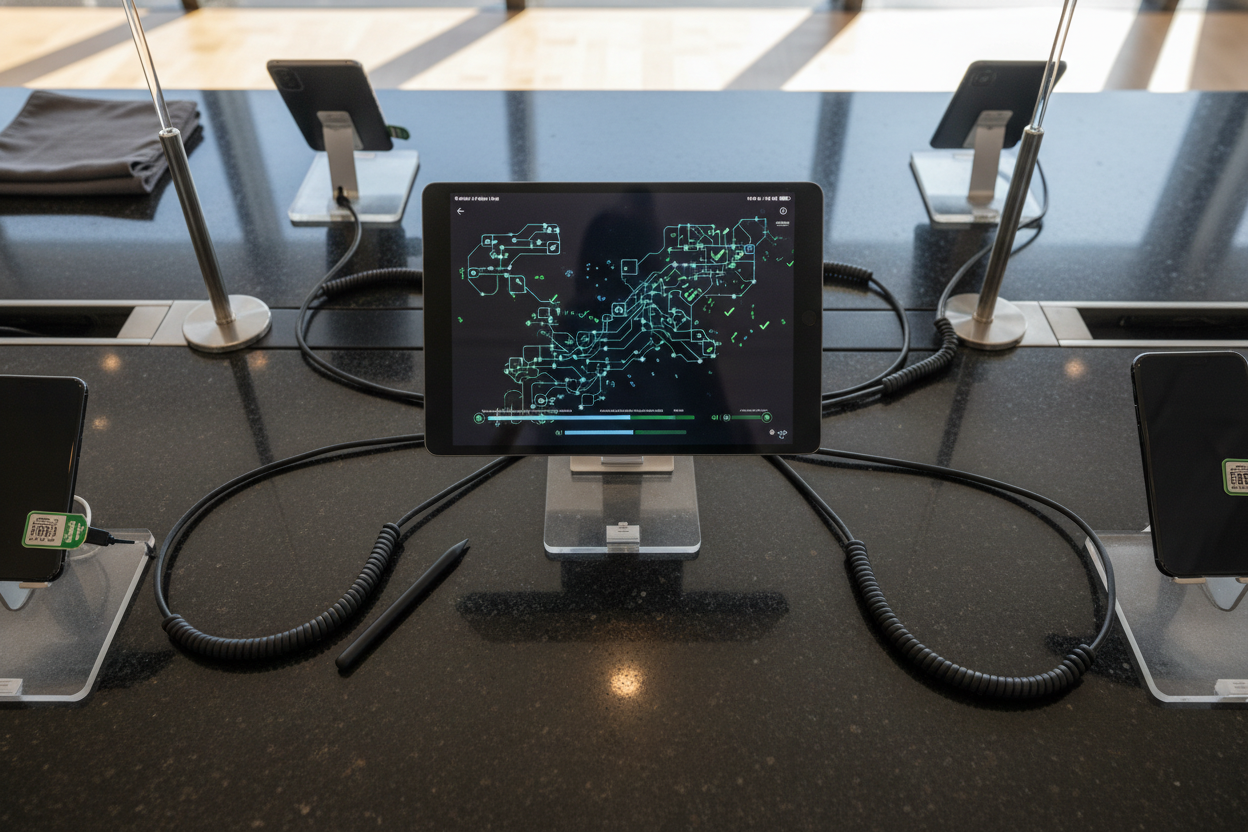
Enter mobile ZK validators, the decentralization dream realized. The FibRace project in late 2025 mobilized 6,000 participants across 99 countries, generating 2 million proofs on 1,420 smartphone models. Verdict? Most modern devices prove in under 5 seconds, no remote provers needed. This obliterates the server-farm myth, flinging validation power to billions of pockets.
Succinctness is king here. ZK proofs' tiny footprint - kilobytes versus terabytes of execution traces - empowers ARM chips in iPhones and Androids to join the fray. Ethereum's L1 zkEVM vision materializes: a global validator mesh where your daily driver contributes to consensus, boosting resilience against outages or attacks. Brevis's Pico Prism paves the way, its low-latency proofs tailor-made for battery-constrained edge devices.
Ethereum (ETH) Price Prediction 2027-2032
Forecasts driven by L1 zkEVM succinctness, real-time ZK proving, and mobile validator adoption (2026 baseline: $2,228)
| Year | Minimum Price | Average Price | Maximum Price | Avg YoY % Change |
|---|---|---|---|---|
| 2027 | $3,000 | $5,500 | $9,000 | +147% |
| 2028 | $4,200 | $8,200 | $14,000 | +49% |
| 2029 | $5,500 | $12,000 | $21,000 | +46% |
| 2030 | $7,000 | $17,500 | $31,000 | +46% |
| 2031 | $9,500 | $25,000 | $45,000 | +43% |
| 2032 | $12,000 | $35,000 | $62,000 | +40% |
Price Prediction Summary
Ethereum's price is forecasted to experience substantial growth from 2027 to 2032, propelled by ZK proof advancements like Pico Prism and Succinct SP1 enabling L1 zkEVM and mobile validators. Average prices could surge from $5,500 in 2027 to $35,000 by 2032 (15x from baseline), with min/max reflecting bearish consolidation and bullish adoption scenarios amid market cycles.
Key Factors Affecting Ethereum Price
- L1 zkEVM integration with real-time ZK proofs (under 12s proving time)
- Mobile validators feasible on smartphones (FibRace project validation)
- Scalability boost to 10,000+ TPS via proof verification over re-execution
- Succinct Labs SP1 and Brevis Pico Prism technological milestones
- Regulatory progress, institutional inflows, and Ethereum roadmap execution
- Competition from L2s/alt L1s, macroeconomics, and crypto market cycles
Disclaimer: Cryptocurrency price predictions are speculative and based on current market analysis. Actual prices may vary significantly due to market volatility, regulatory changes, and other factors. Always do your own research before making investment decisions.
As ETH holds at $2,227.64, these strides signal a tectonic shift. ZK succinctness doesn't just optimize; it democratizes, turning every smartphone into a sentinel for the world's largest smart contract platform.



No comments yet. Be the first to share your thoughts!