
Get zk-snarks vs zk-starks 2026 right
Before selecting a zero-knowledge protocol for your DePIN or AI data market, you need to clarify your constraints. The choice isn't just about privacy; it is about computational cost, trust assumptions, and verification speed.
Start by auditing your verifier's hardware. If your users are on mobile devices or low-power IoT nodes, zk-SNARKs are usually the only viable option. Their proof sizes are tiny, and verification is fast. zk-STARKs require more memory and processing power to verify, which can alienate a broad user base.
Next, evaluate your trust setup. zk-SNARKs require a "trusted setup" ceremony. This is a one-time event where cryptographic parameters are generated and then destroyed. If this process is compromised, an attacker could forge proofs without detection. zk-STARKs are transparent and do not need this ceremony, making them trust-minimized from day one.
Finally, consider your threat model. zk-SNARKs rely on elliptic curve cryptography, which is vulnerable to future quantum computers. zk-STARKs use hash functions, which are believed to be quantum-resistant. If your data needs to remain private for decades, this distinction is critical.
Make sure you understand these tradeoffs before committing to a stack. A mismatch here can lead to high gas fees or a product that simply doesn't scale.
Walk through the steps
Choosing between ZK-SNARKs and ZK-STARKs for DePIN or AI data markets requires a clear understanding of your specific constraints. This process breaks down the decision into actionable stages, from defining proof requirements to selecting the final cryptographic scheme.
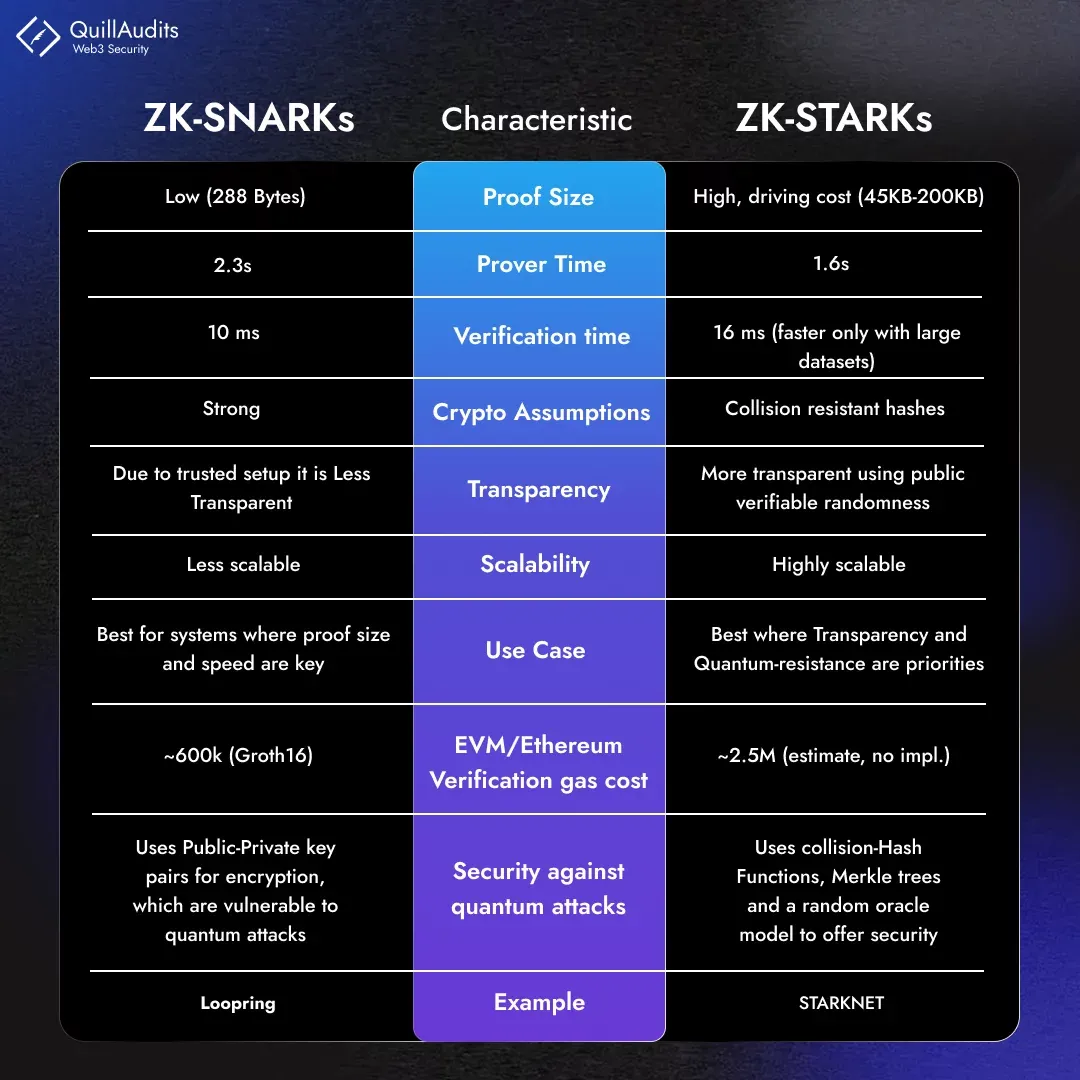
Start by calculating the maximum acceptable proof size for your on-chain verification. If you are deploying to Ethereum L1 or have strict block space limits, ZK-SNARKs are often the default choice because their proofs are significantly smaller (typically under 200 bytes). However, if your application involves heavy data verification where proof generation speed is more critical than on-chain storage costs, ZK-STARKs may offer a better balance despite larger proof sizes.
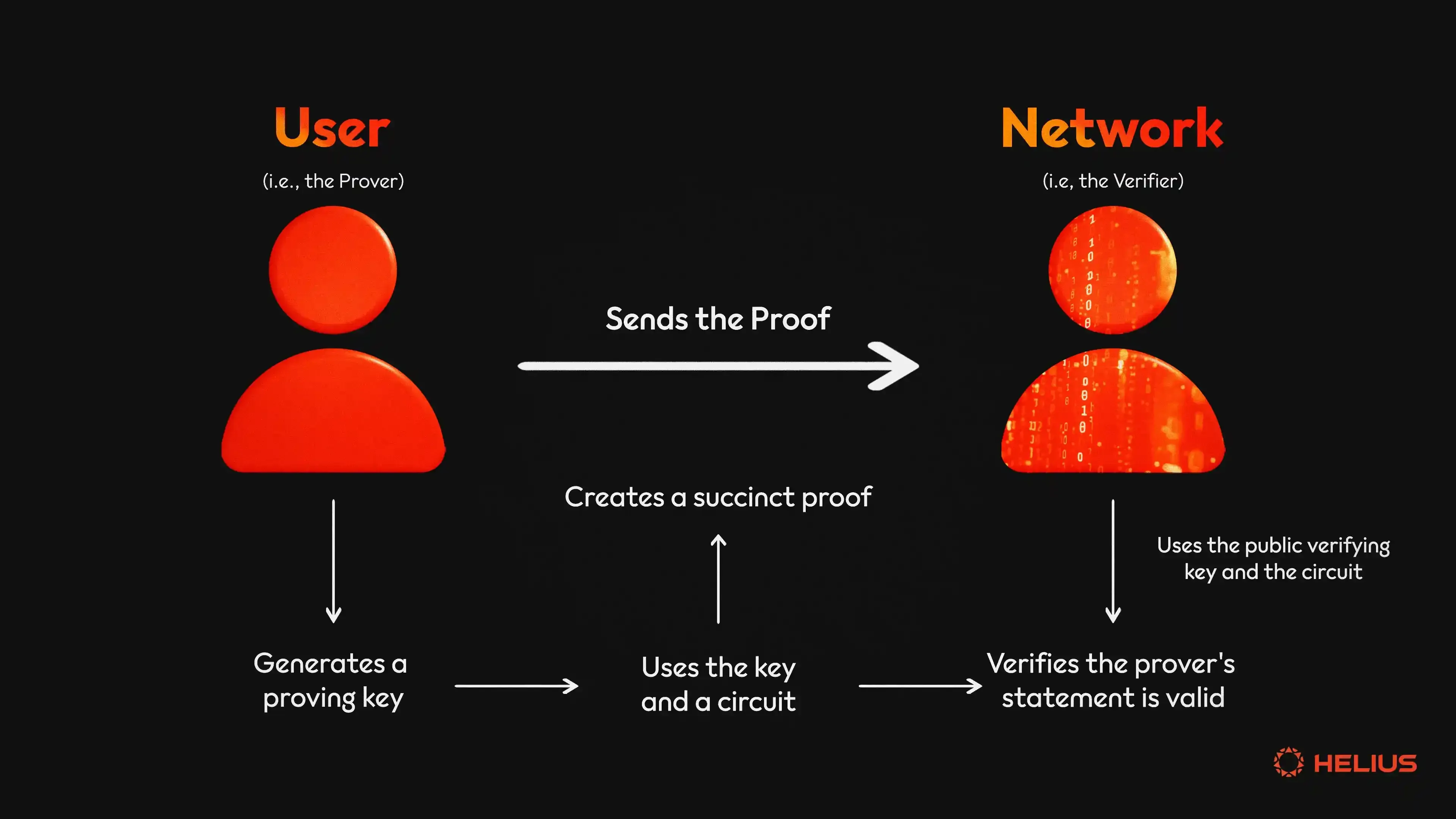
Determine whether your project can tolerate a trusted setup phase. ZK-SNARKs require a "trust setup" ceremony to generate initial parameters; if this process is compromised, the entire system's security is void. ZK-STARKs are "transparent" and do not require this setup, making them preferable for projects where decentralization and trustlessness are paramount. For DePIN networks with many anonymous nodes, the transparency of STARKs often provides a stronger security foundation.
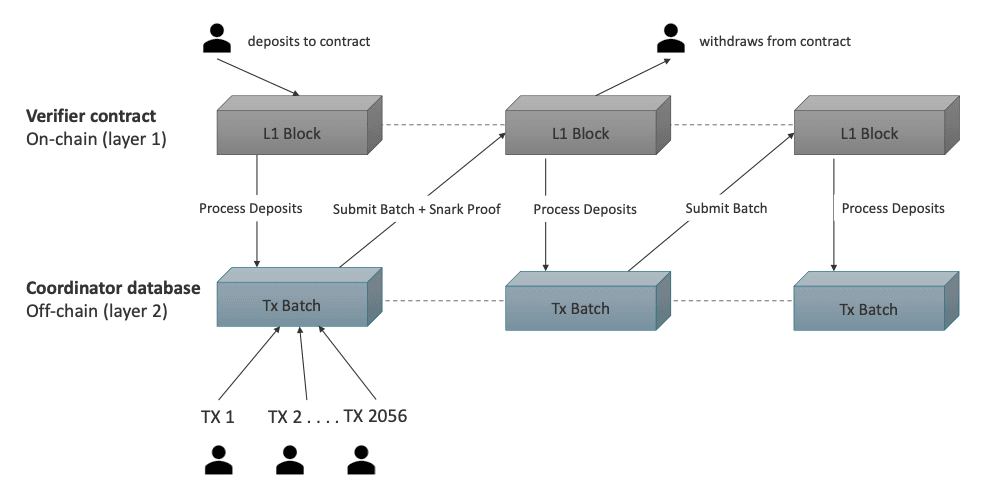
Compare the resource costs for generating and verifying proofs. ZK-SNARKs have lower verification costs but higher prover complexity for large circuits. ZK-STARKs have higher verification costs but scale better for massive datasets, which is common in AI data markets. If your workload involves verifying thousands of AI inference steps, the linear scalability of STARKs might reduce long-term operational expenses compared to the quadratic overhead of some SNARK implementations.
Consider the long-term threat landscape. ZK-STARKs are built on hash functions and are considered post-quantum secure, meaning they are resistant to attacks from quantum computers. ZK-SNARKs rely on elliptic curve cryptography, which is vulnerable to quantum attacks. If your DePIN or AI platform needs to remain secure for decades, STARKs offer a future-proof advantage without requiring a transition to new cryptographic standards.
Fix common mistakes
ZK proof systems are powerful, but they are easy to misconfigure. In DePIN and AI data markets, a single error can break privacy guarantees or inflate costs. Below are the most frequent mistakes and how to avoid them.
Mistake 1: Using ZK-SNARKs for high-volume, low-value data. SNARKs require a trusted setup and produce small proofs, but verification is expensive. If you are processing thousands of small sensor updates, the gas costs will overwhelm the network. Switch to ZK-STARKs for these workloads. STARKs are transparent and scale better with data volume, even if the individual proofs are larger.
Mistake 2: Ignoring verifier overhead in ZK-STARKs. STARKs are scalable, but they are not free. The computational cost to verify a STARK proof is higher than a SNARK. If you deploy a STARK-based system on a low-power device without optimizing the verification circuit, the device will fail to validate the proof. Always benchmark verification time on your target hardware before finalizing your architecture.
Mistake 3: Overlooking circuit complexity. Both systems suffer if your proof circuit is too complex. A bloated circuit increases proving time exponentially. Keep your logic minimal. Only include the data necessary for the privacy guarantee. Remove any redundant checks or unused variables from the circuit definition.
Zk-snarks vs zk-starks 2026: what to check next
Choosing between zero-knowledge proof systems often comes down to specific infrastructure constraints rather than abstract superiority. The following questions address the practical tradeoffs for DePIN and AI data markets in 2026.
For most DePIN applications requiring minimal bandwidth and existing infrastructure compatibility, ZK-SNARKs remain the standard. However, as quantum threats loom and data volumes explode, ZK-STARKs offer a more future-proof architecture for AI data markets.
No comments yet. Be the first to share your thoughts!