
Get zk-rollups 2026 right
Before deploying capital or migrating data, you must verify the underlying proof system. A ZK rollup is a Layer 2 blockchain that batches thousands of transactions offchain and settles them back to Ethereum using a single zero-knowledge proof. This architecture offers finality and data availability, but it introduces specific technical prerequisites that differ from optimistic rollups.
Verify the proof system and circuit complexity
ZK rollups rely on recursive proof composition to minimize on-chain gas costs. Ensure the project uses a modern proving system like Halo 2 or Groth16, which balances setup complexity with verification speed. Complex circuits require trusted setups, introducing centralization risks if the ceremony is compromised. Prefer projects with transparent setups or no trusted setup requirements to maintain decentralization guarantees.
Assess data availability and settlement layer
The security of a ZK rollup depends entirely on where it posts transaction data. Check if the rollup posts compressed data directly to Ethereum L1 or uses a separate data availability layer like Celestia or EigenDA. L1 posting ensures maximum security but increases costs. Separate layers offer cheaper transactions but introduce additional trust assumptions. For high-stakes applications, L1 data availability remains the gold standard.
Test the exit window and bridge security
Unlike optimistic rollups, ZK rollups offer immediate finality, but bridge withdrawals may still face latency. Verify the bridge’s smart contract audit history and whether it supports light-client verification. A robust bridge allows users to withdraw funds without relying on a centralized sequencer. Test the withdrawal process with small amounts to confirm the user experience and settlement times match the documentation.
How to choose between ZK-Rollups and ZK-SNARKs
Selecting the right zero-knowledge scaling solution requires matching the technology to your specific use case. ZK-Rollups and ZK-SNARKs solve different problems: one prioritizes throughput for general transactions, while the other focuses on compact proofs for privacy or state verification. Follow these steps to evaluate which fits your architecture.
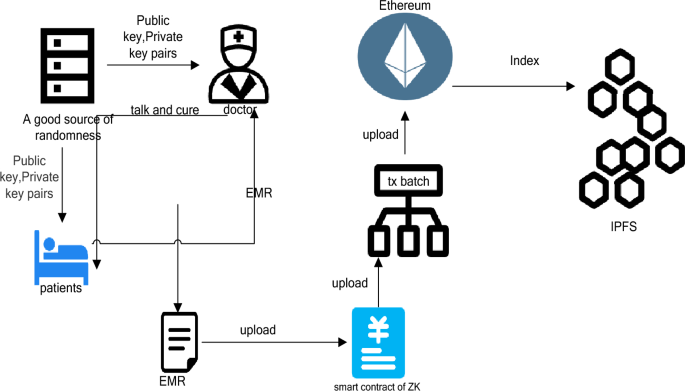
Start by identifying whether you need high transaction throughput or cryptographic privacy. If your goal is to move thousands of payments or swaps off Ethereum mainnet efficiently, ZK-Rollups are the standard. They batch transactions together, publishing only a single validity proof to the chain. This approach maximizes data availability and minimizes gas costs for users. If your goal is to prove a single statement without revealing the underlying data—such as in identity verification or confidential transactions—ZK-SNARKs are more appropriate.
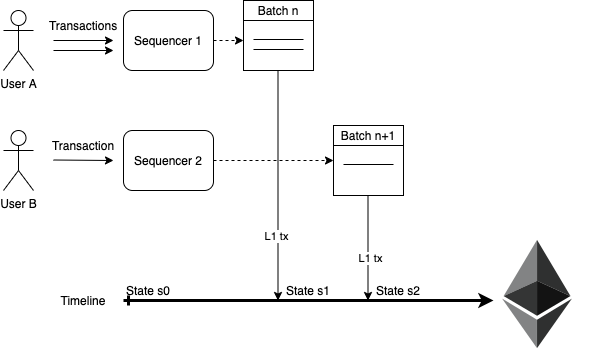
Consider the computational resources required to create proofs. ZK-Rollups generate a single proof for an entire block of transactions, which is computationally intensive but amortized over many users. This makes them ideal for high-volume environments like decentralized exchanges. ZK-SNARKs generate proofs for individual circuits. While faster to generate for small tasks, they do not scale as efficiently for bulk data processing. Choose ZK-Rollups if you can handle batch proof generation; choose ZK-SNARKs if you need lightweight, individual proof generation.
Analyze the gas cost to verify the proof on Ethereum mainnet. ZK-Rollups publish one proof per batch, meaning the verification cost is shared across all transactions in that batch. This results in significantly lower fees per transaction for end users. ZK-SNARKs, when used for general scaling, often require more complex verification logic if not optimized for batching. For applications where user experience and low fees are critical, ZK-Rollups offer a superior economic model. For niche applications where proof size matters more than throughput, ZK-SNARKs remain competitive.

Verify that your existing tooling and smart contract frameworks support your chosen technology. ZK-Rollups have matured rapidly, with major projects like zkSync and Starknet offering robust developer SDKs. ZK-SNARKs require specialized circuit design languages like Circom or Gnark. If your team is already building on Ethereum-compatible stacks, ZK-Rollups provide a smoother integration path. If you are building a privacy-focused protocol from scratch, ZK-SNARKs offer greater flexibility in circuit design.
Fix Common Mistakes in ZK Rollup and ZK-SNARK Implementation
Even with robust zero-knowledge proofs, implementation errors can break security guarantees or inflate costs. The following mistakes are the most frequent causes of failure when deploying ZK rollups or integrating ZK-SNARKs into financial infrastructure.
Misinterpreting Proof Types
The most critical error is treating ZK-SNARKs and ZK-STARKs as interchangeable without considering the tradeoffs. ZK-SNARKs are smaller and faster to verify but require a trusted setup, which introduces a one-time vulnerability if the ceremony is compromised. ZK-STARKs are quantum-resistant and do not need a trusted setup, but their proofs are larger and more computationally expensive. Choosing the wrong type for your use case can lead to unacceptable latency or security risks. Always match the proof system to your specific threat model and performance requirements.
Ignoring Gas Optimization
Deploying and verifying proofs on Ethereum mainnet is expensive. A common mistake is failing to optimize the circuit logic before deployment, resulting in prohibitively high gas costs. Every constraint added to the circuit increases the computational burden. Use efficient arithmetic circuits and minimize the number of gates. Consider using layer-2 specific optimizations like recursive proofs to batch verifications. This step is essential for maintaining economic viability as transaction volume grows.
Overlooking Verification Costs
Many developers focus solely on the cost of generating proofs, neglecting the cost of verifying them on-chain. Verification costs can sometimes exceed generation costs, especially for complex circuits. Ensure your budget accounts for both. If verification costs are too high, consider using a different proof system or a different layer-2 solution with lower verification overhead. Always test your circuit on a testnet with realistic gas prices to avoid surprises.
Skipping Formal Verification
Zero-knowledge circuits are complex software. A single bug in the circuit logic can lead to incorrect proofs or security breaches. Skipping formal verification is a high-stakes gamble. Use formal verification tools to mathematically prove the correctness of your circuit. This step ensures that your code behaves exactly as intended, protecting users from potential exploits.
Using Unaudited Libraries
Relying on unaudited or obscure cryptographic libraries is a major security risk. Always use well-established, community-audited libraries for generating and verifying proofs. Check for recent audits and community adoption. If a library has not been reviewed by experts, the risk of hidden vulnerabilities is too high. Security should never be an afterthought in zero-knowledge applications.
Zk-rollups 2026: practical questions and choices that change the plan
Before committing to a ZK-rollup, you need to understand the operational realities of 2026. The landscape has shifted from experimental proofs to mature, high-throughput networks. These questions address the most common technical and economic hurdles developers face when choosing between ZK-SNARKs and ZK-STARKs, or selecting a specific rollup provider.
These distinctions matter because the choice between SNARKs and STARKs affects your gas costs, development complexity, and long-term security posture. While SNARKs offer immediate efficiency, STARKs provide future-proofing against quantum threats. For most 2026 projects, the decision hinges on whether you prioritize low transaction costs or maximal cryptographic transparency.
No comments yet. Be the first to share your thoughts!