
What ZK-Rollups Mean for 2026
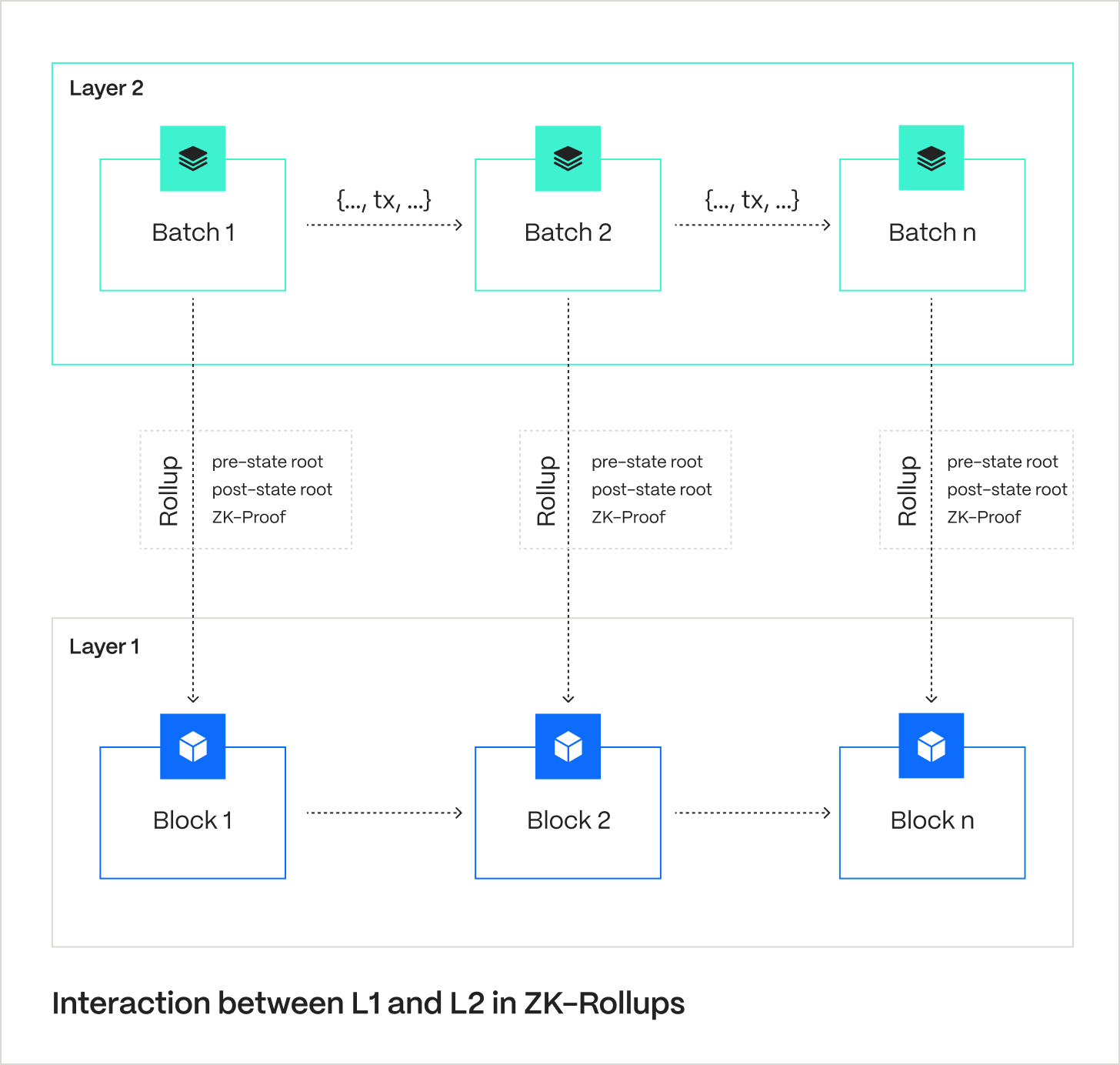
A ZK-rollup is a Layer 2 blockchain that batches thousands of transactions offchain and settles them back to Ethereum using a single zero-knowledge proof. This approach allows the network to verify the validity of all included transactions without processing each one individually on the main chain. The result is significantly higher throughput and lower fees while inheriting Ethereum’s security guarantees.
In 2026, the focus has shifted from theoretical viability to practical compliance. ZK-proofs enable selective data visibility, allowing organizations to prove regulatory adherence—such as KYC status or transaction limits—without exposing the underlying sensitive data. This capability addresses the primary tension in decentralized finance: the need for privacy versus the requirement for auditability.
The technology relies on complex mathematics to generate a succinct proof that the computation was performed correctly. Unlike optimistic rollups, which assume transactions are valid unless challenged, ZK-rollups provide immediate finality. This distinction is critical for applications requiring high confidence in transaction settlement, such as institutional payments or regulated asset trading.
The ecosystem is maturing rapidly, with major projects like zkSync and StarkNet leading the charge. These platforms are not just building faster chains; they are building infrastructure that can coexist with traditional financial regulations. As the technology becomes more accessible, developers are finding new ways to leverage ZK-proofs for identity verification and data integrity.
For enterprises, the decision to adopt ZK-rollups often hinges on specific use cases. Financial institutions benefit from the ability to conduct private audits, while consumer applications gain the ability to protect user data from breaches. The tradeoff lies in the computational cost of generating proofs, which remains higher than other scaling solutions, but the security and privacy benefits often justify the expense.
Zk-rollups 2026 choices that change the plan
Use this section to make the ZK-Rollups decision easier to compare in real life, not just on paper. Start with the reader's actual constraint, then separate must-have requirements from details that are merely nice to have. A practical choice should survive normal use, maintenance, timing, and budget. If a recommendation only works in an ideal situation, call that out plainly and give the reader a fallback path.
| Factor | What to check | Why it matters |
|---|---|---|
| Fit | Match the option to the primary use case. | A good deal still fails if it does not fit the job. |
| Condition | Verify age, wear, and service history. | Hidden condition issues erase upfront savings. |
| Cost | Compare purchase price with likely upkeep. | The cheapest option is not always the lowest-cost option. |
How to choose the right ZK rollup for your use case
Selecting a ZK rollup is not about picking the fastest chain; it is about matching your compliance and privacy requirements with the right trust model. In 2026, the landscape splits into two distinct paths: validity rollups (ZK-rollups) and optimistic rollups. While both settle on Ethereum, their approach to data privacy and verification differs significantly.
Validity rollups generate a zero-knowledge proof for every batch of transactions. This proof is verified on-chain, meaning the network trusts the math, not the operators. This model offers strong data privacy guarantees and finality within minutes, making it ideal for high-value financial transactions or applications requiring strict regulatory compliance. However, generating these proofs is computationally expensive, which can lead to higher gas fees during peak congestion.
Optimistic rollups, by contrast, assume transactions are valid unless challenged. They do not generate ZK proofs for every batch, resulting in lower costs and higher throughput. However, they lack the inherent data privacy of ZK-rollups and require a seven-day dispute window for finality. This delay can be a dealbreaker for time-sensitive applications or institutions requiring immediate settlement confirmation.
To navigate this decision, evaluate your project against three core criteria:
If your application requires immediate settlement and cannot tolerate a seven-day dispute window, a validity rollup is the only viable option. The cryptographic proof provides instant finality, which is critical for DeFi protocols and institutional trading platforms where latency translates directly to financial risk.
Regulatory bodies increasingly demand transparent, verifiable transaction histories. Validity rollups provide a mathematically provable audit trail for every batch, simplifying compliance reporting. If your use case involves sensitive financial data or requires adherence to strict data privacy laws like GDPR, the inherent privacy features of ZK-proofs offer a significant advantage over optimistic models.
Optimistic rollups offer lower transaction costs by deferring computation. However, this cost efficiency comes with a security tradeoff: users must trust that no malicious actor will exploit the dispute window. Validity rollups prioritize security and privacy over low cost. For high-value transactions, the premium paid for ZK-proof generation is often justified by the reduced counterparty risk.
| Feature | ZK Rollup (Validity) | Optimistic Rollup |
|---|---|---|
| Finality Time | Minutes | 7 Days |
| Data Privacy | High (Zero-Knowledge) | Low (Transparent) |
| Transaction Cost | Higher | Lower |
| Security Model | Cryptographic Proof | Dispute Window |
The choice ultimately depends on whether you prioritize speed and cost or security and privacy. For most compliance-heavy applications in 2026, the robustness of ZK-rollups makes them the preferred infrastructure, despite the higher operational costs.
Spotting Weak ZK-Rollup Claims
Not every solution calling itself a ZK rollup meets the same standard. Many projects use the term loosely, offering only marginal speed gains without the cryptographic proof that defines the architecture. In 2026, the line between genuine zero-knowledge scaling and simple data availability layers has blurred, making due diligence essential for compliance and security.
Watch for projects that omit proof generation details or rely on centralized sequencers without transparent audit trails. A true zk rollup must generate a validity proof for every batch settled on Ethereum. If a project claims privacy but does not publish its proof system or verification cost, it likely lacks the robustness required for high-stakes financial applications.
Key Tradeoffs by Use Case
| Feature | Validity Rollup (ZK) | Fraud Proof Rollup (Optimistic) |
|---|---|---|
| Finality | Fast (minutes) | Slow (7 days) |
| Security | Cryptographic proof | Economic challenge period |
| Cost | Higher proof generation | Lower proof costs |
| Privacy | Native (data hidden) | Limited (data visible) |
Choose validity rollups when you need immediate settlement and strict data privacy, such as for institutional trading or healthcare records. Opt for fraud-proof rollups when you prioritize lower transaction costs and have a longer timeline for finality, suitable for general-purpose DeFi applications where speed is less critical than cost efficiency.
Zk-rollups in 2026: common: what to check next
ZK-rollups are Layer 2 scaling solutions that batch thousands of transactions offchain and settle them on Ethereum Mainnet using zero-knowledge proofs. This approach increases throughput while maintaining the security guarantees of the base layer.
What does zk rollup mean?
A zk rollup is a method for scaling blockchains by moving transaction execution off the base chain while allowing the base chain to verify the result. The "zk" stands for zero-knowledge, referring to the cryptographic proofs that confirm the validity of the batched transactions without revealing the underlying data. This allows for high throughput and low fees while preserving decentralization and security.
Is zkSync built on Ethereum?
Yes, zkSync is a Layer 2 network built specifically for Ethereum. It uses zero-knowledge proofs to process transactions offchain and then posts the final state root to Ethereum Mainnet. This means zkSync inherits Ethereum's security model while offering faster and cheaper transactions for users and developers.
What is zk in crypto?
In cryptocurrency, "zk" refers to zero-knowledge proofs, a cryptographic method that allows one party to prove to another that a statement is true without revealing any information beyond the validity of the statement itself. In the context of rollups, zk proofs are used to demonstrate that a batch of transactions was executed correctly, enabling secure and private scaling of blockchain networks.
No comments yet. Be the first to share your thoughts!