
The 2026 ZK Landscape: Privacy Meets Regulation
Zero-knowledge proofs (ZKP) have graduated from theoretical cryptography to a core infrastructure layer for regulated digital assets. In 2026, the technology is no longer primarily about anonymity; it is a compliance utility. The modern ZKP allows a user to prove they meet specific regulatory criteria—such as age, residency, or asset ownership—without exposing the underlying private data to the verifier. This shift transforms privacy from a barrier to compliance into a mechanism for it.
The distinction between a proof and raw data is critical. A zero-knowledge proof is a cryptographic method of verifying the validity of a statement without revealing the statement itself. The prover demonstrates knowledge of a secret or the truth of a condition, while the verifier accepts the proof without learning anything beyond the fact that the statement is true. This mathematical guarantee is what allows financial institutions to audit transactions while preserving user confidentiality.
Real-world implementations illustrate this practical application. The XRP Ledger recently integrated zero-knowledge proofs to allow banks to transact privately, enabling them to verify transaction validity without exposing counterparty details to the public ledger. Similarly, researchers have demonstrated proof-of-reserve schemes on Bitcoin, where users can prove they own UTXOs exceeding a threshold without revealing their full transaction history or balance. These examples show ZKP moving beyond concept into active network protocols.
The standardization of these protocols is accelerating through initiatives like ZKProof, which aims to mainstream ZKP cryptography through open-industry academic collaboration. As standards solidify, the focus is shifting from experimental rollups to interoperable, compliance-ready infrastructure. The technology is no longer asking if privacy is possible, but how to structure privacy in a way that satisfies global regulatory frameworks.
ZK-rollups as compliance infrastructure
ZK-rollups address the core tension in regulated finance: the need to scale transaction throughput without compromising auditability. By bundling thousands of transactions off-chain and generating a single cryptographic proof that validates their correctness, these rollups allow institutions to maintain privacy while satisfying regulatory requirements. The technology effectively decouples data execution from data availability, ensuring that sensitive client information remains confidential while the network verifies the integrity of the ledger.
This architecture transforms compliance from a reactive data dump into a proactive cryptographic verification. Instead of exposing entire transaction histories to third-party auditors, institutions can use zero-knowledge proofs to demonstrate compliance with specific rules—such as Know Your Customer (KYC) status or transaction limits—without revealing the underlying identities or amounts. This selective disclosure mechanism is critical for high-stakes environments where data minimization is a legal requirement.
Real-world implementations are already demonstrating this capability. The XRP Ledger has integrated zero-knowledge proofs to enable private transactions for banks, allowing them to verify counterparty eligibility without exposing trade flows. Similarly, research into Bitcoin's protocol shows how ZKPs can verify proof-of-reserve schemes, allowing users to prove ownership of UTXOs exceeding a threshold without revealing specific transaction details. These examples illustrate how the technology moves beyond theoretical privacy to practical compliance infrastructure.
The shift from traditional data storage to ZK-based verification significantly reduces privacy risks and regulatory friction. The following comparison highlights the operational differences between legacy compliance models and modern ZK-rollup implementations.
| Feature | Traditional KYC Storage | ZK-Based Verification | Compliance Impact |
|---|---|---|---|
| Data Retention | Full transaction history stored centrally | Proofs only; raw data off-chain | Reduces liability from data breaches |
| Audit Access | Full ledger access for regulators | Selective disclosure via proofs | Enables data minimization principles |
| Privacy Risk | High exposure to insider threats | Minimal; no sensitive data exposed | Lowers risk of regulatory penalties |
| Scalability | Limited by on-chain storage costs | High throughput via batching | Supports high-volume institutional trading |
As regulatory frameworks evolve, the ability to prove compliance without revealing data will become a standard requirement. ZK-rollups provide the technical foundation for this future, balancing the competing demands of transparency and privacy in a way that traditional systems cannot.
Institutional adoption of zero-knowledge proofs
The transition of zero-knowledge proofs (ZKPs) from theoretical cryptography to institutional infrastructure is defined by concrete protocol integrations rather than speculative pilots. In 2026, the market reality is anchored by major networks implementing privacy-preserving primitives to resolve the compliance paradox. Institutions no longer choose between transparency and privacy; they use ZKPs to prove compliance without exposing underlying data.
The XRP Ledger has integrated zero-knowledge proofs to allow banks to transact privately for the first time. This implementation enables financial institutions to verify transaction validity and regulatory adherence without broadcasting sensitive customer data to the public ledger. This move signals a shift where legacy finance adopts ZKP technology to meet strict data sovereignty requirements while maintaining the efficiency of distributed ledgers [src-serp-5].
Bitcoin, traditionally viewed as purely transparent, is also seeing ZKP adoption through proof-of-reserve schemes. Researchers demonstrate how ZKPs allow users to prove the ownership of a given UTXO exceeding a threshold value without revealing transaction details or balances [src-serp-7]. This capability allows custodians to provide cryptographic assurance of solvency to auditors and regulators without compromising the privacy of individual user accounts.
The 8th ZKProof Workshop, held in Rome in May 2026, further underscores this institutional maturity. The workshop focused on security, implementation, and real-world applications, reflecting a community shift from academic exploration to rigorous, production-grade deployment [src-serp-7]. This environment supports the development of standardized, auditable ZK circuits that meet the high-stakes demands of legal and regulatory frameworks.
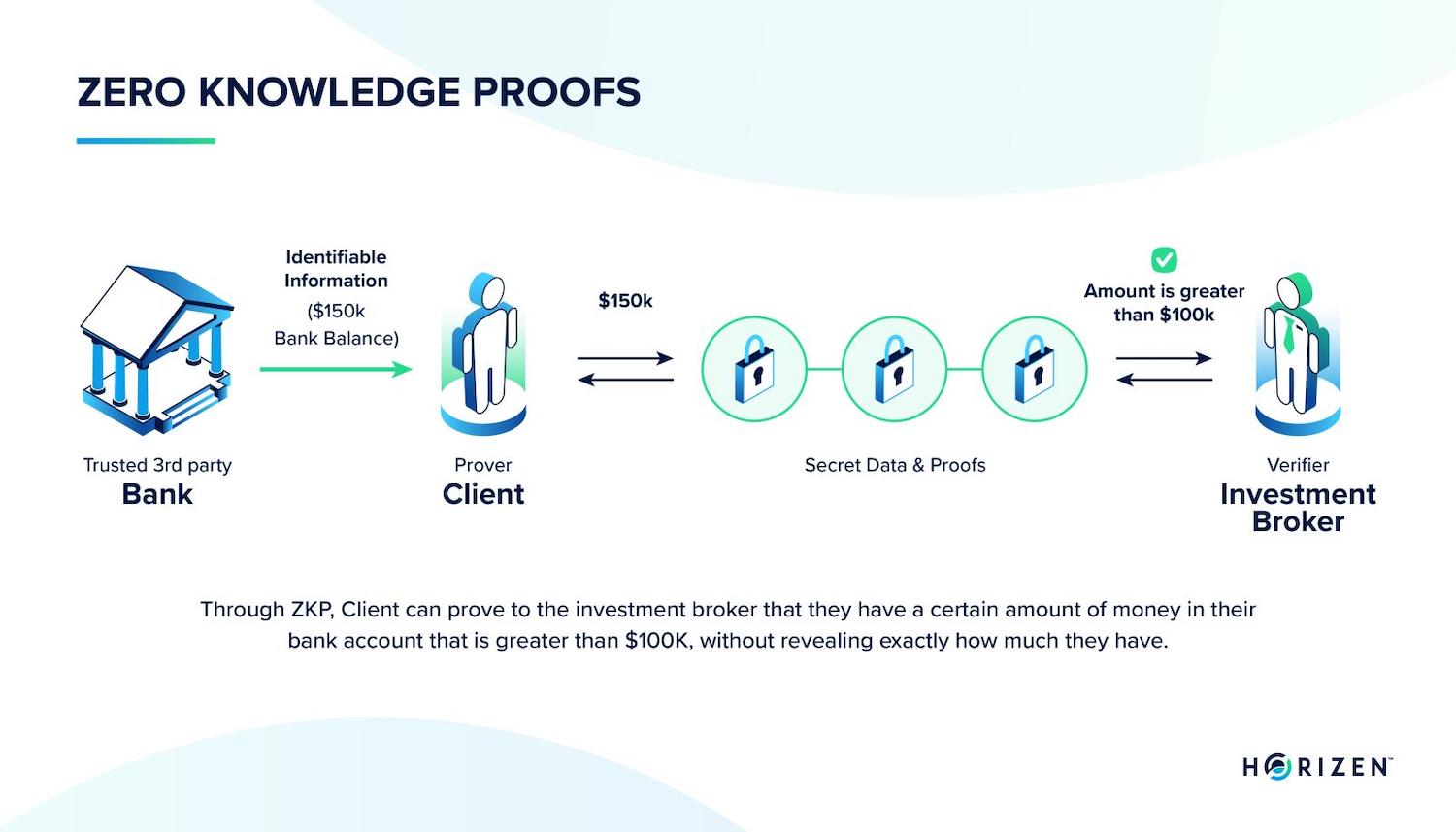
Navigating regulatory frameworks
Regulators are shifting from skepticism to structured integration as zero-knowledge proof (ZKP) technology matures. The core challenge for legal compliance lies in reconciling cryptographic privacy with the universal demand for transparency. Selective disclosure allows entities to prove compliance—such as age verification or anti-money laundering checks—without exposing the underlying private data. This capability transforms the privacy-compliance paradox from a theoretical debate into an engineering specification.
Standardization bodies are moving quickly to define these specifications. The ZKProof initiative, an open-industry academic effort, is currently working to establish formal standards for ZKP interoperability and security. Their upcoming 2026 standards conference in Rome signals a move toward formalized, auditable protocols that legal frameworks can reference. By creating a common language for cryptographic verification, regulators can assess risk based on standardized proofs rather than opaque black-box systems.
Real-world implementations are already testing these boundaries. The XRP Ledger’s integration of ZKPs enables banks to conduct private transactions while maintaining an auditable trail for regulators. Similarly, research into Bitcoin-based proof-of-reserve schemes demonstrates how ZKPs can verify asset ownership without revealing specific transaction details or UTXO balances. These examples provide concrete precedents for how selective disclosure functions in high-stakes financial environments, offering a template for future regulatory guidelines.
Frequently asked questions about zero-knowledge proofs
These applications highlight the shift from theoretical cryptography to practical regulatory tools. The XRP Ledger's implementation and Bitcoin's proof-of-reserve research show that ZKPs are no longer just academic concepts.
No comments yet. Be the first to share your thoughts!