
The 2026 shift to ZK privacy
In 2026, zero-knowledge proofs (ZKPs) have completed their transition from academic curiosity to essential regulatory infrastructure. What began as a niche cryptographic tool is now the backbone of compliant digital finance. The industry no longer debates whether ZKPs work; it focuses on how they fit into global compliance frameworks.
This shift is driven by the maturity of ZK-rollups. These scaling solutions allow blockchain networks to process thousands of transactions off-chain while using ZKPs to verify validity on-chain. The result is a system that preserves user privacy without sacrificing the auditability required by regulators. As noted by ZKProof, an open-industry academic initiative, the goal is now mainstream adoption through rigorous standardization rather than experimental research [src-serp-1].
Ethereum.org defines the core mechanic simply: a prover demonstrates the validity of a statement without revealing the statement itself [src-serp-4]. In 2026, this mechanic powers everything from private banking transactions to secure identity verification. The technology has become invisible to the end user but critical to the integrity of the network.
The stakes are high. As financial institutions integrate ZK-rollups, the margin for error in proof generation shrinks. A single vulnerability in the cryptographic circuit can compromise billions in assets. This reality has pushed the industry toward stricter auditing standards and formal verification methods, ensuring that privacy does not come at the cost of security.
ZK-Rollups vs. Other Privacy Mechanisms
The privacy landscape is crowded, but not all tools are created equal. While mixers and confidential transactions offer anonymity, they often clash with regulatory requirements, creating a high-stakes environment for compliant projects. ZK-rollups have emerged as the preferred standard because they reconcile this tension, offering verifiable privacy without the opacity that triggers regulatory scrutiny.
To understand why ZK technology is becoming the center of gravity for compliant privacy, it helps to compare it against legacy alternatives. The following table contrasts ZK-rollups with mixers and confidential transactions across three critical dimensions: regulatory visibility, scalability, and the nature of the privacy guarantee.
| Mechanism | Regulatory Visibility | Scalability | Privacy Guarantee |
|---|---|---|---|
| ZK-Rollups | High (On-chain verification) | High (Batch processing) | Selective (Proof of validity) |
| Mixers | Low (Obscured trail) | Low (Sequential mixing) | Total (Anonymity set) |
| Confidential Transactions | Medium (Hidden amounts) | Medium (Proof size) | Partial (Amounts hidden) |
The distinction lies in the proof itself. Mixers obscure transaction trails, making it difficult for regulators to distinguish between legitimate activity and illicit flows. This opacity is why many jurisdictions are moving to ban or restrict mixer services. In contrast, ZK-rollups use cryptographic proofs to validate transactions without revealing the underlying data. As noted by Ethereum.org, a zero-knowledge proof allows a prover to demonstrate the validity of a statement without revealing the statement itself.
This capability enables a "selective" privacy model. Users can prove they are over 18 or that a transaction is compliant with anti-money laundering (AML) rules without exposing their identity or full transaction history. This is a fundamental shift from the "all-or-nothing" approach of mixers. By embedding compliance into the cryptographic layer, ZK-rollups allow privacy to coexist with regulatory oversight, a balance that confidential transactions struggle to achieve at scale.
The market is already reflecting this preference. Projects that prioritize compliance are increasingly adopting ZK infrastructure to future-proof their operations against evolving regulations. This trend suggests that while mixers may retain niche use cases for total anonymity, ZK-rollups are becoming the default for enterprise and regulated DeFi applications.
Compliance and Data Sovereignty
The central tension in digital privacy has always been the conflict between regulatory oversight and individual anonymity. Traditional compliance models force a binary choice: reveal all personal data to prove eligibility, or reveal nothing and remain excluded. Zero-knowledge proofs resolve this by enabling selective disclosure. They allow a user to prove a specific statement about their data is true without revealing the underlying raw information.
This capability is transforming how regulated industries handle sensitive information. In age verification, for example, a user can generate a proof that they are over 18 without exposing their birth date, name, or address. This approach satisfies legal requirements for age-restricted services while minimizing the attack surface for data breaches. Google has open-sourced libraries to demonstrate this practical application, showing how ZKPs can verify age assurance without exchanging unnecessary personal data [Google Innovation].
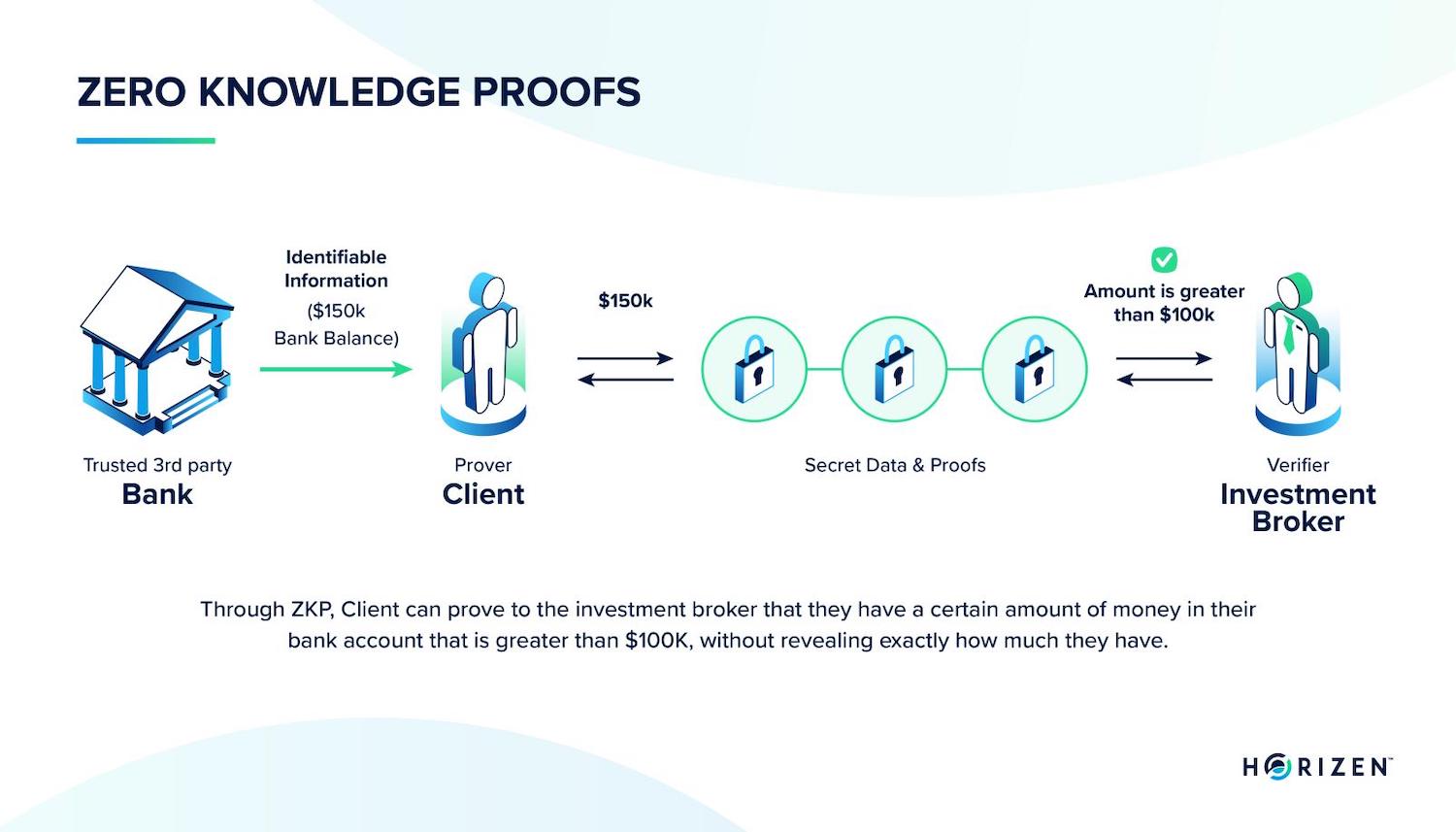
The implications extend beyond age checks to financial compliance and data sovereignty. Know Your Customer (KYC) processes often require sharing extensive identity documents, creating large, attractive targets for hackers. With zero-knowledge proofs, a user can prove they are not on a sanctions list or have passed a credit check without revealing their full identity or transaction history. This aligns with strict data minimization principles found in GDPR and other privacy frameworks.
By decoupling verification from data exposure, organizations can maintain rigorous compliance standards while respecting user privacy. This shift reduces liability for data handlers and gives users greater control over their digital footprint. As regulations tighten globally, zero-knowledge proofs are becoming the technical foundation for a privacy-preserving compliant economy.
Bitcoin and ZK integration
Zero-knowledge proofs are moving from Ethereum's modular stacks to Bitcoin's base layer, addressing the network's longstanding transparency paradox. While Bitcoin's ledger is immutable and public, new cryptographic protocols allow users to prove transaction validity without exposing sender, receiver, or amount. This shift transforms Bitcoin from a transparent public ledger into a system capable of private, compliant value transfer.
The technical feasibility centers on non-interactive zero-knowledge proofs (NIZKs). These proofs enable a user to demonstrate that a transaction adheres to Bitcoin's consensus rules—such as valid signatures and sufficient funds—without revealing the underlying data. For instance, a ZKP can verify that a sender has enough balance to complete a payment, keeping their total wallet history confidential. This is not merely a privacy feature; it is a structural upgrade that allows Bitcoin to handle complex smart contract logic while maintaining its security guarantees.
Regulatory implications are significant. Traditional compliance relies on surveillance of the entire ledger. ZK-integrated Bitcoin introduces a "compliance-by-default" model where regulators can verify anti-money laundering (AML) checks without accessing raw transaction data. This aligns with the 2026 focus on zero-knowledge proofs as the center of gravity for privacy-preserving compliance. The challenge lies in balancing this cryptographic opacity with legal requirements for financial oversight.
Market trends and standards
The adoption of zero-knowledge proofs (ZKP) is shifting from experimental research to industrial standardization. In 2026, the primary driver of market growth is not just privacy, but the ability to meet regulatory compliance without exposing sensitive data. Major financial entities and tech firms are moving beyond pilot programs, integrating ZK-Rollups to handle high-volume transactions on Ethereum while maintaining auditability.
Standardization remains the critical bottleneck. The ZKProof initiative is leading the charge in creating formal verification standards for zero-knowledge systems. Their upcoming conference in Rome (May 9-10, 2026) will focus on these protocols, aiming to unify disparate proof systems into interoperable standards. This effort is essential for enterprises that need to trust the mathematical integrity of the proofs they deploy.
Market interest is reflected in the underlying infrastructure. As institutional capital flows into privacy-preserving technologies, the valuation of related assets and the development of ZK-friendly chains accelerate. This growth is not speculative; it is driven by the tangible need for scalable, compliant blockchain solutions.
Common questions on ZK privacy
Zero-knowledge proofs have moved from theoretical cryptography to the backbone of modern blockchain infrastructure. As we look toward 2026, the integration of ZK technology into legacy systems and emerging privacy protocols remains a central topic for developers and regulators alike. Below are direct answers to the most frequent questions regarding Bitcoin integration and the broader future of the technology.
No comments yet. Be the first to share your thoughts!