
ZK-rollups 2026: The privacy layer for data sovereignty
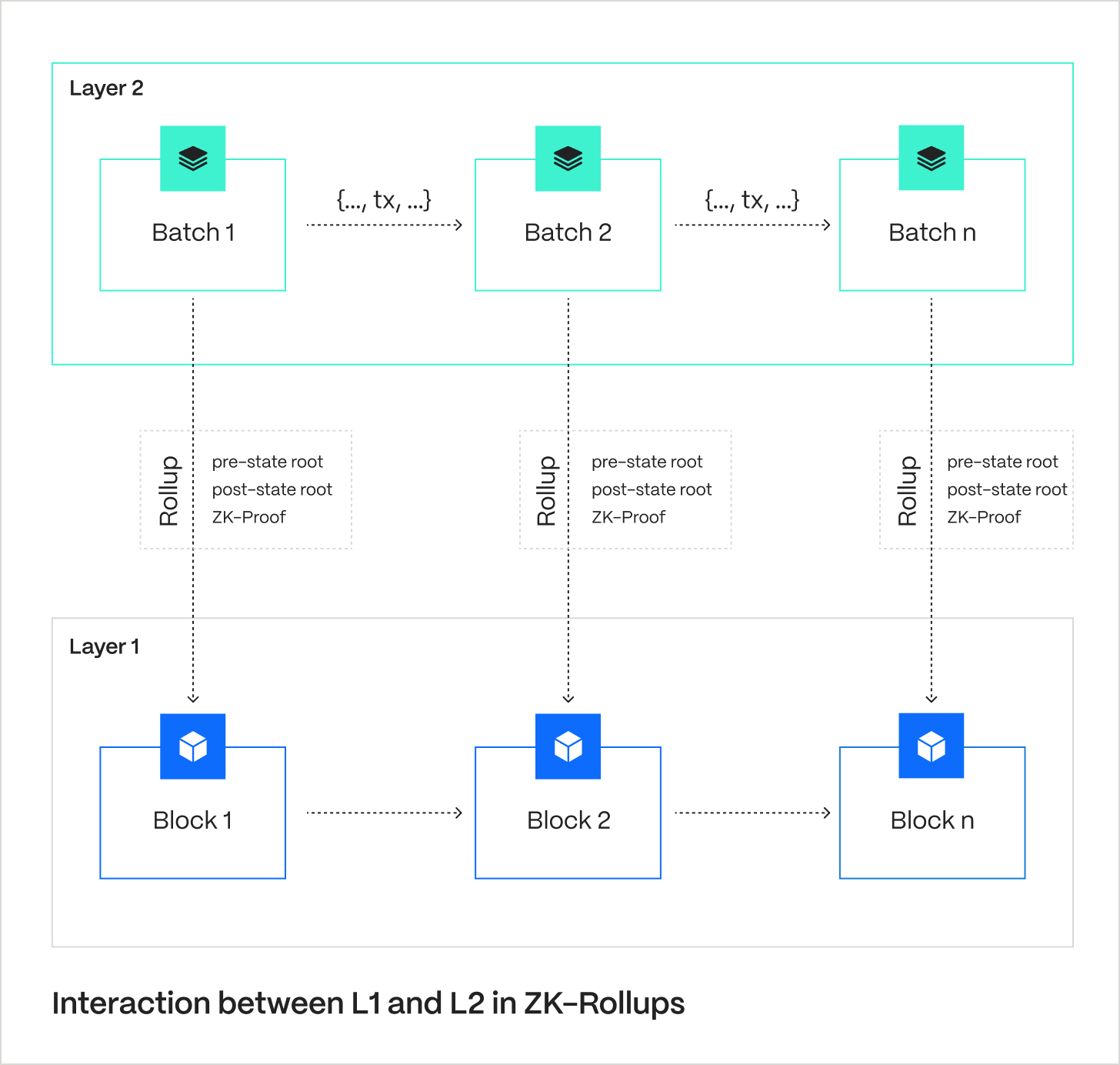
By 2026, ZK-rollups have evolved from experimental Layer 2 scaling solutions into the primary infrastructure for data sovereignty. A ZK-rollup batches thousands of transactions offchain and settles them back to Ethereum using a single, compact zero-knowledge proof. This mechanism allows the base layer to verify the integrity of the entire batch without processing every individual transaction.
The privacy aspect is inherent to the technology. Because the validity proof confirms that the state transition is correct without revealing the underlying data, user information remains private by default. This solves the data sovereignty crisis: users retain control over their data while benefiting from Ethereum's security guarantees. Unlike optimistic rollups, which rely on challenge periods, ZK-rollups provide immediate finality and cryptographic privacy.
This architecture decouples data availability from execution. The rollup operator stores the raw transaction data, while Ethereum only stores the compressed proof and the new state root. This reduces gas costs significantly and ensures that the network can scale without compromising on security or privacy. For developers and enterprises, this means building applications that are both high-performance and compliant with strict data protection standards.
How ZK-proofs protect consumer data
Use this section to make the ZK-Rollups decision easier to compare in real life, not just on paper. Start with the reader's actual constraint, then separate must-have requirements from details that are merely nice to have. A practical choice should survive normal use, maintenance, timing, and budget. If a recommendation only works in an ideal situation, call that out plainly and give the reader a fallback path.
The simplest way to use this section is to write down the must-have criteria first, then compare each option against those criteria before weighing nice-to-have features.
Top zkEVM projects in 2026
The landscape of zero-knowledge rollups has matured, with four projects standing out for their balance of security, speed, and ecosystem depth. While many solutions exist, zkSync Era, Polygon zkEVM, Linea, and Starknet offer the most robust environments for developers prioritizing data sovereignty and EVM compatibility.
These networks differ in their underlying cryptography and commitment to the Ethereum Virtual Machine. zkSync Era and Polygon zkEVM offer near-native EVM equivalence, making them ideal for developers porting existing Solidity applications. Linea provides a strong balance of performance and developer tooling. Starknet, while using a different virtual machine (Cairo), offers unparalleled scalability for specific high-throughput use cases.
The following comparison highlights the technical distinctions between these leading zkEVM projects to help you choose the right layer for your specific needs.
| Project | VM Type | Est. TPS | Finality | EVM Compat. |
|---|---|---|---|---|
| zkSync Era | zkEVM | 2,000+ | ~10-30 min | Native EVM |
| Polygon zkEVM | zkEVM | 9,000+ | ~10-30 min | EVM Equivalent |
| Linea | zkEVM | 4,000+ | ~10-30 min | EVM Equivalent |
| Starknet | Cairo | 10,000+ | ~10-30 min | Non-EVM (via bridge) |
zkSync Era remains a benchmark for EVM compatibility, allowing developers to deploy existing smart contracts with minimal modification. Polygon zkEVM leverages Polygon’s extensive infrastructure to offer high throughput and fast finality, appealing to enterprise-grade applications. Linea has gained traction through its focus on user experience and robust developer tools, backed by ConsenSys. Starknet continues to push the boundaries of computational throughput using its custom Cairo language, though it requires a steeper learning curve for traditional Ethereum developers.
When selecting a platform, consider your specific requirements for tooling, community support, and the degree of EVM equivalence needed. For most Solidity developers, zkSync Era or Polygon zkEVM provide the smoothest transition. For applications requiring maximum computational scale, Starknet’s unique architecture offers distinct advantages.
ZK-Rollups vs. Optimistic Rollups
Choosing between ZK-rollups and Optimistic rollups comes down to a tradeoff between speed and verification complexity. While both solutions layer on top of Ethereum to increase throughput, their approaches to proving transaction validity create different experiences for users handling consumer data.
Optimistic rollups operate on a "guilty until proven innocent" model. They assume transactions are valid by default to maximize throughput, only requiring computation if a challenge is raised. This introduces a mandatory seven-day dispute window before funds can be withdrawn. For applications where data sovereignty and immediate finality are critical, this delay creates a vulnerability window where user data or assets are not yet fully settled.
ZK-rollups take the opposite approach. They generate cryptographic validity proofs (zero-knowledge proofs) for every batch of transactions before submitting them to the main chain. This means transactions are mathematically verified as correct the moment they are confirmed. There is no waiting period for fraud proofs. The result is near-instant finality, which is essential for consumer applications that require real-time data privacy and immediate confirmation.
The performance difference is stark. Optimistic rollups prioritize computational efficiency by offloading verification, while ZK-rollups prioritize security and speed by shifting the heavy lifting to proof generation. As ZK technology matures, the gap in user experience is widening, making ZK-rollups the preferred choice for privacy-focused data applications.
| Feature | ZK-Rollups | Optimistic Rollups |
|---|---|---|
| Finality | Immediate | ~7 days |
| Verification | Validity proofs | Fraud proofs |
| Privacy | Inherent | None |
Choosing the right ZK-rollup for your use case
Selecting a ZK-rollup requires matching specific privacy needs, transaction volume, and cost constraints to the right infrastructure. Not all ZK-rollups are built for the same purpose. Some prioritize raw throughput for gaming, while others focus on financial privacy for DeFi applications. Developers must evaluate the trade-offs between scalability, security, and user experience before committing to a chain.
No comments yet. Be the first to share your thoughts!