zkCLOB ZK-SNARKs: Encrypting Orders to Eliminate Front-Running and MEV in DeFi

In the high-stakes arena of decentralized finance, transparency has long been a double-edged sword. Public order books on traditional DEXs expose trader intentions, inviting front-running and MEV extraction that erode user trust and profitability. zkCLOB emerges as a principled countermeasure, leveraging zk-SNARKs to encrypt orders and deliver CEX-like performance without the custody risks. This zero-knowledge DEX trading platform matches intents off-chain while validating everything on-chain, achieving sub-second speeds on Solana testnet with latencies as low as 400 milliseconds.

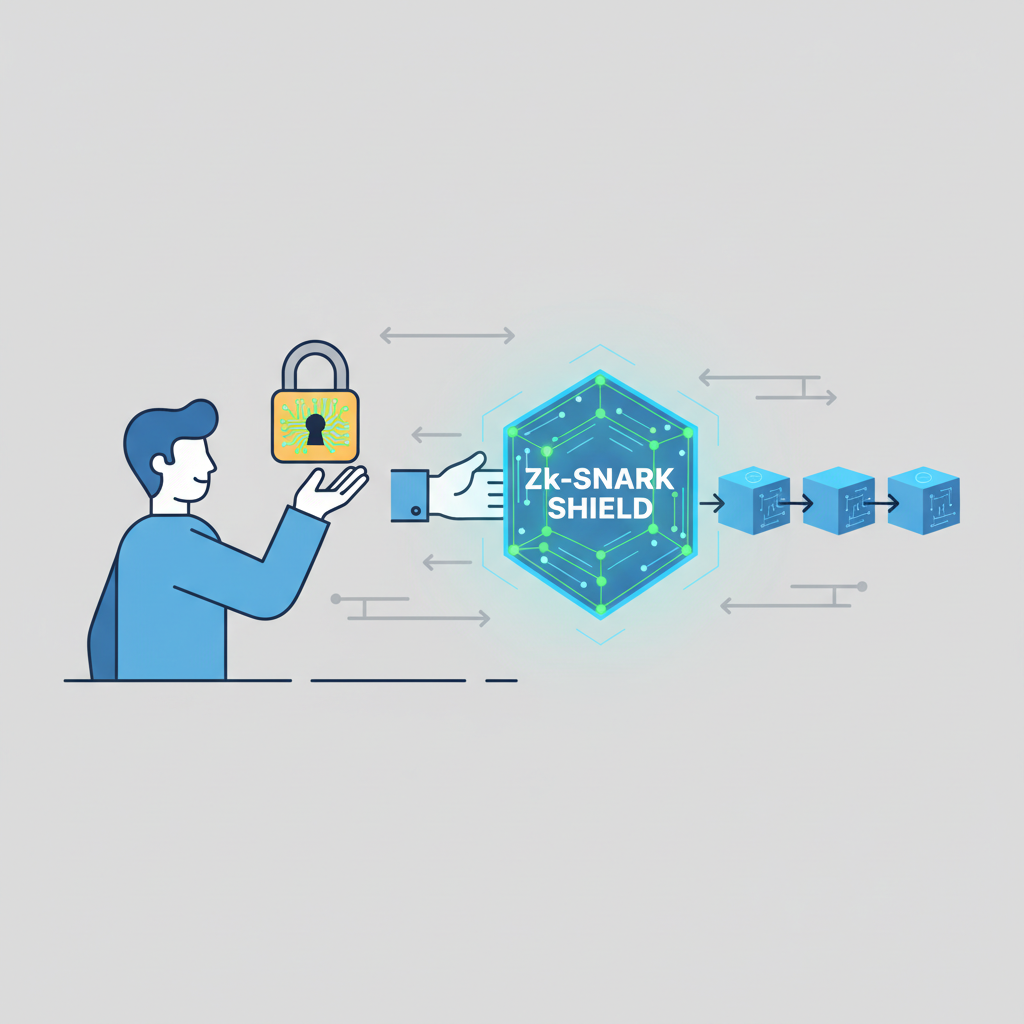
zkCLOB’s architecture addresses the core vulnerabilities of on-chain trading. By encrypting the entire order book, it prevents visibility into pending orders, prices, or sizes. Traders submit encrypted intents that relayers match privately, generating zk-proofs to settle trades atomically on-chain. This encrypted order privacy DeFi model mirrors dark pools in traditional finance, where institutional orders execute without market impact. Unlike AMMs with their slippage pitfalls, zkCLOB supports a true central limit order book, compatible with Jupiter, Raydium, and other Solana protocols via wallets like Phantom and Backpack.
zk-SNARKs as the Privacy Engine in zkCLOB
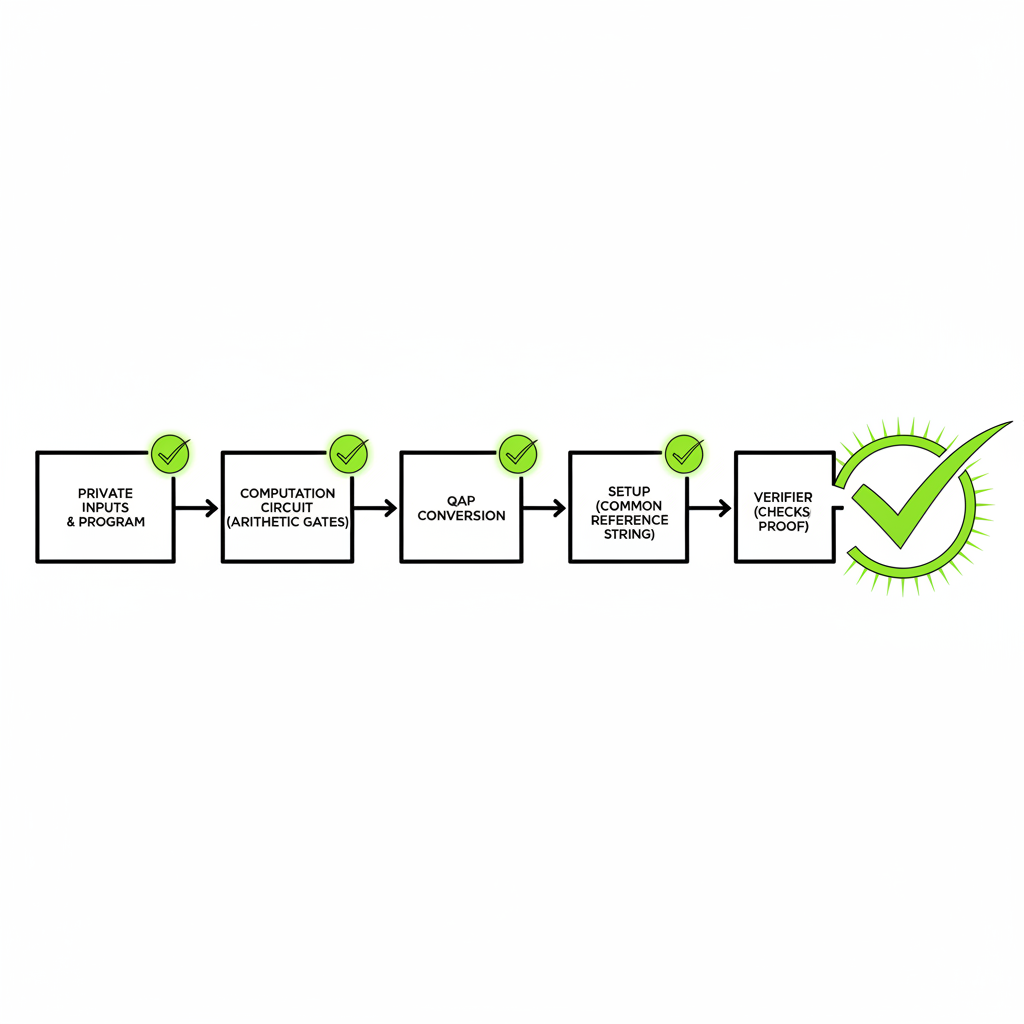
At the heart of zkCLOB ZK-SNARKs lies a succinct proof system that verifies complex computations without revealing inputs. Borrowed from Zcash’s shielded transactions, these proofs enable MEV protection zk proofs by attesting to valid matches without exposing order details. The process unfolds in layers: users encrypt orders using shared keys, off-chain matchers compute pairings under homomorphic properties, and zk-SNARKs compress the evidence into a tiny verifiable statement. On Solana, this yields institutional-grade privacy, shielding against sandwich attacks and liquidation hunting that plague transparent chains like Ethereum.
How zkCLOB Harnesses ZK-SNARKs for Encrypted Orders and MEV Protection

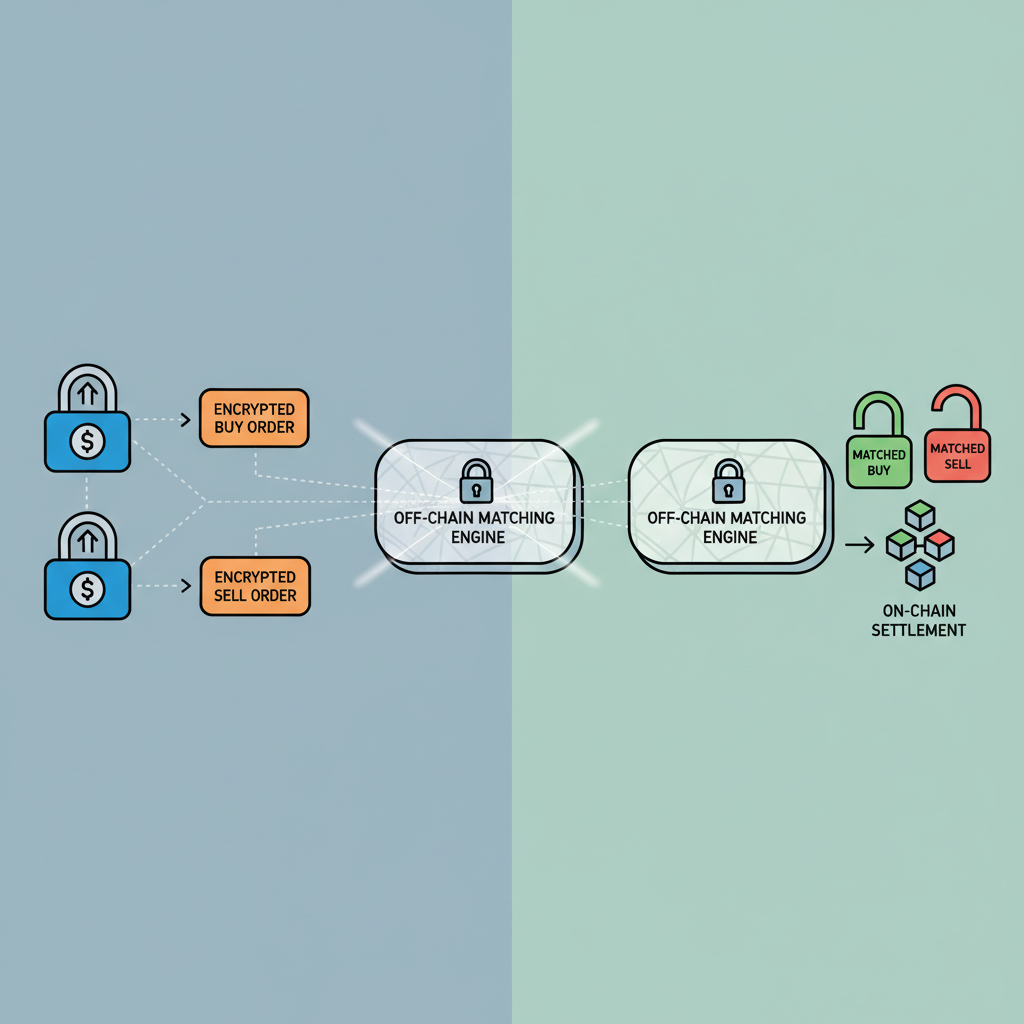
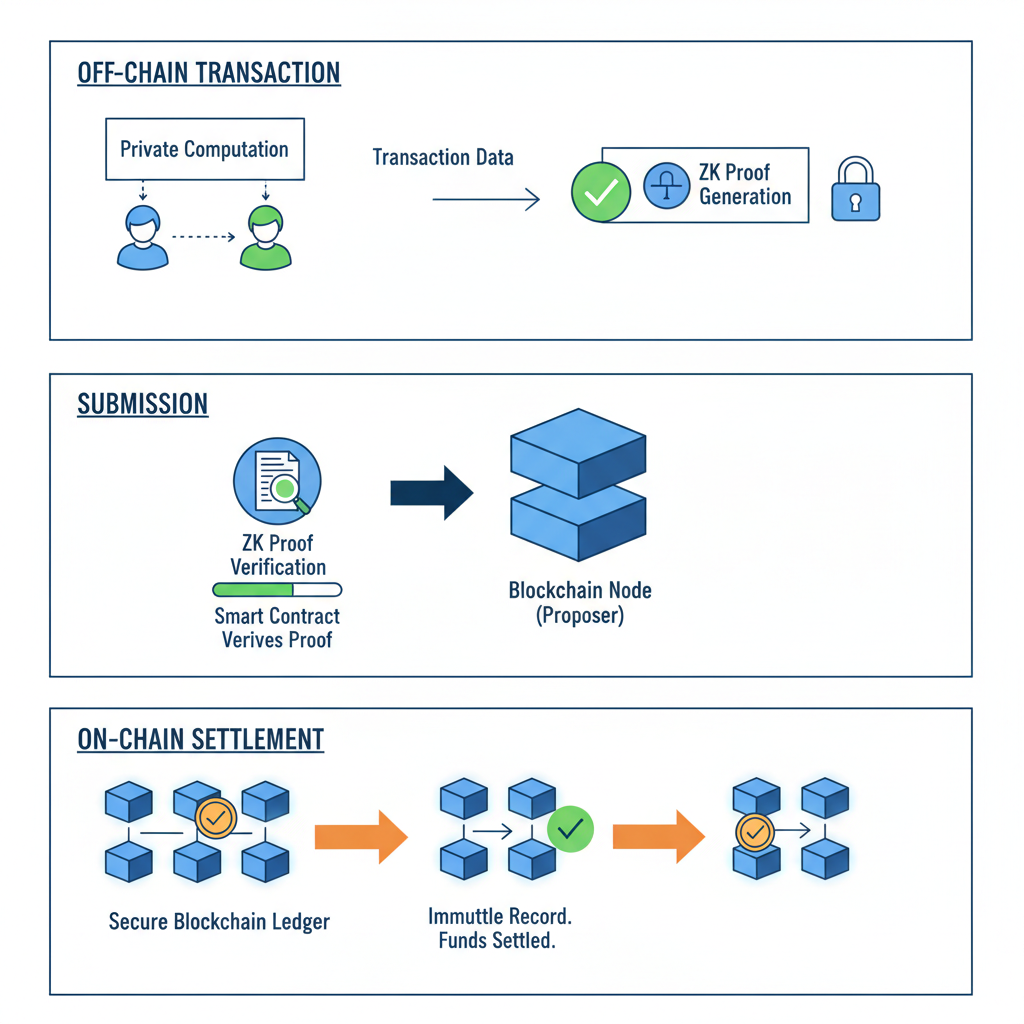
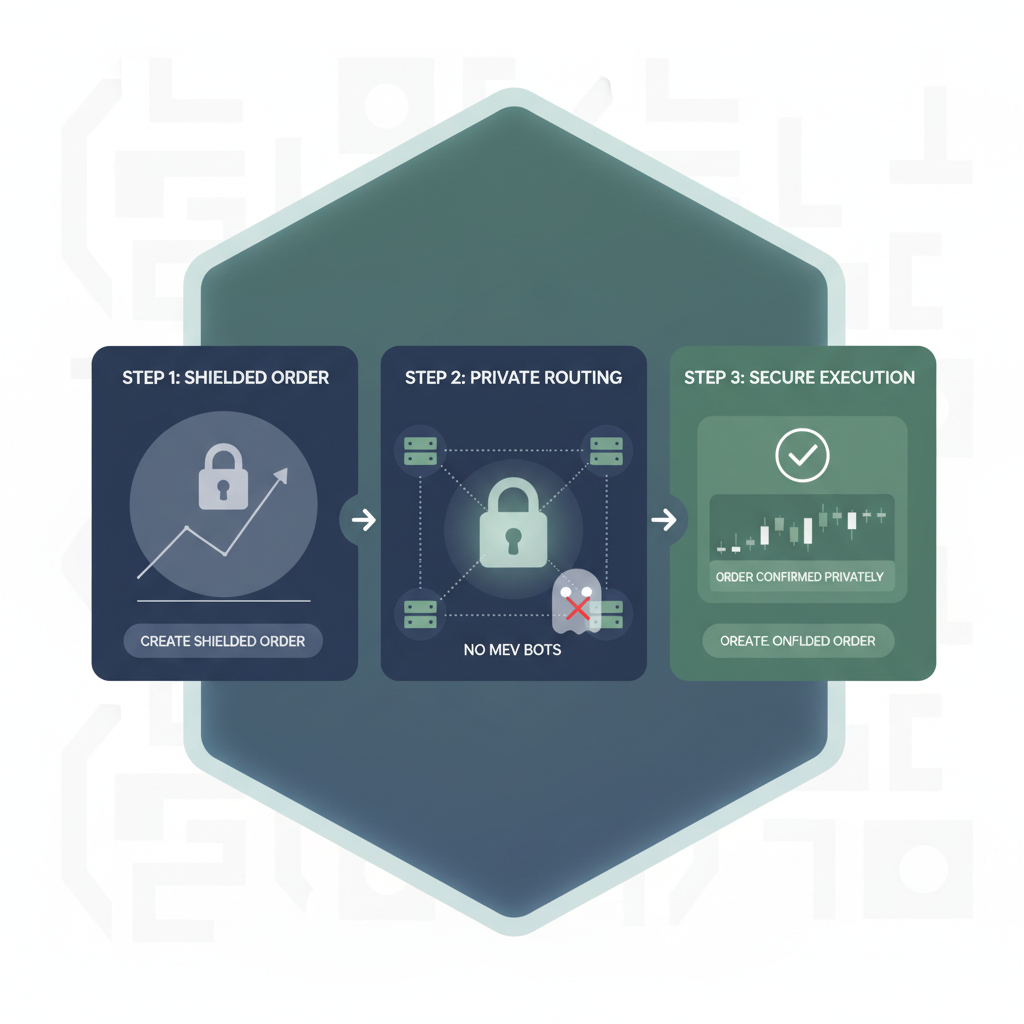
Conservatively assessing its potential, zkCLOB aligns with sustainable privacy trends. Projects like Railgun on Ethereum demonstrate zk-SNARKs’ maturity for private transfers, but zkCLOB extends this to sophisticated order matching. The non-custodial design ensures users retain asset control, a critical factor for long-term adoption amid regulatory scrutiny. Early testnet metrics suggest viability, with seamless integration across Solana’s ecosystem, from Orca to Drift.
Eliminating Front-Running Through Order Encryption
Front-running prevention zk demands concealing intent until execution. Traditional CLOBs broadcast orders publicly, allowing bots to parasitize flow. zkCLOB inverts this: encryption obfuscates price, side, and quantity, while a decryption oracle-like mechanism in zk-SNARKs reveals only post-match data. Drawing from COMMON protocol research, it employs generic cryptographic primitives to maintain privacy even under adversarial relayers. Metadata leakage, a subtle DeFi killer, vanishes too; no address tracking or timing analysis exposes behavior.
This setup fosters fairer markets. Consider a large perp position layered across entries: average prices stay hidden, thwarting targeted liquidations. zkCLOB’s off-chain matching, proven on-chain, rivals CEX speeds without centralization. On Solana testnet, 400ms latency positions it for high-frequency needs, a rarity in privacy-preserving DeFi. Yet, challenges persist; proof generation overhead must scale, and relayer incentives require careful alignment to avoid collusion risks.
Comparative Edge Over Transparent DEX Models
Against AMMs and transparent CLOBs like Serum forks, zkCLOB carves a defensible niche. AMMs suffer impermanent loss and poor capital efficiency for limit orders; open books invite exploitation, as seen in Ethereum’s MEV crisis. zkCLOB’s zk proofs enforce atomicity, preventing partial fills or reorg abuses. Research from a1research. io underscores the privacy paradox: blockchains crave speed yet demand secrecy. zkCLOB resolves it, echoing Aleo’s default privacy but tailored for trading velocity.
zkCLOB’s edge sharpens further when benchmarked against emerging privacy layers. Ethereum’s privacy apps, like those halting MEV bots, lag in latency; Cardano’s zk-SNARK tooling prioritizes flexibility over trading speed. zkCLOB, live on Solana testnet, integrates natively with Phoenix and Openbook, delivering zero knowledge DEX trading that feels centralized yet remains decentralized. Its decryption oracle, akin to COMMON’s design, ensures match privacy without trusting relayers fully. This conservative fusion of speed and secrecy positions it ahead of fragmented solutions.
Technical Underpinnings: zk-SNARKs in Action
Delving into the cryptography, zkCLOB ZK-SNARKs rely on arithmetic circuits that prove order validity under encryption. Users generate keypairs for ElGamal-style encryption, submitting ciphertexts to the order book. Off-chain solvers, incentivized via fees, perform homomorphic matching, adding encrypted prices without decryption, then craft proofs attesting to fair execution. These succinct arguments, under 1KB, settle on Solana in blocks, evading reorgs that doom Ethereum frontrunners. From a fundamental standpoint, this mirrors Zcash’s sapling upgrades but optimizes for high-throughput matching, a leap for encrypted order privacy DeFi.
Solana Technical Analysis Chart
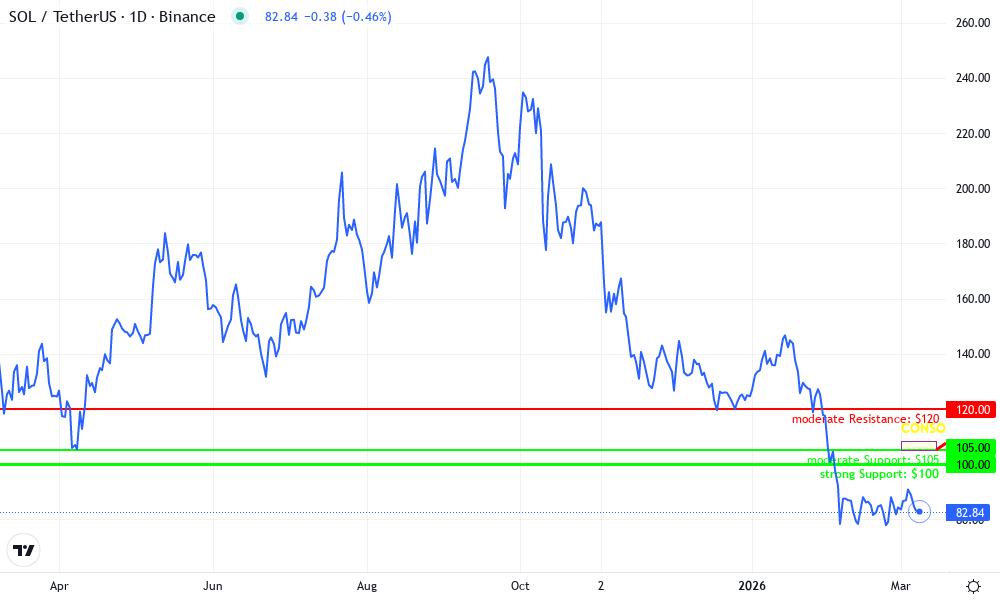
Analysis by James Thompson | Symbol: BINANCE:SOLUSDT | Interval: 1D | Drawings: 5
Technical Analysis Summary
As James Thompson, apply conservative overlays: primary downtrend line from peak at 2026-10-15 high connecting to recent lows; horizontal supports at $100 and $105; resistance at $120 and $150; rectangle for recent consolidation; fib retracement from peak to trough; text annotations for key levels; callouts for volume dry-up and MACD bearish crossover; vertical line at 2026-03-08 for zkCLOB context awareness; low-risk entry zone marked with long_position only above $110 confirmation.
Risk Assessment: medium
Analysis: Downtrend intact but oversold with fundamental tailwinds from zkCLOB; low tolerance favors waiting for higher lows
James Thompson’s Recommendation: Hold core position, add on $110+ confirmation for long-term DeFi growth
Key Support & Resistance Levels
📈 Support Levels:
-
$100 – Psychological and multi-month low support
strong -
$105 – Recent swing low with volume cluster
moderate
📉 Resistance Levels:
-
$120 – Near-term overhead from February retrace
moderate -
$150 – 50% fib retracement of decline
weak
Trading Zones (low risk tolerance)
🎯 Entry Zones:
-
$110 – Break above EMA20 with volume confirmation, aligning low-risk tolerance
low risk
🚪 Exit Zones:
-
$130 – Initial profit target at resistance confluence
💰 profit target -
$98 – Tight stop below key support
🛡️ stop loss
Technical Indicators Analysis
📊 Volume Analysis:
Pattern: declining on downside, potential exhaustion
Dry-up suggests selling pressure waning, watch for spike on rebound
📈 MACD Analysis:
Signal: bearish crossover persisting
Momentum remains negative but flattening near lows
Applied TradingView Drawing Utilities
This chart analysis utilizes the following professional drawing tools:
Disclaimer: This technical analysis by James Thompson is for educational purposes only and should not be considered as financial advice.
Trading involves risk, and you should always do your own research before making investment decisions.
Past performance does not guarantee future results. The analysis reflects the author’s personal methodology and risk tolerance (low).
Such efficiency stems from Solana’s parallel execution, where zk verification runs concurrently with settlements. Testnet data shows 400ms end-to-end, rivaling CEXs without their opacity risks. Yet, opinionated as I am on sustainable models, proof recursion remains key; current Groth16 setups suffice for now, but scaling to millions demands Plonk or newer variants for faster proving.
Risks and Relayer Economics in zkCLOB
No innovation escapes scrutiny. Relayer centralization poses a vector; if dominant, they could selectively match or censor. zkCLOB mitigates via proof-of-rotation and slashing, but incentives must align long-term. Collusion thresholds worry me, economic models drawing from a1research. io suggest diversified relayers via staking. Regulatory headwinds loom too; privacy defaults invite scrutiny, as Aleo’s playbook shows. Still, non-custodial ops and on-chain verifiability fortify zkCLOB against overreach, preserving user sovereignty.
Comparison of zkCLOB vs Traditional DEXs
| Feature | Transparent CLOB (e.g., Serum) | AMM (e.g., Orca) | zkCLOB |
|---|---|---|---|
| Latency | Low (sub-second on-chain) | Medium (on-chain swaps with slippage) | Very Low (≤400ms with off-chain matching & ZK validation) |
| Privacy Level | None (fully transparent order book) | Low (visible transactions) | Complete (encrypted orders via zk-SNARKs, no leakage) |
| MEV Resistance | Low (front-running & sandwich attacks) | Low (MEV bots exploit) | High (eliminates front-running & MEV) |
| Capital Efficiency | High (tight spreads) | Medium (liquidity pools & slippage) | High (true CLOB with privacy) |
Quantum threats hover distantly, but lattice-based zk alternatives lag in succinctness. Conservatively, zkCLOB’s Solana bet pays off amid Ethereum’s layer-2 sprawl, where privacy layers like Railgun add friction. Its compatibility with Drift perps and Meteora pools unlocks composability, shielding layered strategies from hunters.
Path to Mainnet and Market Impact
Transitioning to mainnet demands rigorous audits, already underway per zkCLOB updates. Early adopters, whales evading sandwich meat grinders, signal demand. Imagine MEV-proof farming: yields compound privately, entries averaged invisibly. This front-running prevention zk fabric could redistribute billions in extracted value back to traders, echoing dark pool economics but on-chain.
Fundamentally, zkCLOB embodies privacy’s enduring value. Transparent DeFi bloats bot armies; encrypted books restore equilibrium. With wallet support from Ledger to Exodus, barriers drop. As Solana matures, zkCLOB could capture CEX refugees, blending velocity with verifiability. Its zk-SNARK engine, battle-tested across chains, underpins a fairer frontier, one where intent trumps interception.