Fhenix FHE for Confidential DeFi: Encrypt Transfers and Deploy Contracts Privately

In the shadowed corridors of public blockchains, where every transaction gleams under the harsh light of transparency, Fhenix emerges as a beacon of true confidentiality. By weaving Fully Homomorphic Encryption (FHE) directly into Ethereum’s fabric, Fhenix FHE empowers developers to craft confidential smart contracts that process encrypted data without ever peeking inside. Imagine executing DeFi trades, stablecoin mints, and asset transfers where balances and amounts remain shielded from prying eyes, all while running seamlessly on EVM-compatible chains. This isn’t just privacy; it’s the foundation for a $100 trillion encrypted Web3 future.


Fhenix’s CoFHE engine stands at the vanguard, allowing smart contracts to compute over ciphertexts natively. No zero-knowledge proofs bloating gas fees, no trusted execution environments risking single points of failure. Developers write in standard Solidity, hook into Uniswap v4 for private swaps, and deploy without bespoke VMs or rollups. Their testnet pulses with life, offering SDKs and live demos that prove FHE encrypted DeFi isn’t a distant promise but a deployable reality today.
Discover the Fhenix vision for a private, encrypted Web3. Learn how fully homomorphic encryption (FHE) powers the next era of private DeFi.
Redact Money: Shielding Assets with Effortless Encryption
At the heart of Fhenix’s ecosystem lies Redact Money, a gateway to Fhenix shielded transfers. Users encrypt ETH and morph it into shielded assets, usable within smart contracts without exposing a whisper of value. Explorers rave about the frictionless flow: deposit ETH, encrypt on-chain, and wield it privately in DeFi protocols. This isn’t theoretical; it’s battle-tested on testnet, bridging the gap from cleartext chaos to encrypted elegance.
Encrypt ETH into Shielded Assets: Redact Money on Fhenix Testnet






Redact complements Fhenix by laying shielded rails for mass adoption. Toggle privacy on demand, encrypt tokens, and transact invisibly. Backed by Multicoin Capital and Bankless, Fhenix’s momentum signals institutional readiness for confidential DeFi. Yet, the real magic unfolds in shielded stablecoins: deploy privacy-preserving ERC20s where balances hide in plain sight, configured with name, ticker, decimals, and ironclad FHE security.
CoFHE in Action: Live Demos of Confidential Smart Contracts Fhenix
Fhenix’s encrypted smart contract demos showcase the pinnacle of confidential smart contracts Fhenix. Powered by CoFHE, they run private payments, encrypted stablecoins, and DeFi primitives on EVM chains. Watch as contracts compute yields, execute swaps, and manage collateral entirely over encrypted inputs, outputting only what users authorize. This pure FHE path sidesteps ZK’s verification overhead, delivering computational efficiency that scales Ethereum’s privacy layer.
Fhenix CoFHE Encrypted Smart Contract for Private DeFi Transfers
Behold the vanguard of confidential DeFi: a battle-tested Fhenix CoFHE smart contract that encrypts transfers and balances on EVM chains, shielding your assets from prying eyes while preserving full composability.
```solidity
// Fhenix fhEVM Confidential Transfer Contract Demo
// Empower DeFi with Fully Homomorphic Encryption

pragma solidity ^0.8.20;

import {FHE} from "fhevm/lib/TFHE.sol";

contract ConfidentialTransfer {
    mapping(address => euint256) private balances;

    event Transfer(address indexed from, address indexed to, euint256 value);

    constructor() {}

    function deposit(euint256 amount) external {
        balances[msg.sender] += amount;
    }

    function privateTransfer(address to, euint256 amount) external {
        require(FHE.decrypt(balances[msg.sender]) >= FHE.decrypt(amount), "Insufficient balance");
        balances[msg.sender] = balances[msg.sender] - amount;
        balances[to] = balances[to] + amount;
        emit Transfer(msg.sender, to, amount);
    }

    function getPrivateBalance() external view returns (uint256) {
        return FHE.decrypt(balances[msg.sender]);
    }
}
```
Deploy this authoritative blueprint on the Fhenix fhEVM devnet to orchestrate private payments and unlock the encrypted future of decentralized finance.
Since early architectures, Fhenix has evolved into FHE rollups primed for scaling private computation atop Ethereum. Developers integrate via straightforward SDKs, no PhD in cryptography required. For those diving deeper into FHE on EVM chains, the testnet invites experimentation: encrypt transfers, deploy shielded vaults, and pioneer the confidential economy.
From Vision to Velocity: FHE EVM Tutorial Essentials
Embarking on an FHE EVM tutorial with Fhenix reveals a developer-friendly paradigm. Start with their Solidity library, encrypt inputs client-side, and let CoFHE handle the rest. Hooks enable private Uniswap liquidity provision; stablecoin contracts mint shielded USDC equivalents. The manifesto outlines this trajectory: unlocking Ethereum’s latent potential through encrypted computation, where DeFi thrives unseen yet verifiable.
Projects like Fluton and Redact Money amplify this, providing rails for real-world flows. Users toggle confidentiality seamlessly, turning public ledgers private without sacrificing composability. As Fhenix testnet matures, expect a surge in confidential AMMs, lending protocols, and yield farms, all encrypted end-to-end.
Builders today stand at the threshold of this encrypted frontier, armed with Fhenix’s tools to forge applications that redefine DeFi’s boundaries. The FHE EVM tutorial path demystifies integration, transforming abstract cryptography into tangible code. What sets Fhenix apart lies in its refusal to demand paradigm shifts; it layers confidentiality atop Ethereum’s proven infrastructure, ensuring liquidity and interoperability endure.
Unlock Fhenix Privacy: Encrypt Assets, Deploy Contracts, Transact Shielded



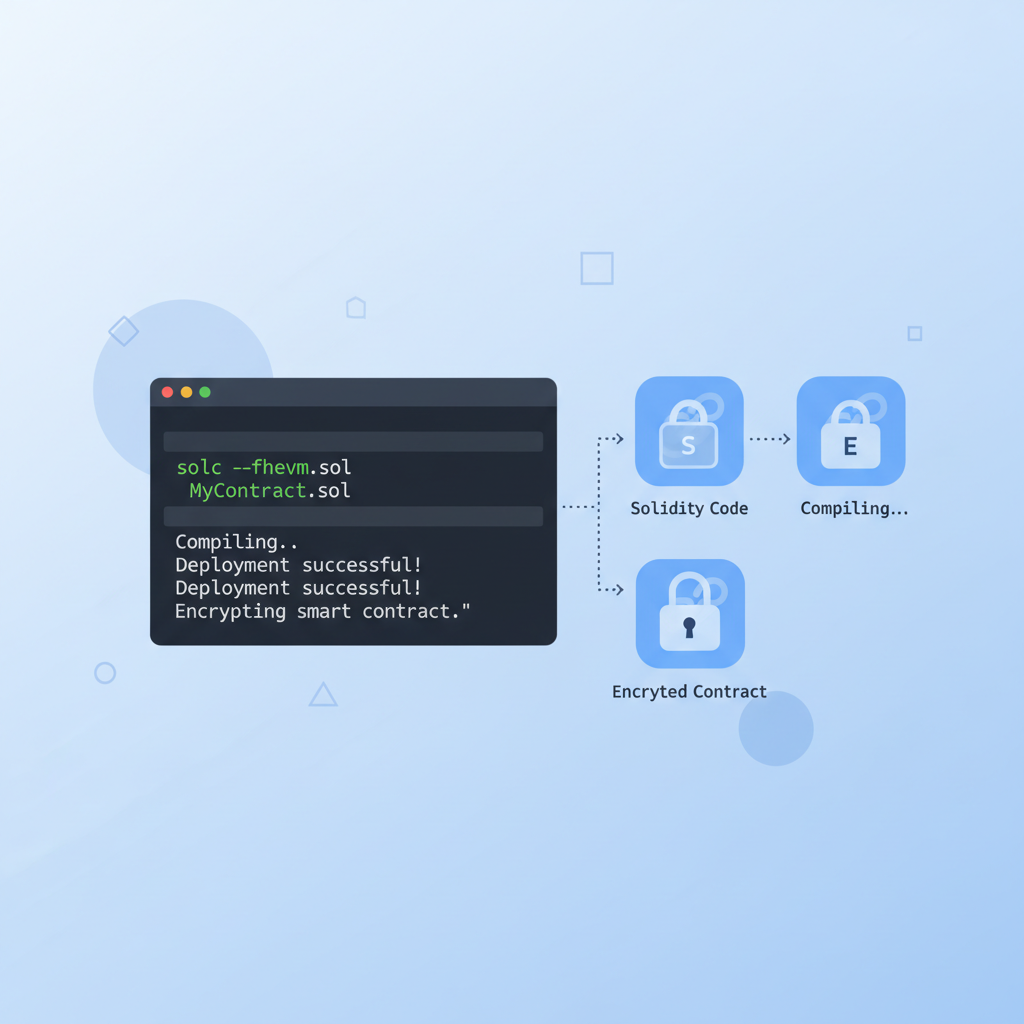

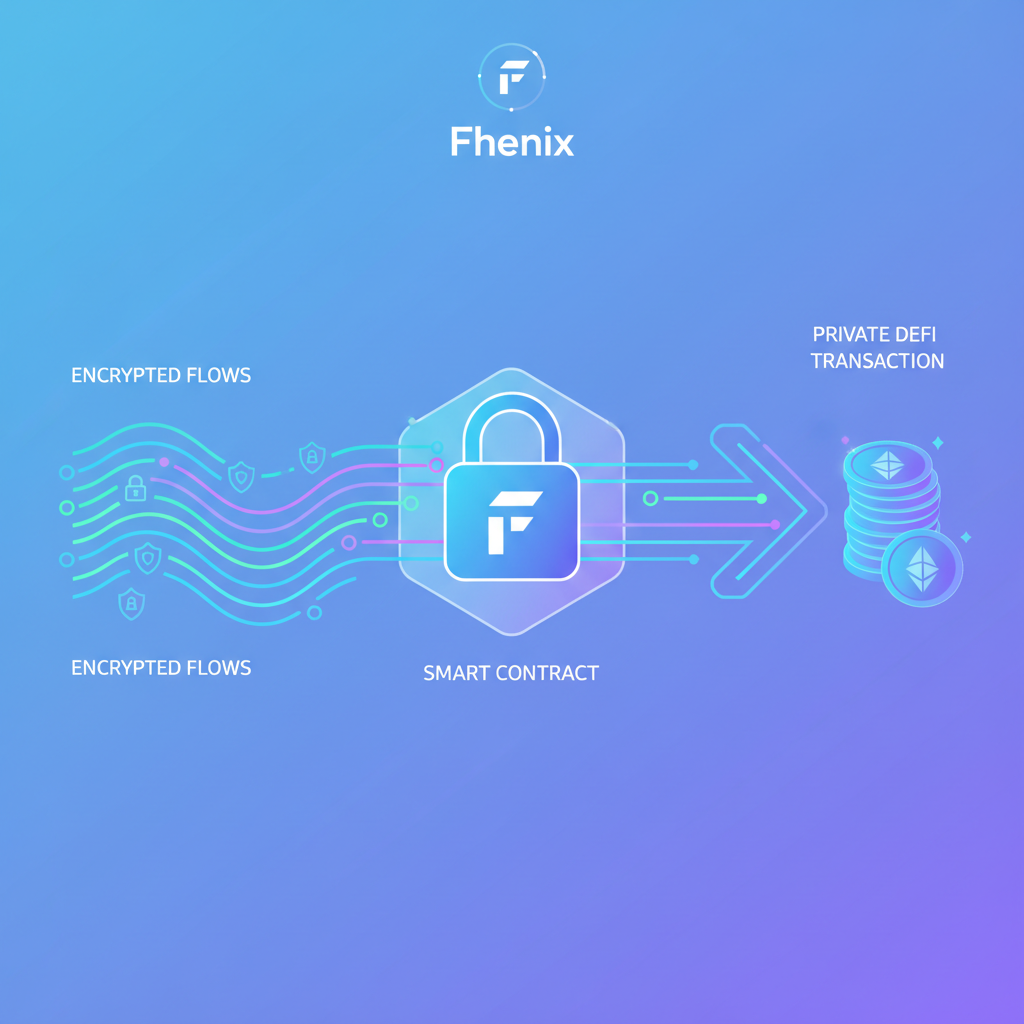
Once shielded, these assets fuel sophisticated DeFi maneuvers. Picture providing liquidity to a confidential Uniswap pool, where positions and fees stay encrypted, or minting a stablecoin that masks holdings amid volatile markets. Fhenix’s CoFHE unburdens this with native ciphertext operations, slashing complexity that plagues hybrid ZK-FHE setups.
Solidity: Confidential ERC20 Transfer with Fhenix FHE
Unlock the future of DeFi with Fhenix FHE: execute ERC20 transfers where inputs are encrypted, balances computed entirely in the encrypted domain, and outputs decrypted only as needed for ironclad confidentiality.
```solidity
// SPDX-License-Identifier: MIT
pragma solidity ^0.8.19;

import {Fhenix} from "@fhenixprotocol/contracts/src/Fhenix.sol";

contract ConfidentialERC20 {
    mapping(address => uint256) private _balances;

    function confidentialTransfer(
        address to,
        Fhenix.Euint256 calldata encryptedAmount
    ) external {
        // Encrypt sender's balance for private computation
        Fhenix.Euint256 memory senderBalance = Fhenix.asEuint256(_balances[msg.sender]);

        // Privately check sufficient balance and compute new balances
        Fhenix.requireGe(senderBalance, encryptedAmount);
        Fhenix.Euint256 memory newSenderBalance = Fhenix.sub(senderBalance, encryptedAmount);
        Fhenix.Euint256 memory newRecipientBalance = Fhenix.add(
            Fhenix.asEuint256(_balances[to]),
            encryptedAmount
        );

        // Selectively decrypt and update only the necessary outputs
        _balances[msg.sender] = Fhenix.decrypt(newSenderBalance);
        _balances[to] = Fhenix.decrypt(newRecipientBalance);
    }

    function balanceOf(address account) external view returns (uint256) {
        return _balances[account];
    }
}
```
This authoritative implementation harnesses Fhenix’s FHEVM to ensure no plaintext exposure during transfers, empowering developers to deploy truly private smart contracts that redefine blockchain privacy.
Exploring @fhenix lately. Tried Redact Money and the experience was surprisingly smooth. Encrypt ETH, turn it into shielded assets still usable inside smart contracts.
This code snippet exemplifies the elegance: encrypt inputs client-side, pass ciphertexts to the chain, and let CoFHE orchestrate computations. No oracle dependencies, no multi-party setups. For deeper dives, the testnet SDKs guide from setup to deployment, fostering an ecosystem where privacy becomes default, not afterthought.
Backing the Confidential Revolution
-

Multicoin Capital: Investment signaling FHE conviction
-

Bankless: Web3 thought leadership
-

Fluton: Optimized FHE primitives for efficiency
-

Redact Money: Shielded rails for everyday confidential DeFi
-

Shielded Stablecoins: Configurable ERC20s composing with liquidity, enabling modular privacy upgrades
Fhenix’s evolution toward FHE rollups addresses scaling head-on, distributing confidential computation across Ethereum L2s without privacy leaks at settlement. Early demos already pulse with private payments and encrypted AMMs, proving viability. As mainnet approaches, anticipate a cascade: confidential order books shielding MEV, private derivatives evading front-running, and vaults optimizing yields in secrecy.
Visionaries recognize Fhenix not as incremental but tectonic. By pure FHE, it liberates Ethereum from transparency’s tyranny, birthing a parallel economy of shielded value. Developers, seize the testnet; encrypt your ambitions. The $100 trillion future beckons, encrypted and unstoppable, where privacy fuels prosperity without compromise.