Fhenix FHE for Private DeFi: Encrypting Smart Contracts on Ethereum 2026

In the relentless march toward a truly confidential Web3, Fhenix emerges as Ethereum’s sentinel against data exposure, wielding Fully Homomorphic Encryption (FHE) to forge private smart contracts that compute without compromise. By 2026, as DeFi protocols grapple with regulatory scrutiny and front-running predators, Fhenix’s innovations promise encrypted DeFi computations that shield strategies, balances, and logic from prying eyes, all while preserving Ethereum’s composability.

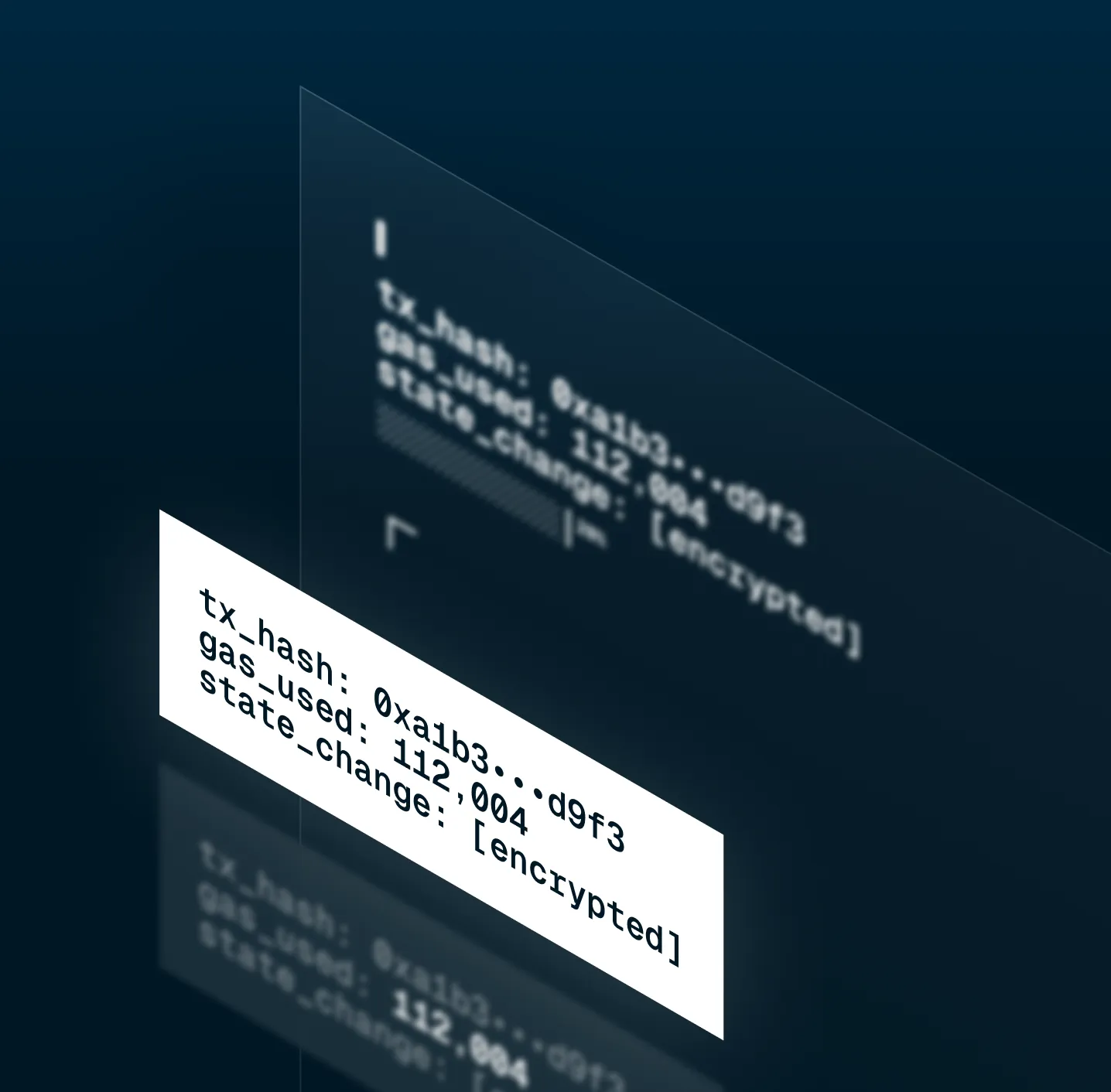
Fhenix doesn’t just encrypt data; it redefines on-chain privacy by enabling private smart contracts on Ethereum. Traditional zero-knowledge proofs verify computations off-chain, but FHE allows those computations to occur directly on ciphertext. Developers deploy logic that processes encrypted inputs, yielding encrypted outputs, without any decryption step. This unlocks FHE DeFi encryption for lending platforms hiding borrow rates, DEXes concealing order books, and yield farms protecting APYs from copycats.
Fhenix’s Helium Testnet: Dawn of Confidential Ethereum Apps
Launched in early 2026, the Helium testnet marks Fhenix’s bold stride into production-ready fully homomorphic encryption on Ethereum. Developers now deploy encrypted smart contracts, where sensitive data like collateral values or liquidation thresholds remain confidential throughout execution. Imagine a vault protocol that adjusts positions based on encrypted market signals, invisible to MEV bots yet fully verifiable on-chain.
Central to this is the FHE Coprocessor (CoFHE), which offloads the cryptographic heavy-lifting off-chain. FHE’s computational intensity has long plagued scalability, but CoFHE optimizes this by handling intensive operations externally while attesting results via zero-knowledge proofs. Efficiency surges; gas costs plummet. This hybrid approach maintains Ethereum’s trustlessness, positioning Fhenix as the infrastructure layer for Fhenix shielded transactions in high-stakes DeFi.
Most “onchain privacy” conversations skip the hard part. How do smart contracts compute on sensitive data without ever seeing it?
FHE Rollups: Scaling Privacy Without Sacrificing Speed
Fhenix’s FHE Rollups fuse optimistic rollups with homomorphic encryption, creating private, composable Layer 2s. Transactions batch as encrypted payloads, computations execute on ciphertexts, and state transitions post to Ethereum with cryptographic guarantees. No trusted setups, no selective disclosure pitfalls. This scales encrypted DeFi computations to millions of users, rivaling zk-rollups in throughput while eclipsing them in confidentiality.

Precision has been FHE’s Achilles’ heel in financial apps, where rounding errors cascade into losses. Enter Decomposed BFV (DBFV), Fhenix’s breakthrough method slicing computations into modular components for exact arithmetic on encrypted integers and floats. Now, complex derivatives pricing or options vaults run flawlessly on ciphertext, heralding a new era for institutional-grade DeFi.
These pillars – Helium, CoFHE, Rollups, DBFV – interlock to form Fhenix’s ecosystem, where privacy isn’t an add-on but the foundation. For builders eyeing long-cycle dominance, integrating Fhenix FHE means future-proofing against surveillance capitalism’s encroachment on blockchains.
Explore how FHE enables confidential smart contracts on Ethereum
Builders diving into Fhenix’s stack find a arsenal of tools sharpened for production. The SDK streamlines encryption key generation, ciphertext handling, and circuit compilation, bridging Solidity with FHE primitives. No more wrestling with raw homomorphic schemes; Fhenix abstracts the complexity, letting Ethereum devs focus on logic innovation.
Hands-On with Fhenix: Deploying Your First Encrypted Contract
Start simple: encrypt user balances before feeding them into a lending contract. The protocol computes interest accrual on ciphertexts, outputs encrypted repayments, and settles on-chain without exposing positions. This Fhenix shielded transactions pattern thwarts liquidation snipers and arbitrage leeches, preserving alpha for sophisticated players.
FHE-Enabled Private Lending Smart Contract
Envision the dawn of truly private DeFi on Ethereum: a lending smart contract where all balances and transactions are fully encrypted using Fhenix’s groundbreaking FHE technology. This Solidity example, deployable on the Helium testnet, computes lending operations homomorphically without ever decrypting sensitive data on-chain.
pragma solidity ^0.8.20;

import {TFHE} from "fhenix-lib/contracts/TFHE.sol";

contract PrivateLending {
    euint32 public totalSupply;

    mapping(address => euint32) public balanceOf;

    event Deposit(address indexed user, euint32 amount);
    event Withdrawal(address indexed user, euint32 amount);

    constructor() {
        totalSupply = TFHE.to(euint32(0));
    }

    /// @notice Deposit encrypted funds into the lending pool
    function deposit(euint32 amount) external {
        balanceOf[msg.sender] += amount;
        totalSupply += amount;
        emit Deposit(msg.sender, amount);
    }

    /// @notice Withdraw encrypted funds from the lending pool
    function withdraw(euint32 amount) external {
        balanceOf[msg.sender] -= amount;
        totalSupply -= amount;
        emit Withdrawal(msg.sender, amount);
    }

    /// @notice View encrypted balance (decrypt off-chain)
    function getBalance(address user) external view returns (euint32) {
        return balanceOf[user];
    }
}
Deploy this contract using Foundry or Hardhat configured for the Fhenix Helium testnet (RPC: https://rpc.helium.fhenix.io). Interact via encrypted inputs generated client-side—ushering in a new era of confidential, secure DeFi by 2026.
Deeper integrations shine in perpetuals and options. Encrypted oracles pipe price feeds as ciphertexts, enabling vaults to hedge invisibly. Fhenix’s composability means these plug into existing DeFi primitives – Uniswap liquidity, Aave collateral – amplifying privacy across ecosystems without silos.
Real-World DeFi Transformations: From Shielded Pools to Confidential Derivatives
Picture a DEX where order books stay dark until matched, preventing sandwich attacks that drain billions yearly. Fhenix enables this via private smart contracts Ethereum, with DBFV ensuring floating-point precision for TWAP calculations. Yield aggregators route funds through encrypted strategies, disclosing only net returns to users.
Institutional adoption accelerates as custodians demand compliance without sacrificing decentralization. Encrypted KYC scores feed into risk engines, approving loans sans data leaks. Regulators glimpse aggregates via selective disclosure, not granular exposures. Fhenix threads the needle, making DeFi palatable for trillions in traditional capital.
FHE fixes the transparency paradox: blockchains reveal everything, yet DeFi thrives on hidden edges.
Challenges persist – bootstrapping liquidity in private pools requires novel incentives, like shielded airdrops verified homomorphically. Fhenix counters with provable fairness mechanisms, where contribution proofs mint tokens without revealing amounts. Gas optimization via CoFHE keeps costs competitive, even as Ethereum scales post-Dencun.
Discover FHE for encrypted smart contracts on Ethereum and L2s
Venture beyond testnets toward Fhenix mainnet, slated for late 2026. Partnerships with EigenLayer for restaked security and OP Stack for rollup sovereignty signal explosive growth. DBFV evolves into full tensor support, unlocking ML models for on-chain alpha generation – predict returns on encrypted portfolios, iterate strategies in cipher.
The macro shift is seismic. As quantum threats loom and chains federate under global eyes, FHE DeFi encryption becomes non-negotiable. Fhenix doesn’t patch privacy; it architects it natively, empowering protocols to compute boldly while veiling the board. Ethereum’s next supercycle hinges on such shields – deploy early, compound unseen.
Learn how FHE enables truly private smart contracts on Ethereum