
How zero-knowledge proofs satisfy dora limits to account for
DORA mandates strict operational resilience and third-party risk management for financial entities, but it also enforces rigorous data privacy and confidentiality standards. Zero-knowledge proofs (ZKPs) offer a technical mechanism to reconcile these competing demands. A ZKP allows one party (the prover) to convince another (the verifier) that a statement is true without revealing any information beyond the validity of the statement itself.
In the context of DORA, this means financial institutions can demonstrate compliance with reporting requirements or audit trails without exposing sensitive customer data, proprietary trading algorithms, or confidential transaction histories to third-party cloud providers or regulators. As noted in technical discussions, ZKPs act like tamper-proof stamps on opaque envelopes, allowing the verifier to confirm the integrity of the data without seeing the contents inside.
Tradeoffs for implementation
While ZKPs provide a path to compliance, they introduce significant computational overhead. Generating proofs can be resource-intensive, potentially impacting the low-latency requirements of high-frequency trading or real-time payment systems. Additionally, the complexity of ZK circuit design requires specialized expertise that may not be readily available in all compliance teams.
For entities prioritizing absolute transparency and where data minimization is less critical, traditional cryptographic hashing or secure multi-party computation might offer simpler, faster alternatives. However, for organizations handling highly sensitive data under DORA’s strict confidentiality clauses, ZKPs remain the only technology that can mathematically guarantee privacy while proving compliance.
Zero-knowledge proofs choices that change the plan
Zero-knowledge proofs (ZKPs) offer a way to verify compliance without exposing sensitive data, but they are not a universal fix. Choosing the right proof system depends on balancing computational cost, verification speed, and implementation complexity. For EU DORA compliance, the tradeoffs often come down to whether you prioritize immediate regulatory submission or long-term operational efficiency.
Proof system selection
Different ZK protocols serve different needs. zk-SNARKs require a trusted setup and have small proof sizes, making them ideal for mobile verification but risky if the setup parameters are compromised. zk-STARKs are quantum-resistant and trustless but generate larger proofs and require more computation. Bulletproofs offer medium-sized proofs without a trusted setup but lack public verifiability, limiting their use in public blockchain contexts.
| Feature | zk-SNARKs | zk-STARKs | Bulletproofs |
|---|---|---|---|
| Trusted Setup | Required | Not Required | Not Required |
| Proof Size | Small (~288 bytes) | Large (~KB) | Medium |
| Verification Speed | Fast | Moderate | Slow |
| Quantum Resistance | No | Yes | No |
| Public Verifiability | Yes | Yes | No |
Computational overhead
Generating ZK proofs is computationally expensive. The prover must perform complex polynomial operations, which can strain backend infrastructure. For high-frequency DORA reporting, this latency may be unacceptable. However, verification is fast, allowing regulators to validate claims instantly. This asymmetry makes ZKPs efficient for audit trails but costly for real-time transaction processing.
Implementation complexity
Building a ZKP system requires specialized cryptographic expertise. Integrating it with existing DORA reporting frameworks often necessitates custom middleware. The learning curve is steep, and debugging proof failures can be time-consuming. Organizations should weigh the long-term security benefits against the immediate engineering burden.
| Factor | zk-SNARK | zk-STARK | Bulletproofs |
|---|---|---|---|
| Trusted Setup | Required | None | None |
| Proof Size | Small | Large | Medium |
| Quantum Safe | No | Yes | No |
| Public Verify | Yes | Yes | No |
Choose the next step
Why Zero-Knowledge Proofs Are the Standard for EU DORA Compliance works best as a clear sequence: define the constraint, compare the realistic options, test the tradeoff, and choose the path with the fewest hidden costs. That order keeps the advice usable instead of decorative. After each step, pause long enough to check whether the recommendation still fits the reader's actual situation. If it depends on perfect timing, unusual access, or a best-case budget, include a simpler fallback.
Common ZK Proof Pitfalls for DORA Compliance
Implementing zero-knowledge proofs (ZKPs) for EU DORA compliance requires navigating several technical and regulatory traps. Many organizations mistake the mere existence of a ZK protocol for full compliance, overlooking the critical need for auditable proof verification and data minimization. This section highlights the most frequent errors to avoid.
Confusing Privacy with Auditability
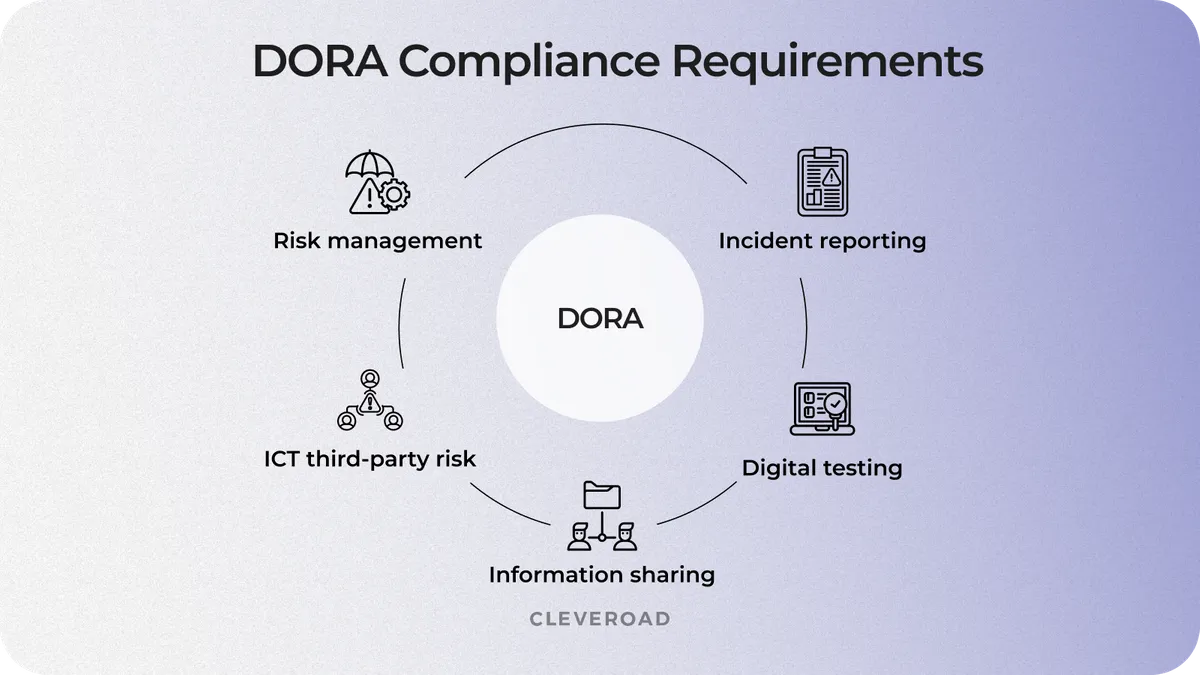
DORA mandates rigorous ICT risk management and incident reporting. A common mistake is assuming that ZKPs provide complete data hiding. While ZKPs protect sensitive transaction details, regulators still require proof of compliance. If your implementation obscures too much data, you cannot produce the necessary audit trails. Ensure your ZK circuits are designed to reveal only what is strictly necessary for verification, not everything or nothing.
Overlooking Proof Verification Costs
Generating ZK proofs is computationally expensive, but verifying them on-chain or in legacy systems can be equally challenging. Many projects underestimate the latency and cost of verification. If your ZK system slows down critical banking operations, it fails the DORA requirement for operational resilience. Choose proof systems like zk-SNARKs or STARKs based on your specific verification speed and cost constraints, not just privacy features.
Ignoring Key Management Risks
ZKPs rely on trusted setups to generate public parameters. If these setups are compromised, the entire proof system collapses. This is a significant risk for financial institutions subject to DORA. Avoid any ZK implementation that relies on unverified or single-party trusted setups. Opt for transparent setups or multi-party computation ceremonies with documented integrity. This ensures that no single entity can forge proofs without detection.
Treating ZKPs as a Silver Bullet
Zero-knowledge proofs are powerful, but they are not a substitute for robust ICT governance. DORA compliance involves people, processes, and technology. Relying solely on ZKPs to solve data privacy issues ignores other requirements like access control, logging, and incident response. Integrate ZKPs into a broader compliance framework rather than treating them as a standalone solution.
Zero-knowledge proofs: what to check next
Zero-knowledge proofs (ZKPs) allow a system to verify compliance with EU DORA regulations without exposing sensitive internal data. This addresses the core tension between regulatory transparency and operational security.
No comments yet. Be the first to share your thoughts!