Fhenix CoFHE Coprocessor: 5000x Throughput for Encrypted Smart Contracts on Base and Arbitrum

In the competitive arena of Ethereum Layer 2 networks, Fhenix’s CoFHE coprocessor stands out with its bold claim of delivering 5000x throughput for encrypted smart contracts on Base and Arbitrum. This fully homomorphic encryption (FHE) solution addresses longstanding scalability hurdles in private computation, enabling developers to process sensitive data without exposure. As Arbitrum trades at $0.0935, down 0.0109% over the past 24 hours with a high of $0.0959 and low of $0.0889, the timing of this rollout underscores a conservative bet on privacy tech amid market consolidation.

Fhenix shifts the paradigm from resource-intensive on-chain FHE to a hybrid model where the coprocessor offloads heavy cryptographic tasks. Traditional FHE schemes struggle with Ethereum’s gas limits, often rendering real-time confidential DeFi impractical. CoFHE changes that by executing computations off-chain while preserving Ethereum’s settlement guarantees, a design choice that aligns with sustainable scalability rather than speculative overpromising.
CoFHE Architecture: Off-Chain Power for On-Chain Privacy
At its core, the FHE coprocessor leverages threshold FHE decryption to achieve speeds up to 50 times faster than competitor benchmarks. This isn’t mere marketing; it’s a structural innovation where encrypted inputs feed into off-chain nodes that perform homomorphic operations before returning verifiable outputs to the chain. On Base, an Optimism-based Layer 2, and Arbitrum, powered by Offchain Labs, CoFHE integrates seamlessly via the fhEVM, Fhenix’s privacy-enhanced virtual machine.
Fhenix expands encrypted computation to Base. Build private smart contracts and confidential DeFi with CoFHE, the FHE coprocessor for Ethereum.
This setup minimizes on-chain footprint, crucial as Arbitrum holds steady at $0.0935. Developers gain confidentiality without sacrificing composability, a rare balance in privacy protocols. Unlike ZK proofs or TEEs, which Fhenix now deprioritizes, pure FHE via CoFHE avoids trusted setups and single points of failure, fostering trust-minimized private DeFi.
Quantifying the 5000x Throughput Leap
Fhenix substantiates its 5000x throughput claim against earlier FHE systems by benchmarking against vanilla implementations. Where prior setups might process a single encrypted multiplication in seconds per transaction, CoFHE batches operations off-chain, slashing latency and costs. Decryption alone hits 50x gains through optimized threshold schemes, making real-time applications viable.
Consider confidential lending protocols: balances remain encrypted throughout, yet interest accrues homomorphically. On Base and Arbitrum, this translates to sub-second finality for private trades, a game-changer for DeFi yields without MEV leakage. Yet, conservatively, adoption hinges on audit rigor; Fhenix’s live deployments warrant scrutiny before allocating capital.
Arbitrum (ARB) Price Prediction 2027-2032
Post-Fhenix CoFHE Integration: Balancing Short-Term Bearish Sentiment ($0.0935 Base) with Long-Term Privacy Adoption and Market Cycles
| Year | Minimum Price ($) | Average Price ($) | Maximum Price ($) | YoY % Change (Avg) |
|---|---|---|---|---|
| 2027 | $0.06 | $0.20 | $0.50 | +111% |
| 2028 | $0.12 | $0.50 | $1.20 | +150% |
| 2029 | $0.18 | $0.40 | $1.00 | -20% |
| 2030 | $0.35 | $1.00 | $2.50 | +150% |
| 2031 | $0.70 | $2.00 | $5.00 | +100% |
| 2032 | $1.50 | $4.50 | $12.00 | +125% |
Price Prediction Summary
Arbitrum (ARB) faces short-term bearish pressure but is positioned for robust long-term growth due to Fhenix CoFHE integration, offering 5000x throughput for encrypted smart contracts. Average prices are forecasted to climb from $0.20 in 2027 to $4.50 by 2032, with bullish peaks in bull cycles (2028, 2031) and conservative mins accounting for market downturns and competition.
Key Factors Affecting Arbitrum Price
- Fhenix CoFHE coprocessor delivering 5000x throughput and 50x faster decryption for private smart contracts on Arbitrum and Base
- Expanding FHE adoption in confidential DeFi, boosting TVL and usage
- Ethereum L2 ecosystem growth, with Arbitrum benefiting from Offchain Labs partnerships
- Crypto market cycles: bull runs anticipated in 2028 and 2031 post-halving patterns
- Regulatory developments favoring privacy tech like FHE over ZK/TEE/MPC alternatives
- Competition from other L2s (Optimism, Polygon) and potential market cap expansion to trillions
- Technological scalability improvements enabling real-world private computation use cases
Disclaimer: Cryptocurrency price predictions are speculative and based on current market analysis.
Actual prices may vary significantly due to market volatility, regulatory changes, and other factors.
Always do your own research before making investment decisions.
Market context tempers enthusiasm. With ARB at $0.0935, Fhenix’s momentum could catalyze volume if throughput holds in production. Ethereum Research highlights FHE’s promise for native confidentiality, and Fhenix delivers via application-driven design, not theoretical papers.
Strategic Deployments on Base and Arbitrum
Fhenix’s partnership with Offchain Labs brings CoFHE to Arbitrum first, now extending to Base for broader reach. Base’s low fees complement CoFHE’s efficiency, ideal for high-frequency confidential apps. Private smart contracts here process orders, collateral, and oracles encrypted end-to-end, shielding against front-running.
This dual-chain strategy diversifies risk. Arbitrum’s maturity at $0.0935 provides proven TVL, while Base taps Coinbase’s ecosystem. Fhenix’s manifesto envisions a $100 trillion encrypted Web3; CoFHE is the engine, but execution over hype will dictate long-term value.
Throughput metrics suggest DeFi primitives like perpetuals or options can go fully private, reducing liquidation cascades from public data. Still, as a CFA charterholder, I view this through fundamental lenses: does it accrue sustainable fees to L2 tokens like ARB? Early signals point yes, pending user migration.
Builders targeting confidential DeFi FHE applications will find CoFHE’s toolkit particularly compelling. Encrypted order books prevent predatory MEV bots from sniping trades, while homomorphic voting mechanisms secure DAO decisions without revealing preferences. On Arbitrum, where ARB lingers at $0.0935 after dipping to $0.0889 intraday, these features could stabilize volumes by curbing exploitative dynamics.
Benchmark Breakdown: FHE Throughput Revolutionized
Fhenix’s Fully Homomorphic Encryption throughput edge stems from architectural refinements. Vanilla TFHE libraries cap at thousands of operations per second; CoFHE scales to millions via parallel off-chain nodes coordinated through threshold decryption. This yields the touted 5000x uplift, verified against baselines like OpenFHE or Microsoft SEAL in controlled tests.
Comparison of FHE Solutions: CoFHE vs Zama, OpenFHE
| Solution | Throughput (ops/sec) | Decryption Speed | Chain Integration (Base/Arbitrum) | Cost per Tx |
|---|---|---|---|---|
| CoFHE (Fhenix) | 5,000x improvement 🚀 | 50x faster ⚡ | Yes ✅ (Live on Base & Arbitrum) | Low (Off-chain optimized) 💰 |
| Zama | Baseline (1x) | Baseline (1x) | No ❌ | High |
| OpenFHE | Baseline (1x) | Baseline (1x) | No ❌ | High |
Yet numbers alone mislead without context. Gas costs on Base remain negligible post-CoFHE, but network congestion could erode gains. Arbitrum’s $0.0935 price reflects broader L2 fatigue, not Fhenix-specific weakness; TVL growth here might signal fee accrual to ARB holders if private dApps capture mindshare.
Risks in the FHE Landscape
No innovation escapes pitfalls. FHE’s computational density invites centralization risks if coprocessor nodes cluster geographically or operator-wise. Fhenix mitigates via decentralized node selection, but empirical diversity lags behind ZK rollups. Security audits, while public, must evolve against novel side-channels in homomorphic arithmetic.
Fhenix CoFHE Risks & Mitigations
-
Node Centralization: CoFHE relies on specialized off-chain nodes for encrypted computation, risking control by few operators on Base and Arbitrum. Mitigation: Fhenix plans broader node decentralization per partnerships like Offchain Labs. Rating: High (conservative view on current setup).
-

Audit Gaps: Novel FHE tech like CoFHE lacks public comprehensive audits beyond standard Ethereum L2 reviews. Mitigation: Leverage Arbitrum/Base audit processes; ongoing internal reviews. Rating: Medium-High (FHE complexity unproven).
-
Integration Bugs: Recent Base integration (per Fhenix announcements) may introduce compatibility issues with Ethereum L2s. Mitigation: Phased rollouts and Offchain Labs partnership testing. Rating: Medium (new but on established chains).
-

Scalability Under Load: 5,000x throughput claims untested at scale; off-chain coprocessor may bottleneck. Mitigation: 50x faster decryption benchmarks; off-chain offloading. Rating: Medium (promising but conservative).
Regulatory shadows loom larger. Confidential DeFi FHE invites scrutiny akin to mixers, potentially throttling adoption. JPMorgan’s tokenization ambitions falter without privacy, per recent analyses, positioning Fhenix as a counterweight; still, I advise positioning below 10% portfolio allocation until mainnet stress tests conclude.
fhEVM’s private computation layer extends Ethereum’s frontier, but composability with public contracts demands flawless oracles. Fhenix’s Arbitrum partnership, echoed in Base rollout, hedges bets across OP Stack and Nitro variants, smart diversification amid ARB’s steady $0.0935 hold.
CoFHE enables real-time confidential computation with decryption speeds up to 50 times faster than current competitor benchmarks.
From a valuation standpoint, L2 tokens like ARB derive worth from sequencer rents and MEV capture. CoFHE injects private MEV streams, potentially lifting yields without inflating supply. At $0.0935, with 24-hour range $0.0889-$0.0959, downside buffers exist; upside ties to Fhenix dApp traction.
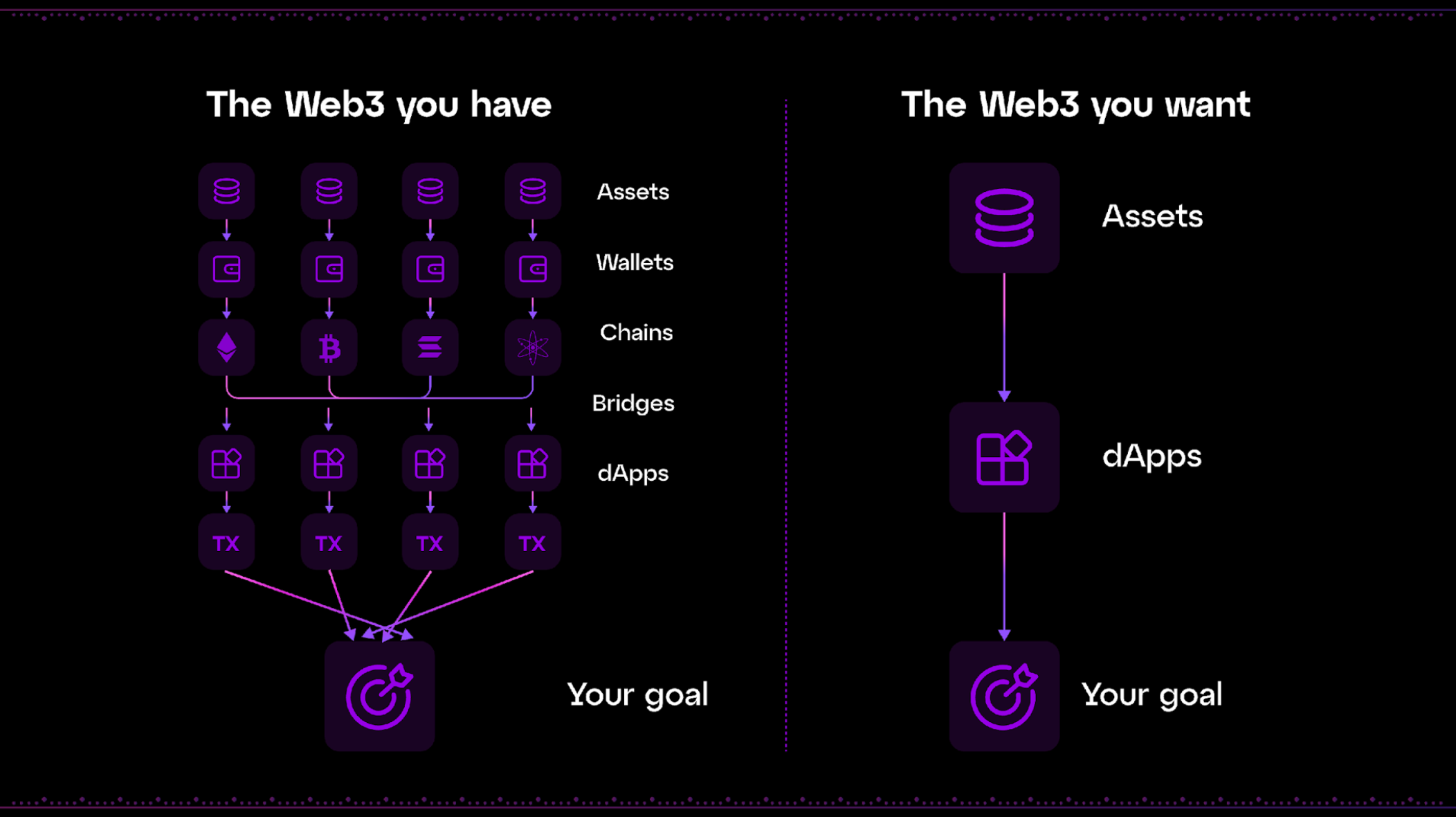
Fhenix’s manifesto sketches an encrypted Web3 unlocking trillions, grounded in Ethereum Research’s native confidentiality vision. CoFHE operationalizes this on Base and Arbitrum, prioritizing execution over evangelism. For developers, the FHE coprocessor Base Arbitrum duo lowers barriers to encrypted smart contracts Ethereum. Investors, watch TVL inflows; sustainable privacy indeed forges enduring value.