STARK Proofs for Zcash Extension: Amortized Privacy Scaling on L1

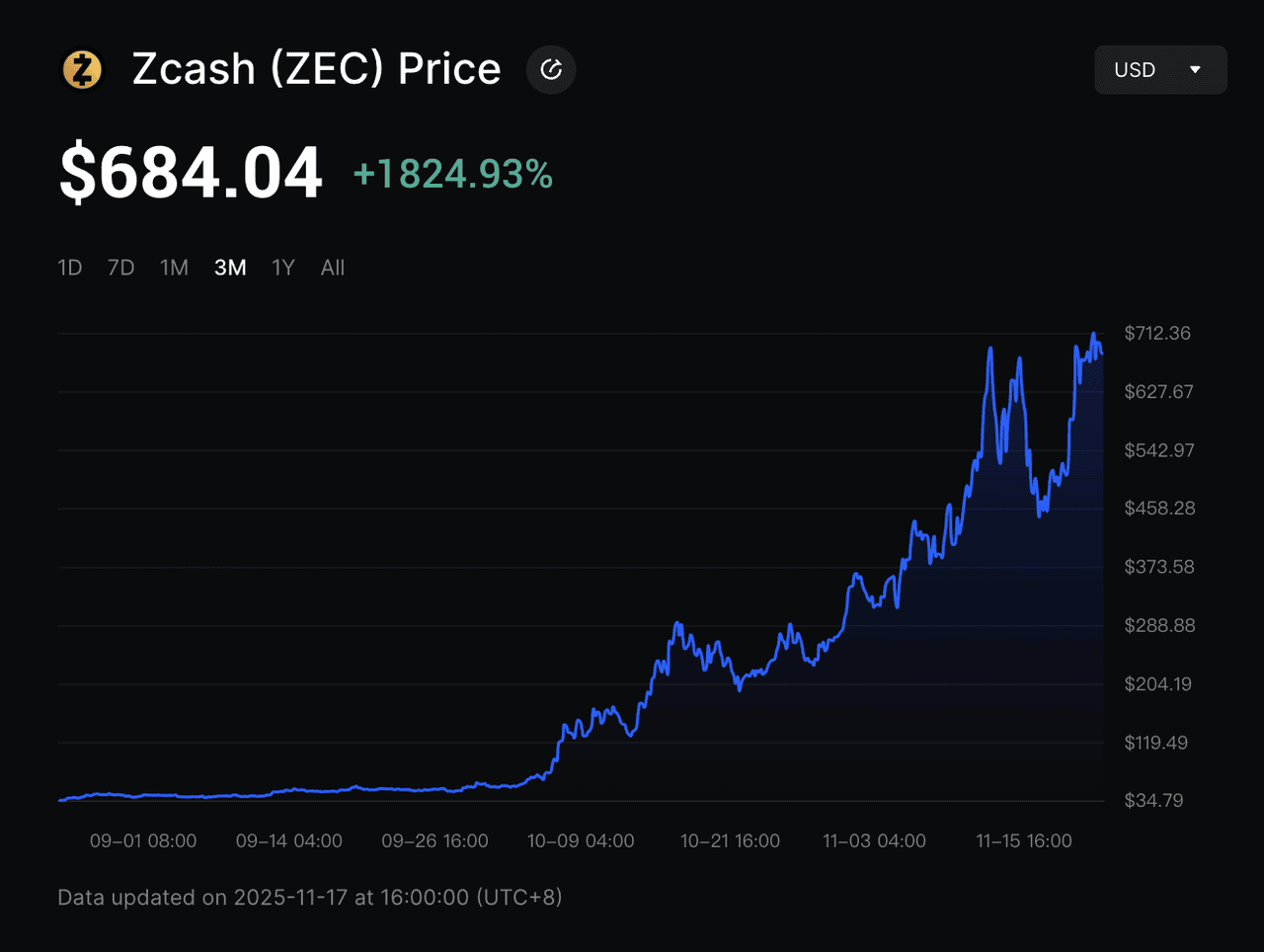
Zcash, trading at $276.72 with a 24-hour decline of $12.34 or -4.27%, stands as a beacon of privacy in the cryptocurrency landscape. Its shielded transactions have long protected user data through zk-SNARKs, but as transaction volumes rise, the network faces scalability pressures. Enter STARK proofs for Zcash extension via Transparent Zcash Extensions (TZE), a proposal enabling amortized privacy scaling on L1. This approach integrates a compact STARK verifier directly into Zcash’s base layer, unlocking Layer-2 (L2) experimentation like Ztarknet without compromising core privacy.

Privacy advocates appreciate Zcash’s commitment to selective disclosure, where users choose transparency only when needed. Yet, the computational overhead of SNARK verification strains L1 resources during peak activity. STARK proofs, or Scalable Transparent ARguments of Knowledge, offer a post-quantum secure alternative. Unlike SNARKs, they require no trusted setup, rely on public randomness, and verify exponentially faster, making them ideal for ZK STARK privacy proofs in high-throughput environments.
Zcash’s Dual Transaction Model: Balancing Privacy and Utility
Zcash pioneered optional privacy with transparent and shielded pools, diverging from Bitcoin’s fully public ledger. Shielded transfers encrypt amounts, addresses, and memos using zk-SNARKs, ensuring zero-knowledge privacy. This dual model mirrors emerging L2 designs like Starknet, which also supports application-specific confidentiality. However, Zcash L1 verification costs limit scalability; a single SNARK proof consumes significant gas equivalents.
Recent community discussions highlight this tension. Proposals emphasize preserving L1 privacy while offloading computation. Ztarknet, a Starknet-inspired L2, sequences transactions off-chain using Madara clients and proves them with Stwo/Cairo provers. State roots anchor to Zcash L1, forming a verifiable chain. This Zcash TZE scaling strategy amortizes costs: one tiny verifier handles countless L2 proofs, distributing overhead across batches.

Regarding DA — this is separate, with Validium no (or almost no) impact, with Rollup more, and Volition (users/apps choose) then it depends.
trust assumptions on the
Transparent Zcash Extensions: A Minimalist Path to STARK Integration
TZEs represent a constrained upgrade mechanism, akin to a “yes/no” oracle for proofs. Unlike full consensus changes, they add a bounded point function to Zcash’s protocol: verify this STARK or reject. This fits neatly into Orchard’s Halo 2 framework, requiring minimal code. Forum threads confirm the verifier’s agnostic nature; it could validate any ZK proof, though STARKs excel in transparency and speed.
Consider Bitcoin verification: a STARK proves its entire history in milliseconds, no trusted setup needed. For Zcash, TZE enables similar efficiency. Ztarknet settles batches to L1, where the TZE checks proof validity in constant time. No new trust assumptions arise; privacy remains shielded on L1, while L2 apps gain programmability. Developers port one verifier, unleashing DeFi, NFTs, and more on a privacy-first chain.
This modular design conserves Zcash’s conservative ethos. As a CFA charterholder focused on stable Web3 finance, I view TZEs as prudent evolution. They scale without risking protocol bloat, echoing FHE’s confidential computation but via lighter ZK machinery.
Amortized Verification: How STARKs Unlock L1 Efficiency
Amortization lies at the heart of this scaling. L2s batch thousands of transactions into one STARK proof, verified once on L1. Verification time stays fixed, regardless of batch size, yielding logarithmic cost per transaction. StarkWare’s innovations in modern algebra ensure proofs scale with data, not linearly.
Ztarknet leverages this for Zcash. Off-chain execution mirrors Starknet’s Cairo VM, optimized for privacy circuits. Provers generate STARKs post-sequencing; sequencers post roots and proofs to L1. TZE confirms correctness, slashing finality times versus recursive SNARK towers. Early GitHub repos outline constraints: minimal components, no L1 privacy alterations.
Zcash (ZEC) Price Prediction 2027-2032
Forecasts incorporating Ztarknet L2 scaling via STARK proofs, privacy preservation, and market cycles from 2026 baseline of $276.72
| Year | Minimum Price | Average Price | Maximum Price | YoY % Change (Avg) |
|---|---|---|---|---|
| 2027 | $250 | $420 | $750 | +52% |
| 2028 | $380 | $680 | $1,250 | +62% |
| 2029 | $550 | $980 | $1,750 | +44% |
| 2030 | $750 | $1,400 | $2,400 | +43% |
| 2031 | $1,050 | $1,950 | $3,300 | +39% |
| 2032 | $1,400 | $2,700 | $4,500 | +38% |
Price Prediction Summary
Zcash (ZEC) is forecasted to experience substantial growth from 2027 to 2032, propelled by Ztarknet’s STARK-based L2 scaling that boosts throughput and programmability without compromising privacy. Starting from a 2026 average of ~$277, average prices are projected to climb to $2,700 by 2032 (CAGR ~47%), with bullish maxima driven by adoption and bull markets, and conservative minima accounting for regulatory or competitive pressures.
Key Factors Affecting Zcash Price
- Ztarknet L2 adoption enhancing Zcash scalability and DeFi use cases
- STARK proof verification via Transparent Zcash Extensions (TZE) enabling efficient L1 settlement
- Surging demand for privacy-preserving blockchains amid regulatory scrutiny
- Crypto market cycles, including post-halving bull runs and institutional inflows
- Protocol upgrades improving transaction speeds and costs
- Potential regulatory risks for privacy coins and competition from ETH/Solana L2s
- Macro factors like global adoption and Bitcoin correlation
Disclaimer: Cryptocurrency price predictions are speculative and based on current market analysis.
Actual prices may vary significantly due to market volatility, regulatory changes, and other factors.
Always do your own research before making investment decisions.
Market data underscores timing. At $276.72, ZEC reflects optimism amid upgrades. A successful TZE deployment could catalyze adoption, blending Zcash’s privacy provenance with Starknet’s ecosystem.
Integrating STARK proofs via TZE positions Zcash for sustained growth, particularly in DeFi applications demanding both privacy and speed. With ZEC at $276.72, down $12.34 or -4.27% over 24 hours from a high of $291.93 and low of $266.83, the market anticipates these enhancements. Ztarknet’s design, detailed on its GitHub repository, prioritizes minimalism: Madara for sequencing, Stwo/Cairo for proving, and TZE for settlement. This stack ensures L2 transactions remain private off-chain while proving validity publicly on L1.
Ztarknet’s Architecture: Privacy-Preserving Rollups on Steroids
At its core, Ztarknet emulates Starknet’s proven L2 framework but anchors to Zcash’s shielded ecosystem. Sequencers batch user transactions into blocks executed on the Cairo VM, a Turing-complete language suited for ZK circuits. Provers then generate STARKs attesting to correct state transitions, including privacy-preserving operations like shielded transfers. These proofs, compact and verifiable in milliseconds, post to Zcash L1 alongside state roots.
The TZE verifier acts as a gatekeeper, checking proof integrity without inspecting underlying data. This STARK Zcash extension supports dual-mode operations: transparent for public apps, shielded for sensitive ones. Community forums stress no alterations to L1 privacy; experimentation flourishes on L2, with one small port enabling myriad applications from confidential lending to private DAOs.
Ztarknet STARK Advantages
-
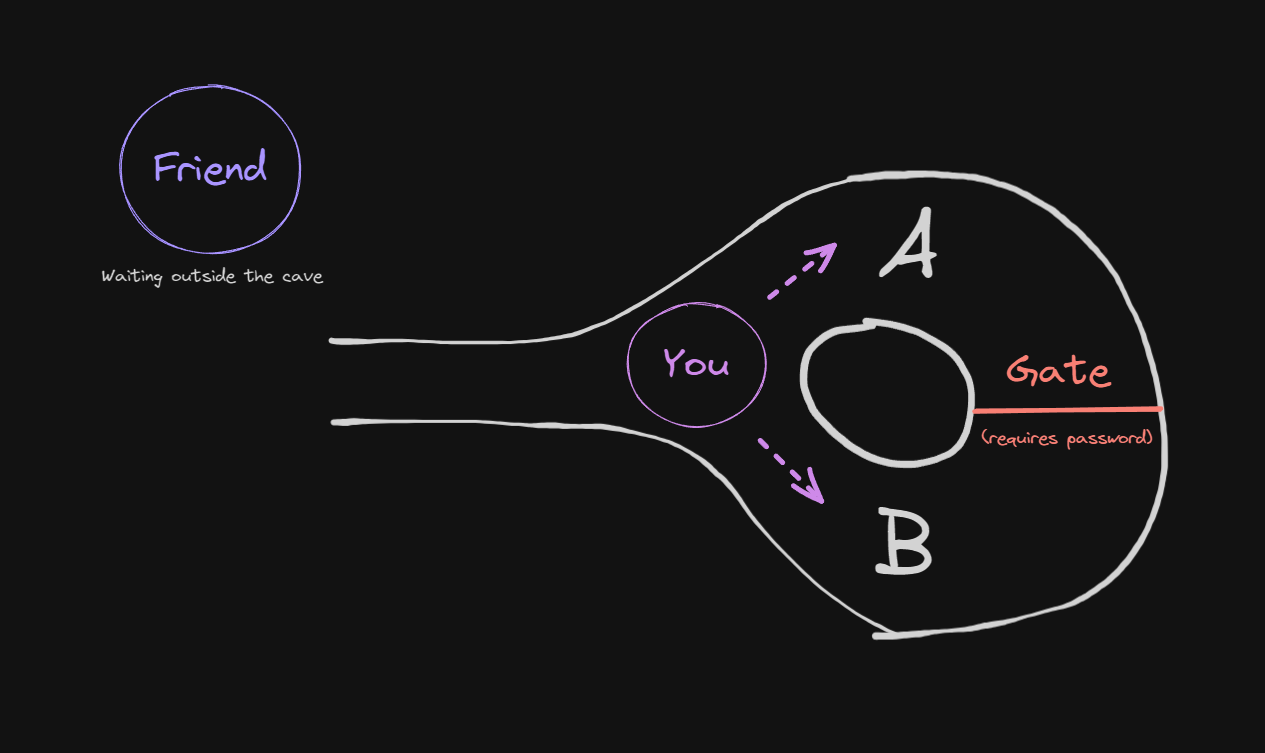
No Trusted Setup: STARK proofs require no trusted ceremonies, ensuring transparency and eliminating risks associated with setup phases, unlike SNARKs.
-
Post-Quantum Security: STARKs use quantum-resistant cryptography based on hash functions and algebra, safeguarding Zcash against future quantum threats.
-

Logarithmic Verification Costs: Efficient STARK verification scales logarithmically, enabling fast, low-cost proof checks on Zcash L1 via TZE.
-
Seamless L1 Privacy Preservation: Ztarknet anchors L2 states to Zcash L1 without altering core privacy protocols, keeping shielded transactions intact.
-
Starknet App Compatibility: Supports Cairo language and Starknet ecosystem, allowing seamless porting of dApps to scale Zcash.
Delving deeper into amortized ZK proofs, STARKs shine in recursion. Batches compress into a single proof, which verifies faster than individual SNARKs. For Zcash, this means handling 1,000 transactions at the cost of one verification, slashing fees exponentially. StarkWare’s algebraic innovations, rooted in FRI protocols, bound proof sizes predictably, avoiding SNARKs’ growing constants.
Post-Quantum Security and Economic Implications for ZEC
STARKs’ reliance on hash functions and collision-resistant primitives offers inherent post-quantum resistance, a boon as quantum threats loom. Zcash, already quantum-vulnerable via discrete logs, gains forward security through TZE. Economically, lower L1 costs attract developers, boosting ZEC demand for gas. At $276.72, the token captures this potential; a TZE activation could mirror Starknet’s TVL surge, drawing privacy-focused capital.
Challenges persist. Proving latency, though improving with Stwo, demands optimization for real-time DeFi. Sequencer centralization risks exist, though Zcash’s decentralization ethos pushes for distributed variants. Proposals advocate bounded verifiers to prevent DoS, aligning with conservative protocol design. As someone advocating long-term stability in Web3 finance, I endorse this measured scaling: it fortifies privacy without overreach.
Comparisons to competitors illuminate strengths. Optimism or Arbitrum sacrifice privacy for Ethereum speed; Ztarknet inverts this, prioritizing confidentiality. Starknet’s Bitcoin proofs demonstrate cross-chain viability, hinting at Zcash-Bitcoin privacy bridges. Binance coverage notes the elegance: a simple point function unlocks L2s, preserving Zcash’s encrypted ledger divergence from transparent chains.
LinkedIn discussions frame Ztarknet as “privacy stays, scale arrives. ” Indeed, Zcash TZE scaling via STARKs enables confidential portfolio management, echoing FHE ideals but with ZK efficiency. Developers gain Cairo’s expressivity for custom privacy circuits, from mixers to confidential voting.
Looking ahead, 2025 roadmaps from Starknet hint at deeper integrations, reliant on TZE proposals. Successful deployment could elevate ZEC beyond $276.72, cementing Zcash as Web3’s privacy powerhouse. This fusion of STARK transparency and Zcash shielding redefines amortized verification, ensuring scalable confidentiality for institutional adoption.