ZK Proofs for Verifiable Reputation in Crypto: Prove Wallet History Without Doxxing Addresses

In the high-stakes world of cryptocurrency, your wallet’s history is both your strongest asset and your biggest vulnerability. Lenders, DeFi protocols, and DAOs crave proof of your on-chain behavior – longevity, transaction volume, even sybil resistance – yet demanding full address disclosure invites doxxing risks, regulatory scrutiny, and privacy erosion. Enter ZK proofs for verifiable reputation: a cryptographic leap that lets you prove wallet history without doxxing addresses, balancing trust with anonymity in ways traditional KYC never could.

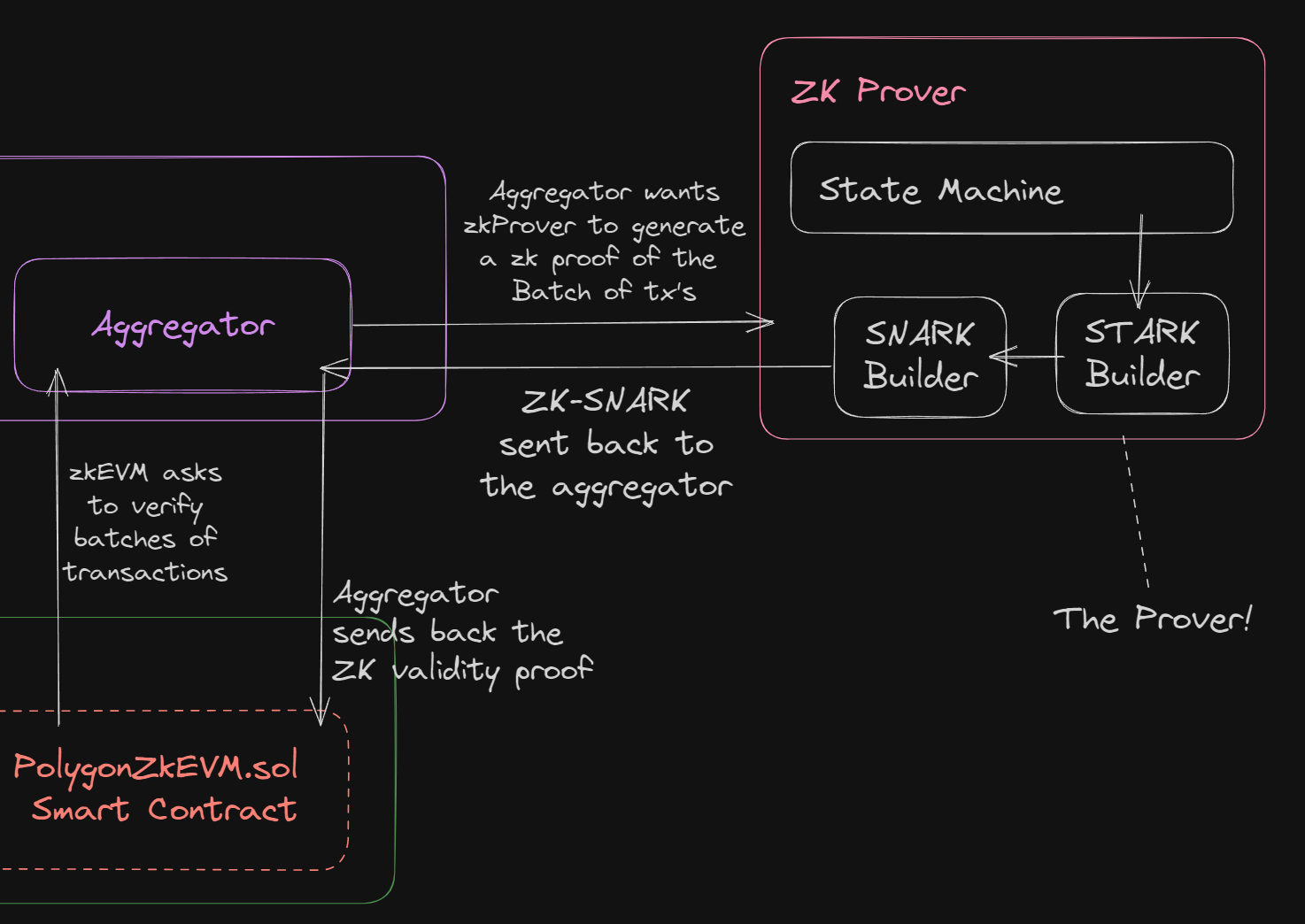
Imagine approaching a DeFi lending platform. Instead of exposing your entire transaction graph, you generate a succinct proof attesting to, say, and quot;my wallet has processed over 100 transactions without illicit flags and quot; or and quot;this address has held assets for 18 months straight. and quot; The verifier checks the proof in milliseconds, confident in its validity, while your sensitive details stay shielded. This is wallet history zk privacy in action, powered by zero-knowledge proofs (ZKPs).
Cracking the Code: ZKPs Beyond Basic Hiding
Zero-knowledge proofs aren’t just about obscuring data; they enforce provable structure without content revelation. As Chainalysis notes, a ZKP lets multiple parties confirm a statement’s truth without extra info leakage. Dock Labs calls it online security gold: verify without revealing the underlying information itself.
At their core, ZKPs rely on protocols like zk-SNARKs or zk-STARKs. You, the prover, hold a private witness – your wallet’s transaction Merkle proofs from a blockchain explorer. Using arithmetic circuits, you compute a proof that satisfies a public statement, such as and quot;the sum of my incoming transfers exceeds X threshold. and quot; The verifier runs a quick check; no wallet scan needed. Hacken. io highlights this duality: privacy meets verifiability.
This selective disclosure flips crypto’s transparency curse. ForkLog points to Atkins’ vision – prove compliance sans full financial history. In blockchain terms, per iCert Global, ZKPs validate transactions without details, ripe for reputation systems. Stefano Tempesta on Medium echoes: user confidentiality preserved amid validation.
and quot;ZK is almost more like just ‘hiding data’ – it’s also about proving correct structure without revealing content. and quot; – r/CryptoTechnology
Built In and Deutsche Bank affirm: one party proves info to another without exposure. But for crypto reputation without doxxing, we push further into wallet-specific circuits.
Building Reputation Primitives: Wallet Age, Volume, and Behavior Signals
Verifiable reputation starts with atomic proofs. Proving wallet age? Construct a circuit over block timestamps where your address first appears, proving existence before a cutoff without linking to current activity. For volume, aggregate UTXO or account balances via homomorphic commitments – prove and quot;total inflows > 10 ETH and quot; using range proofs.
Sybil resistance demands more nuance. Zero knowledge sybil resistance detects multi-account farming via graph properties: prove your wallet lacks high-degree clustering or shared funding paths indicative of sock puppets. Reddit’s CryptoTechnology crowd nails it – ZK proves structure, like transaction graph sparsity, sans content.
Advanced setups layer these. A reputation score could be a composite ZKP: 40% age, 30% volume, 20% clean history (no blacklisted interactions), 10% decentralization score (interactions across chains). Each component zero-knowledge; the aggregate convinces protocols you’re legit.
Privacy holds because proofs are reusable and non-interactive. Generate once, share anywhere. No revocation needed unless you choose signal updates.
Evolution of Privacy Tech: From Shielded Transactions to Soulbound Credentials
ZKPs didn’t emerge in a vacuum. Updated context from 2026 traces roots to Zcash’s 2016 zk-SNARKs debut, shielding sender, receiver, amounts. By 2024, 35% of Zcash txs used shielded addresses, signaling privacy hunger.
Decentralized identity leaped next. ZK-KYC lets you prove age or residency sans PII. Soulbound Tokens (SBTs), non-transferable badges, pair with ZKPs for attribute proofs – and quot;I hold this credential and quot; without data dump. These pave privacy zk wallet proofs, revolutionizing DeFi access, DAO voting, airdrop eligibility.
DeFi protocols are already prototyping these mechanics. Platforms like Aave could gate high-leverage loans behind ZK wallet history proofs, confirming consistent activity without address exposure. DAOs might require zk proofs verifiable reputation for proposal power, ensuring long-term holders dominate without sybil attacks. Airdrops turn fair: prove unique wallet lineage via zero-knowledge sybil resistance, slashing mercenary capital.
Technical Deep Dive: Crafting a Wallet Reputation Circuit
Let’s get hands-on with how developers build these proofs. Using tools like Circom and SnarkJS, you define arithmetic circuits that encode wallet predicates. Picture a simple circuit for proving wallet age: input your private address hash and first transaction block number, publicly committing to a cutoff date. The circuit verifies the block timestamp precedes the cutoff while hashing matches the known root.
This scales to composites. For behavior signals, embed Merkle inclusion proofs for clean transactions – no mixer flags or sanctioned interacts. Range proofs via PLONK handle volume thresholds, ensuring totals hit marks without granular leaks. Opinion: zk-SNARKs edge STARKs here for compactness, though quantum resistance favors the latter long-term. Gas on L2s like zkSync plummets verification to pennies, making it viable now.
Composable layers excite most. Protocols aggregate proofs via recursive SNARKs, yielding a single privacy zk wallet proofs token for any verifier. Reuse across apps; no per-protocol recompute.
ZK Token Index (ZK, MATIC, ZEC) Technical Analysis Chart
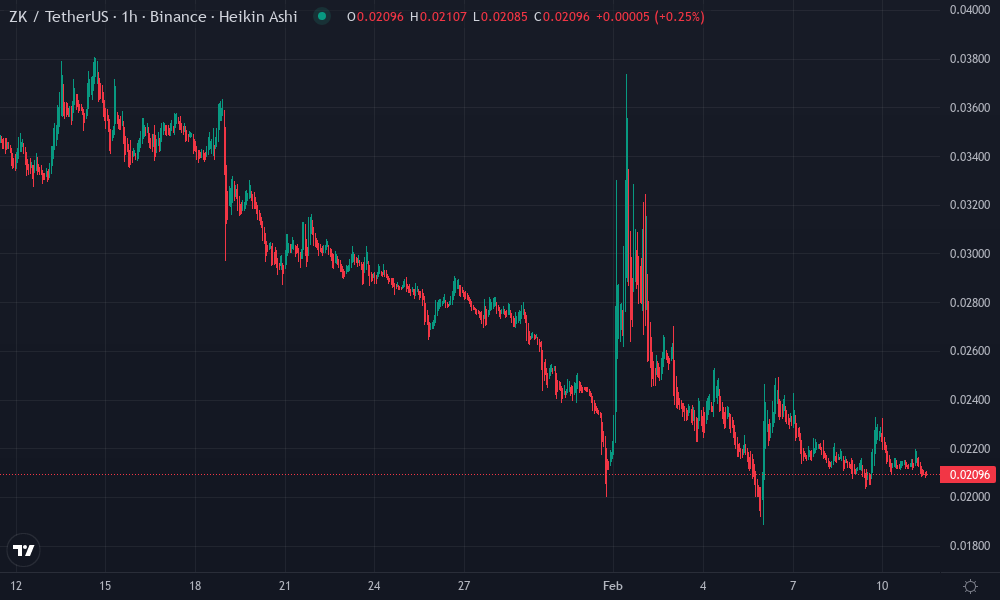
Analysis by Sophia Patel | Symbol: BINANCE:ZKUSDT | Interval: 1h | Drawings: 5
Technical Analysis Summary
As Sophia Patel, start by drawing a primary downtrend line connecting the swing high on 2026-02-21 at approximately 0.00395 to the recent swing low on 2026-03-07 at 0.00195, using the ‘trend_line’ tool to highlight the dominant bearish channel amid L2 sequencer volatility. Add horizontal lines for key support at 0.00180 (strong, recent lows) and resistance at 0.00250 (moderate, prior consolidation break). Mark a consolidation rectangle from 2026-02-27 to 2026-03-04 between 0.00220 and 0.00260. Place arrow_mark_down at the volume spike breakdown on 2026-03-04 around 0.00210 for bearish confirmation. Use fib_retracement from the Feb 21 high to Mar 07 low to project potential retracement levels at 38.2% (0.00255) and 61.8% (0.00285). Add text callouts for MACD bearish divergence and volume climax. Finally, long_position entry zone at 0.00185 with stop_loss below 0.00170 and profit_target at 0.00260, balancing medium risk in this ZK index volatility.
Risk Assessment: medium
Analysis: Downtrend intact but volume climax and support test suggest capitulation risk; medium tolerance fits waiting for confirmation in ZK’s sequencer-volatile environment.
Sophia Patel’s Recommendation: Observe support hold at 0.00180 for low-risk long entry; avoid chasing downside—let the chart story unfold.
Key Support & Resistance Levels
📈 Support Levels:
-
$0.002 – Strong multi-touch low from Mar 4-7, volume shelf formation—key for reversal.
strong -
$0.002 – Intermediate support, recent candle wicks holding.
moderate
📉 Resistance Levels:
-
$0.003 – Prior consolidation high Feb 27-Mar 4, now overhead barrier.
moderate -
$0.003 – Channel midline resistance, 38.2% fib retrace.
weak
Trading Zones (medium risk tolerance)
🎯 Entry Zones:
-
$0.002 – Bounce from strong support with volume divergence, aligning medium risk tolerance for ZK bottom-fishing.
medium risk
🚪 Exit Zones:
-
$0.003 – Profit target at resistance confluence and 50% channel retrace.
💰 profit target -
$0.002 – Tight stop below structure break to limit downside in volatile L2 index.
🛡️ stop loss
Technical Indicators Analysis
📊 Volume Analysis:
Pattern: climax spike on breakdown
Tall red volume bars on Mar 4 drop signal distribution exhaustion, potential reversal setup if dries up.
📈 MACD Analysis:
Signal: bearish divergence
MACD line below signal with histogram contracting—weakening downside momentum post-break.
Applied TradingView Drawing Utilities
This chart analysis utilizes the following professional drawing tools:
Disclaimer: This technical analysis by Sophia Patel is for educational purposes only and should not be considered as financial advice.
Trading involves risk, and you should always do your own research before making investment decisions.
Past performance does not guarantee future results. The analysis reflects the author’s personal methodology and risk tolerance (medium).
Friction Points and Fixes: Scalability, Oracles, and Trust Assumptions
No silver bullet exists. Circuit complexity balloons for rich histories, hiking prove times to minutes on consumer hardware. Fix: hardware accelerators like InProof GPUs or distributed proving networks. Oracle reliance for off-chain data – say, Chainalysis labels – risks centralization; counter with decentralized attesters voting via ZK.
Trusted setups haunt SNARKs, though powers-of-tau ceremonies mitigate. STARKs sidestep this, trading proof size. My take: hybrid approaches win, starting SNARK for speed, upgrading STARK for trustlessness. User experience lags too – wallets need seamless ZK integration, à la MetaMask snaps.
Regulatory gray zones loom. Prove compliance sans history handover thrills, but watchdogs might demand auditability. ZK’s math elegance dodges this: proofs are public, just data-opaque.
Roadmap Ahead: Standards and Ecosystem Convergence
2026 standards emerge: ERC-7843 sketches ZK rep primitives, interoperable across EVM chains. SBTs evolve into dynamic badges, refreshing proofs on-chain via oracles. FHE hybrids beckon for server-side rep computation, though ZK leads for now.
Adoption snowballs. Zcash’s shielded surge proves demand; layer that to reputation. DeFi TVL tied to verifiable users explodes trust, pulling TradFi in. Charts don’t lie: ZK tokens spiked on rep protocol drops, signaling market bets.
Vision sharpens: wallets as black boxes spewing trust signals, not histories. Doxxing dies; reputation thrives cryptographically pure. Crypto matures, privacy intact.