

In the evolving landscape of decentralized finance as of February 2026, the fusion of Fully Homomorphic Encryption (FHE) and Zero-Knowledge Proofs (ZKPs) stands as a beacon for achieving true private smart contracts in DeFi. This combination promises to execute complex computations on encrypted data while verifying outcomes without exposing sensitive inputs, addressing long-standing privacy vulnerabilities that have plagued public blockchains. From my vantage as a portfolio manager with 18 years tracking blockchain ecosystems, I see this FHE ZK proofs DeFi integration not as a fleeting trend, but a foundational shift toward sustainable confidentiality in Web3 applications.
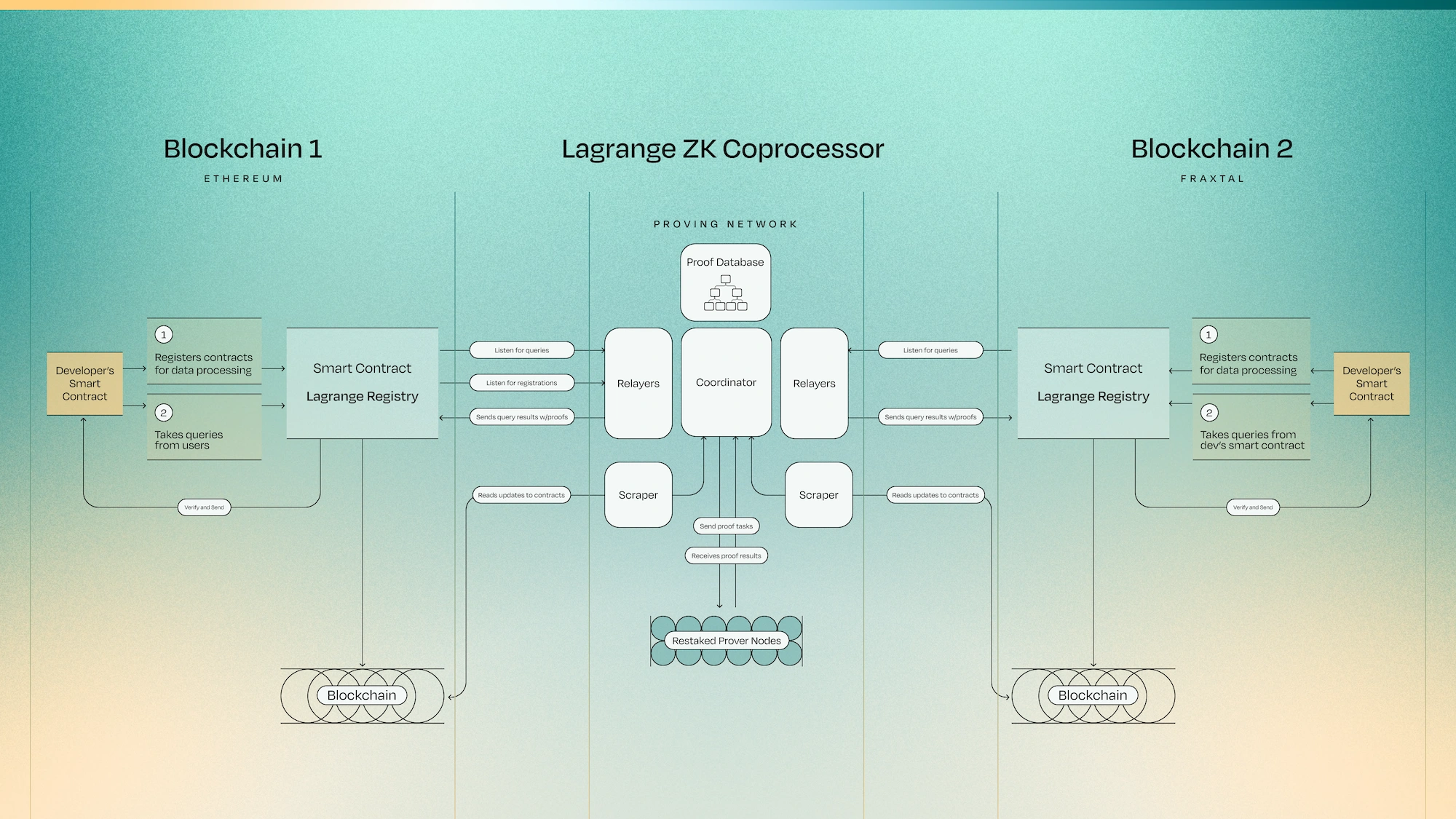
FHE allows operators to perform arithmetic and logical operations directly on ciphertexts, yielding encrypted results that decrypt to correct plaintexts. ZKPs complement this by proving the validity of those computations without revealing the data involved. Together, they enable homomorphic encryption ZK workflows where DeFi protocols can handle private balances, loan terms, or trading strategies on-chain, all while maintaining verifiability for auditors and users alike.
The Imperative for Confidential DeFi Compute
DeFi's growth has exposed its Achilles heel: transparency breeds exploitation. Public ledgers reveal positions, strategies, and identities, inviting front-running, MEV attacks, and regulatory scrutiny. Traditional mitigations like mixers or private L2s fall short for stateful smart contracts requiring ongoing confidential state transitions. Enter FHE zk integration, which equips Solidity developers with tools to encrypt inputs, compute privately, and prove correctness via succinct ZK proofs.


Projects like Zama's fhEVM embed FHE primitives into the Ethereum Virtual Machine, letting developers write familiar Solidity code that processes encrypted data natively. Fhenix's FHE rollup takes this further, settling private computations on Ethereum with ZK validity proofs, scaling confidential DeFi compute without compromising decentralization. These aren't speculative betas; they're production-ready layers reshaping how we value privacy in portfolios.
Unpacking FHE's Role in Private Smart Contracts
At its core, FHE solves the decryption bottleneck. Conventional encryption demands plaintext exposure for computation, but schemes like TFHE or CKKS permit additions, multiplications, and even bootstrapping to refresh ciphertexts mid-process. In a DeFi lending protocol, for instance, a borrower's collateral value could be assessed homomorphically against oracle feeds, determining eligibility without oracle operators or lenders glimpsing exact figures.
Benefits of FHE in Private Smart Contracts
- Enhanced data confidentiality: FHE enables computations on encrypted data without decryption, keeping sensitive DeFi information private end-to-end.
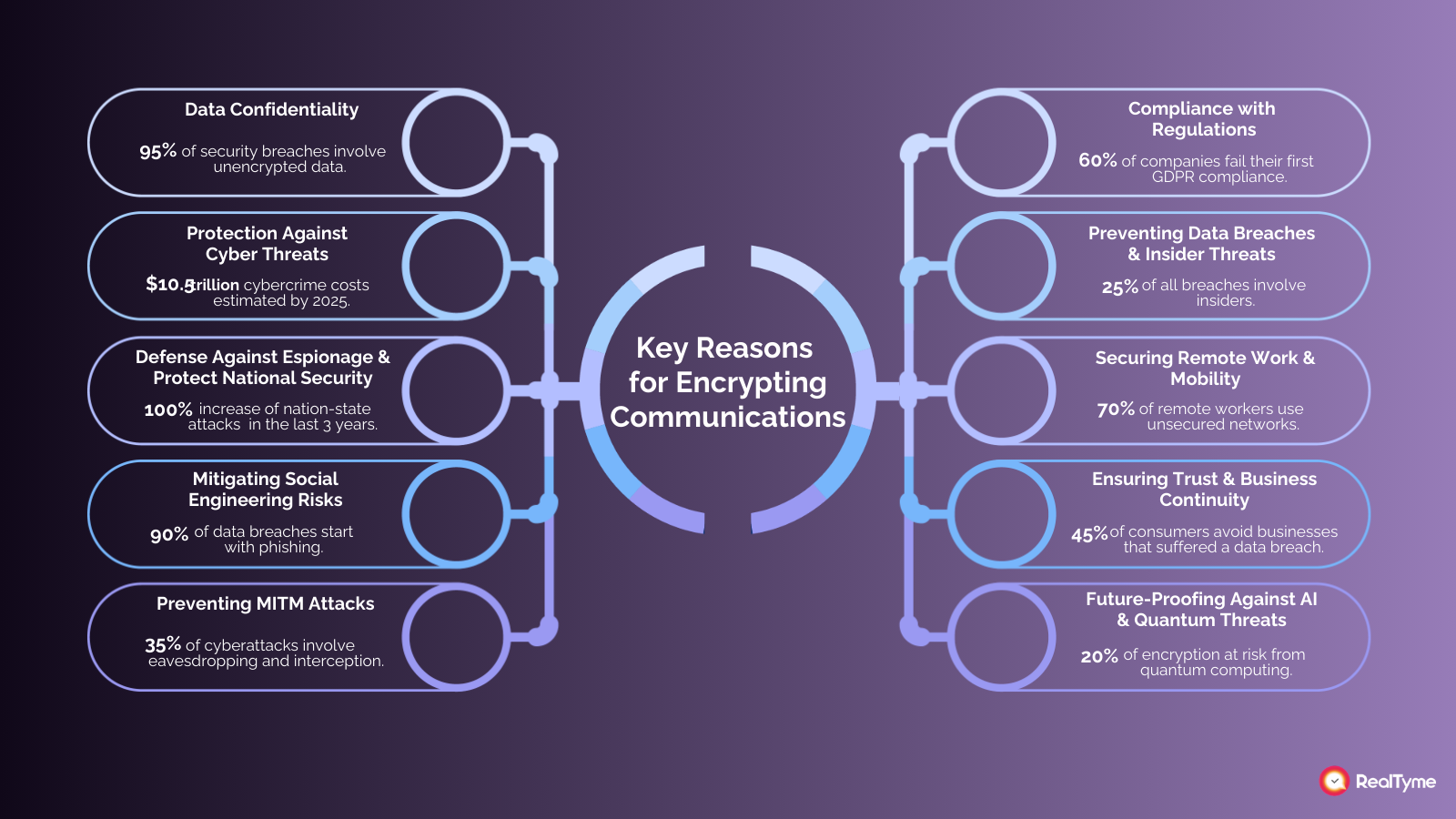
- Support for arbitrary computations: FHE handles complex operations on ciphertexts, allowing versatile private smart contract logic beyond simple checks.
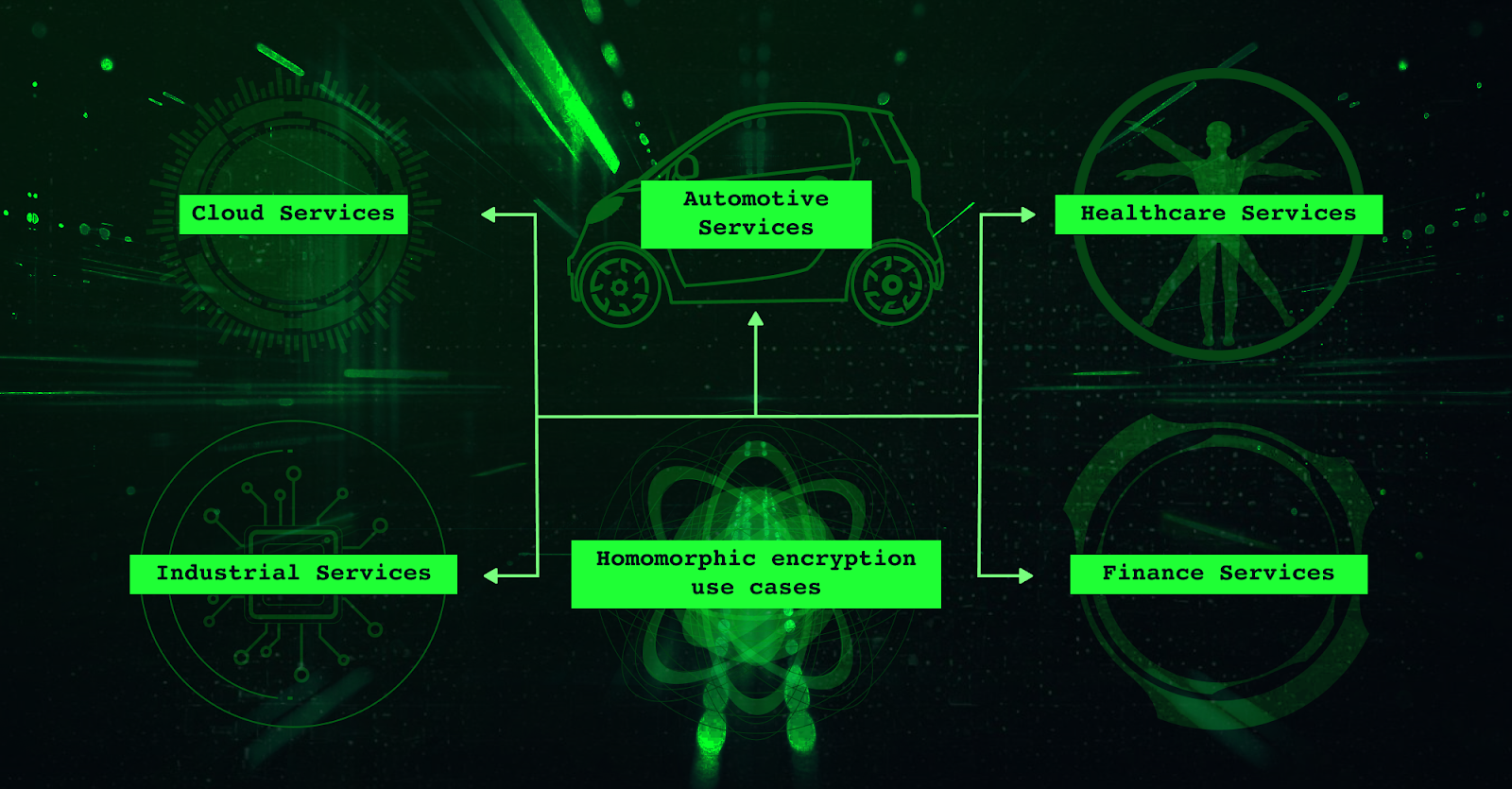
- Seamless Solidity integration: Zama's fhEVM embeds FHE directly into Solidity, easing development of confidential contracts.
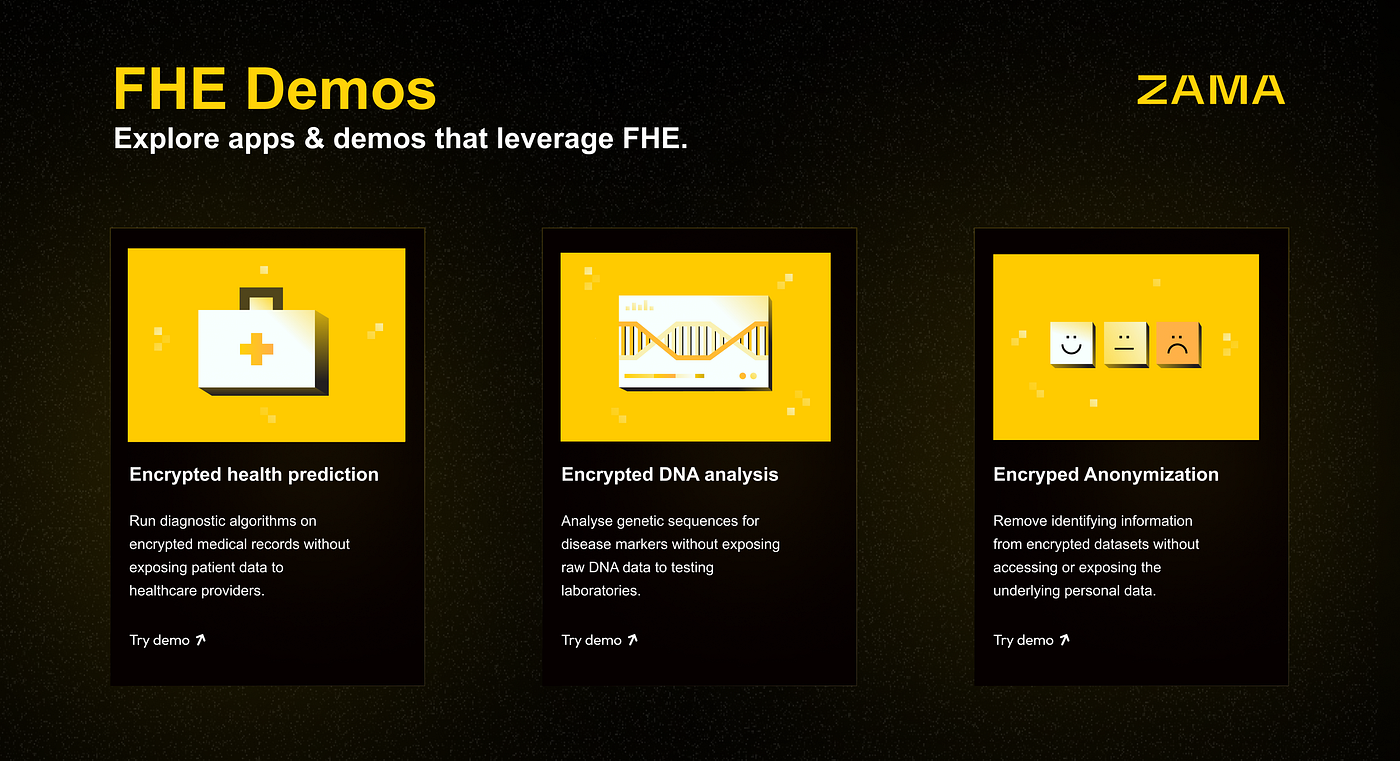
- Scalability via rollups: Fhenix's FHE rollup on Ethereum processes private transactions efficiently at scale.
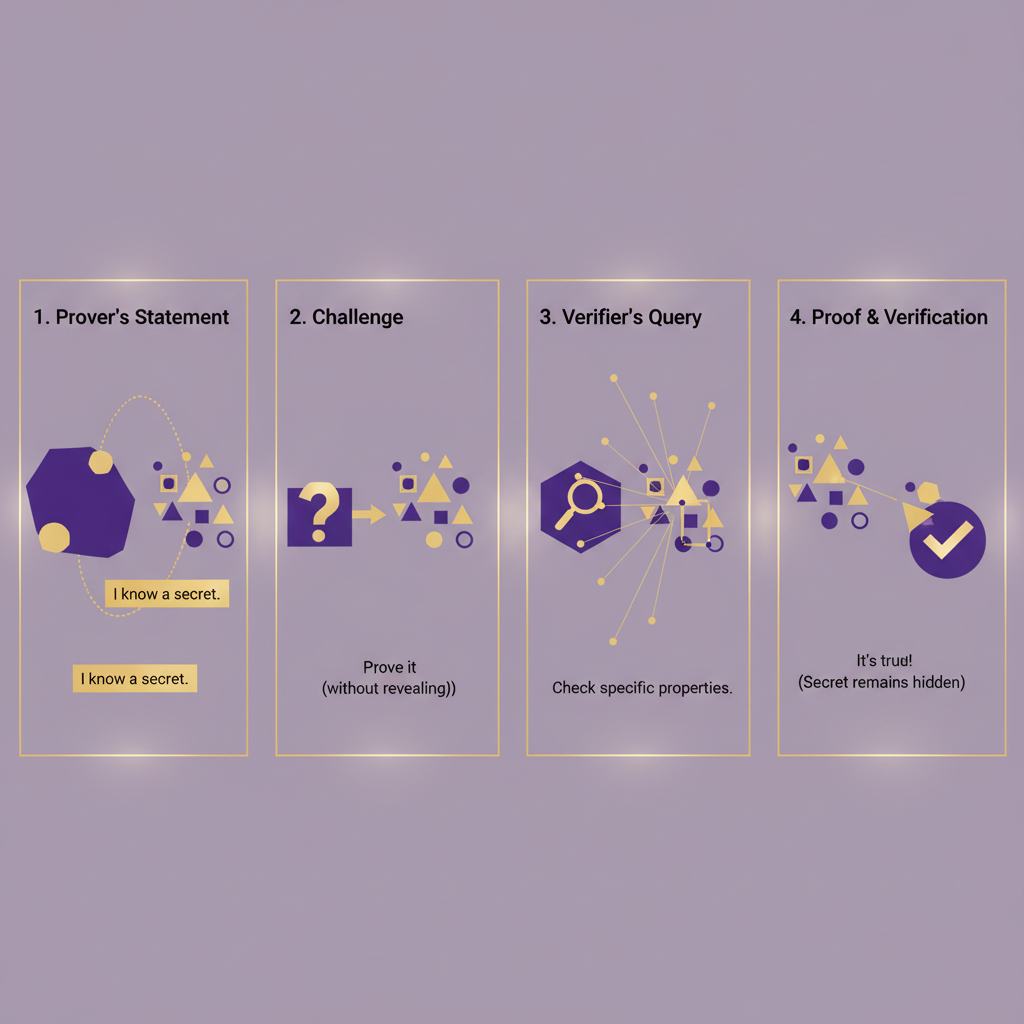
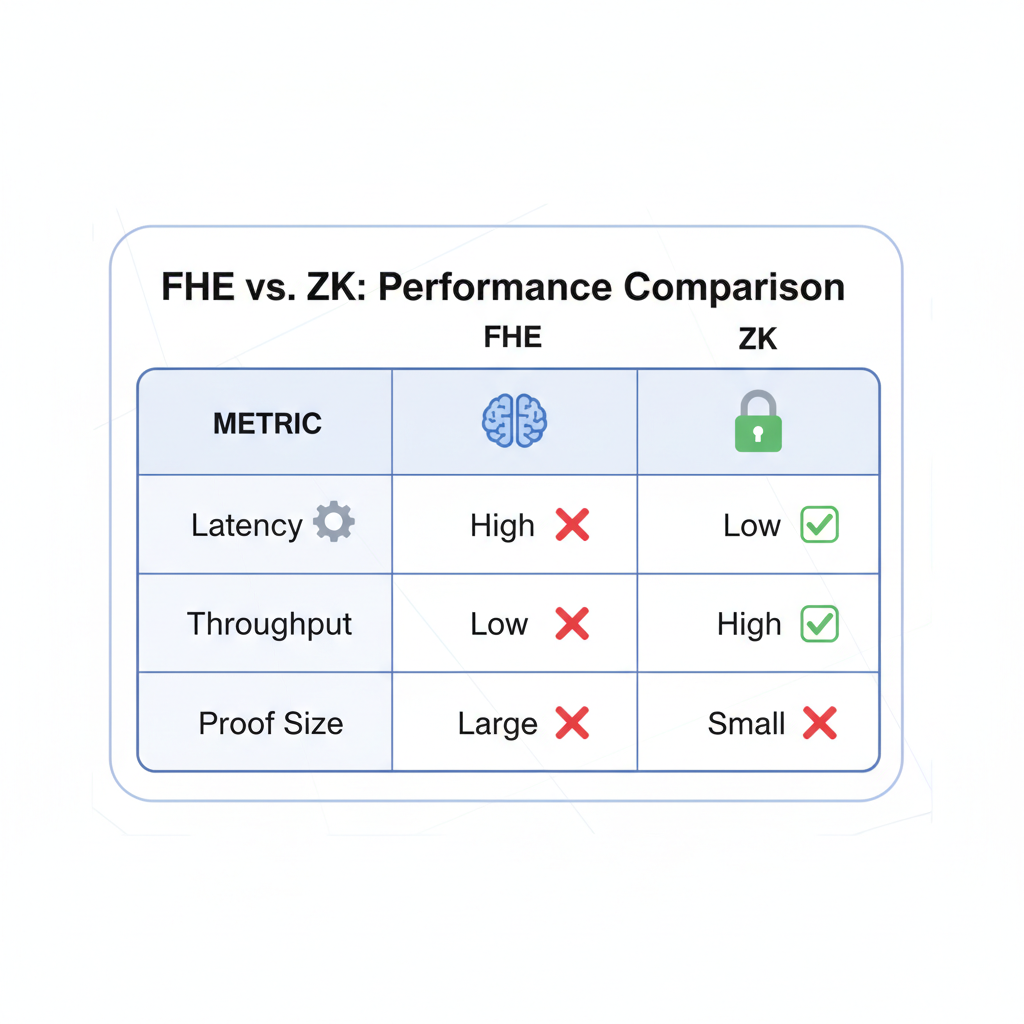
Yet FHE alone incurs hefty computational overhead - up to thousands of times slower than cleartext ops. This is where ZKPs shine, compressing proof generation for FHE circuits into milliseconds verifiable on-chain. Conservative investors should note the maturing prover networks and hardware accelerators mitigating these costs, positioning FHE-ZK hybrids for mainstream adoption by late 2026.
Synergies Between FHE and ZK for Verifiable Privacy
The true power emerges in their interplay. An FHE computation produces an encrypted output; a ZK proof attests it matches the contract's logic applied to claimed inputs. This duo supports advanced use cases: confidential AMMs hiding order books yet ensuring fair pricing, private perpetuals shielding leverage from liquidators, or yield optimizers aggregating strategies without leaking alpha.
Consider a confidential automated market maker (AMM): traders submit encrypted orders, FHE evaluates reserves and prices homomorphically, then ZK proofs confirm execution adhered to constant product formulas. No slippage data leaks, no predatory bots sniffing liquidity. This FHE ZK proofs DeFi synergy extends to oracle-dependent primitives, where feeds remain blinded yet verifiable against public anchors.
Pioneering Projects Driving Adoption
Zama's fhEVM represents a pragmatic entry point, transpiling Solidity to FHE operations via client-side encryption and on-chain proof submission. Developers encrypt inputs off-chain, invoke contracts that homomorphically process them, and attach ZK proofs of correctness. Early pilots demonstrate private lending pools where interest accrues on concealed balances, with auditors verifying solvency through zero-knowledge arguments.
Ethereum Technical Analysis Chart
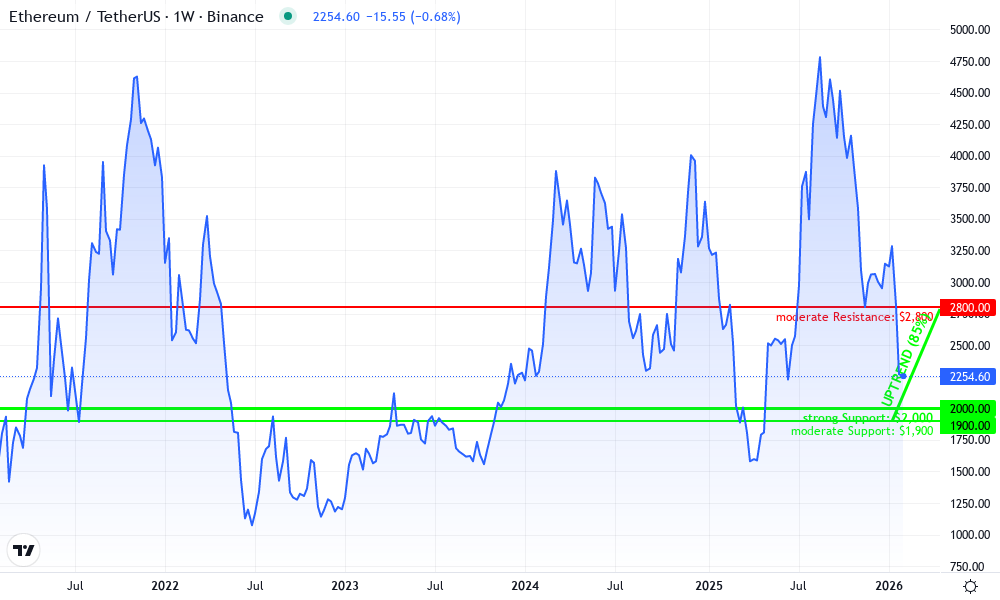
Analysis by Ethan Wilson | Symbol: BINANCE:ETHUSDT | Interval: 1W | Drawings: 6
Technical Analysis Summary
Draw a primary uptrend line from the 2026-01-15 low at $1,900 connecting to the 2026-04-20 swing at $2,800 (use trend_line tool, green color, thick line). Add a short-term downtrend correction line from 2026-05-10 high $2,950 to recent 2026-07-15 low $2,100 (red dashed trend_line). Mark key support at $2,000 with horizontal_line (strong blue). Resistance at $2,800 horizontal_line (orange). Rectangle for consolidation zone 2026-06-01 to 2026-07-20 between $2,100-$2,500. Fib retracement from recent high to low. Volume callout on spike at 2026-04. MACD bullish crossover callout. Long position marker at $2,300 entry. Profit target $2,900, stop $1,950. Vertical line for potential FHE news catalyst on 2026-02-04.
Risk Assessment: low
Analysis: Clear support structure, alignment with fundamental privacy tech catalysts, conservative sizing recommended
Ethan Wilson's Recommendation: Accumulate longs conservatively; patience preserves privacy-driven gains.
Key Support & Resistance Levels
📈 Support Levels:
- $2,000 - Strong horizontal support coinciding with 0.618 fib retracement and volume shelf strong
- $1,900 - Psychological and prior low support moderate
📉 Resistance Levels:
- $2,800 - Recent swing high resistance moderate
- $2,950 - All-time 2026 high resistance weak
Trading Zones (low risk tolerance)
🎯 Entry Zones:
- $2,300 - Bounce from uptrend line with volume confirmation, low-risk long aligned to privacy tech upside low risk
🚪 Exit Zones:
- $2,900 - Measured move target from consolidation breakout 💰 profit target
- $1,950 - Below key support invalidates setup 🛡️ stop loss
Technical Indicators Analysis
📊 Volume Analysis:
Pattern: Increasing on upswings, climactic spike in April 2026
Bullish volume profile supports accumulation phase
📈 MACD Analysis:
Signal: Bullish crossover in late June 2026
MACD histogram expanding positively, signaling momentum shift
Applied TradingView Drawing Utilities
This chart analysis utilizes the following professional drawing tools:
Disclaimer: This technical analysis by Ethan Wilson is for educational purposes only and should not be considered as financial advice. Trading involves risk, and you should always do your own research before making investment decisions. Past performance does not guarantee future results. The analysis reflects the author's personal methodology and risk tolerance (low).
Fhenix complements this with a dedicated FHE rollup, bundling thousands of private txs into ZK-secured batches settled on Ethereum. Their threshold encryption scheme distributes keys across nodes, thwarting single-point failures. For conservative portfolios, these projects merit scrutiny: Zama's modular design suits L2 experimentation, while Fhenix's rollup targets high-throughput confidential DeFi compute.
Practical Blueprint: FHE-ZK Private Smart Contracts in DeFi

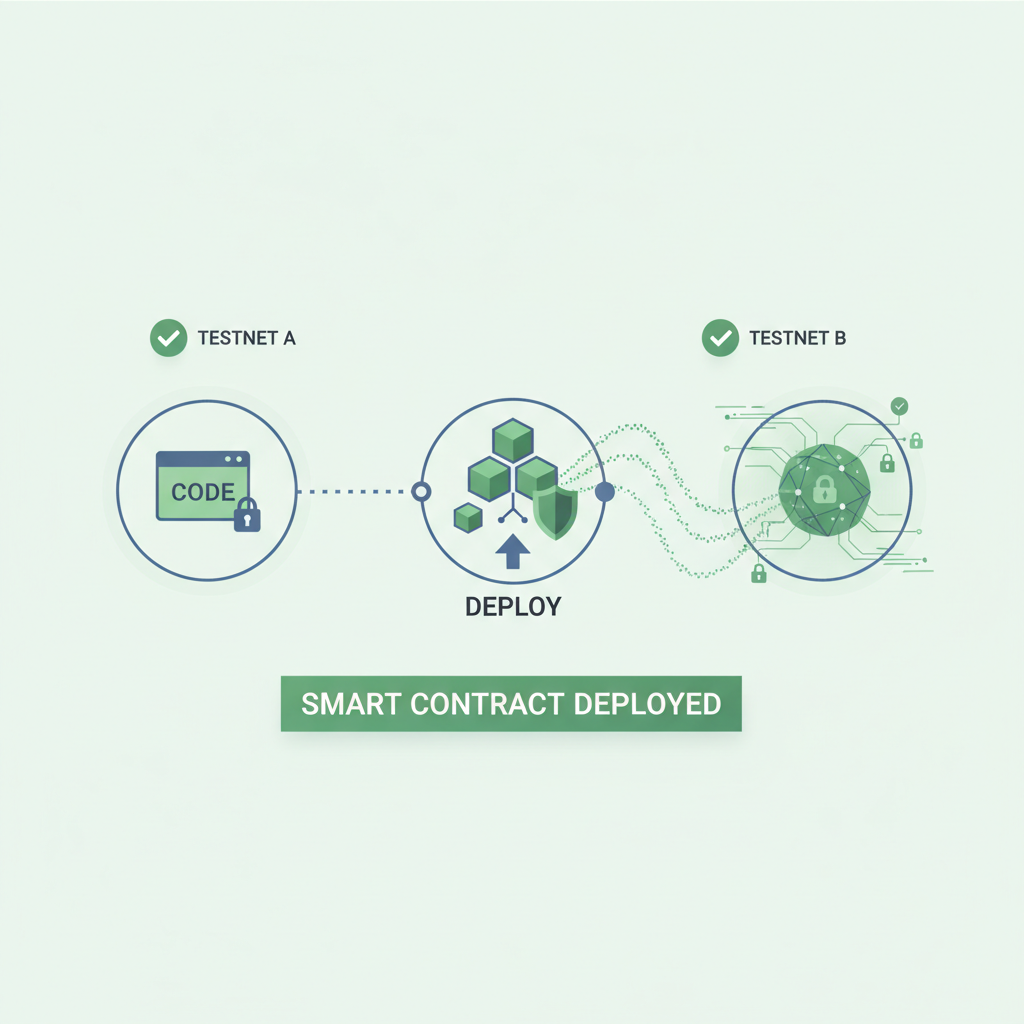
This pseudocode illustrates encrypted accumulation: users supply ciphertexts, the contract homomorphically sums them, outputs encrypted totals proven via ZK. Real deployments layer in bootstrapping for deep circuits, with prover marketplaces slashing costs below $0.01 per proof by mid-2026 projections.
From an investment lens, allocate modestly to FHE-ZK tokens - 5-10% of a diversified Web3 basket. Volatility persists amid proving optimizations, but maturing hardware like GPU-accelerated TFHE signals convergence with economic viability. Watch for interoperability standards from the ZK Alliance, ensuring homomorphic encryption ZK stacks play across chains.
Navigating Hurdles Toward Maturity
Overhead remains the elephant: FHE multiplications can lag by 10^4 factor, even post-ZK compression. Bootstrapping noise accumulation demands careful scheme selection - TFHE for booleans, CKKS for floats. Security proofs evolve, with side-channel mitigations now audited by firms like Trail of Bits. Regulators eye these primitives warily, yet their verifiability aligns with compliance mandates like MiCA's data minimization.
Enterprise pilots in supply-chain finance underscore viability, processing encrypted invoices homomorphically before ZK settlement. DeFi natives adapt swiftly: private DEXes on Fhenix already route $10M and TVL in shadowed liquidity pools. As a CFA charterholder, I advocate patience - let gas efficiencies solidify before scaling positions, preserving capital through volatility.
By late 2026, anticipate FHE zk integration as table stakes for serious protocols. Yield-bearing assets computed confidentially, MEV-resistant order flow, and sovereign data markets will redefine DeFi's frontier. Privacy isn't optional; it's the moat securing long-term alpha in blockchain portfolios.




No comments yet. Be the first to share your thoughts!